Quick answer
Choose a Micro Player if you want a small, low-cost, ready-to-play arcade fix you can carry or set on a shelf. Choose a video game console if you want a shared living-room setup and are willing to spend more on the system, controllers, and games. They solve different problems, and many retro fans eventually own both.
Micro Player handhelds and full video game consoles both play games, but they are built for different rooms, budgets, and habits. A Micro Player is a self-contained miniature arcade unit with the game already inside. A console is a system you build around: you add controllers, a display, and a library.
That difference decides almost everything else, including what you pay up front, how much space you give up, and how often you actually play. This comparison uses the facts we can verify from our catalog so you can match the format to how you really game.
What each format actually is
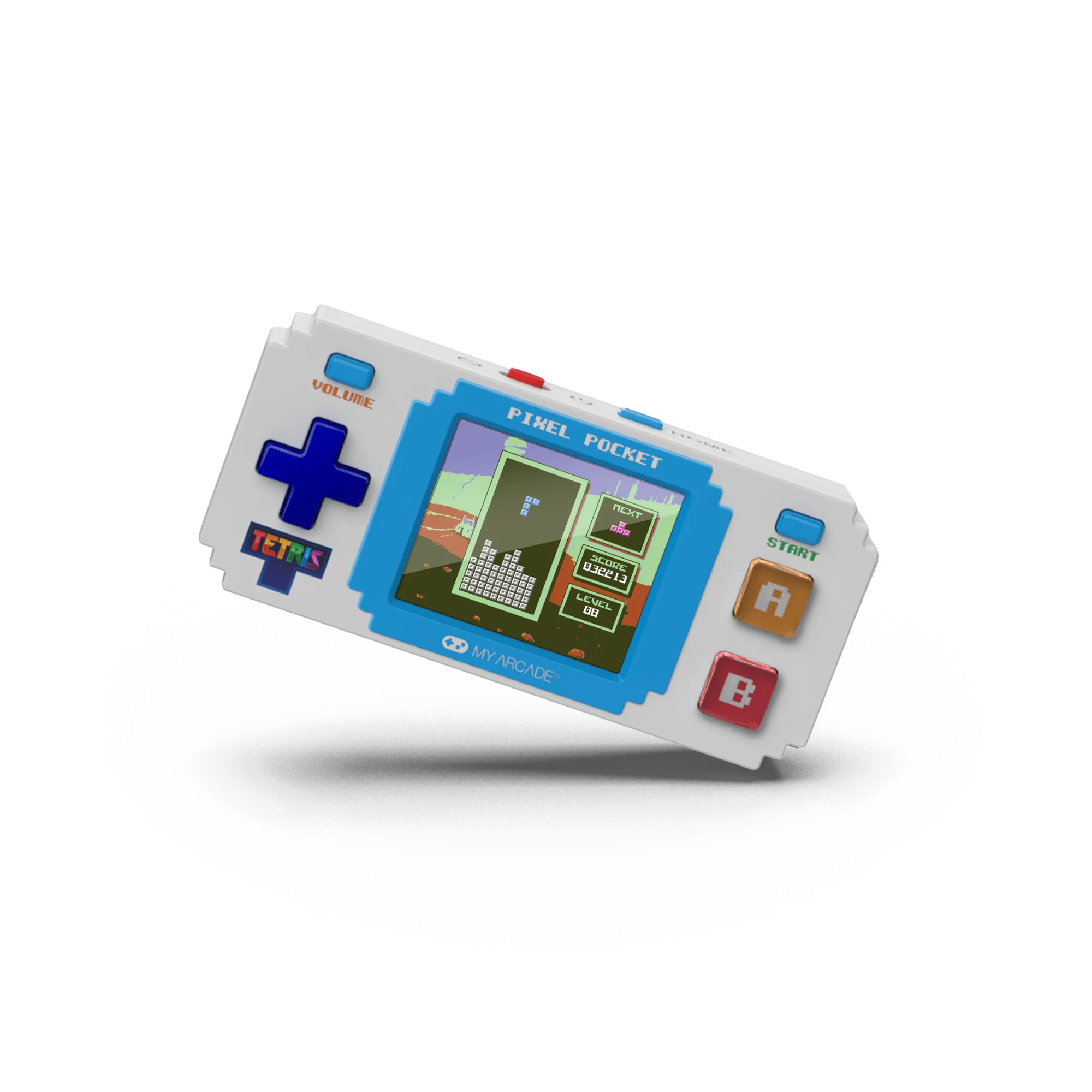
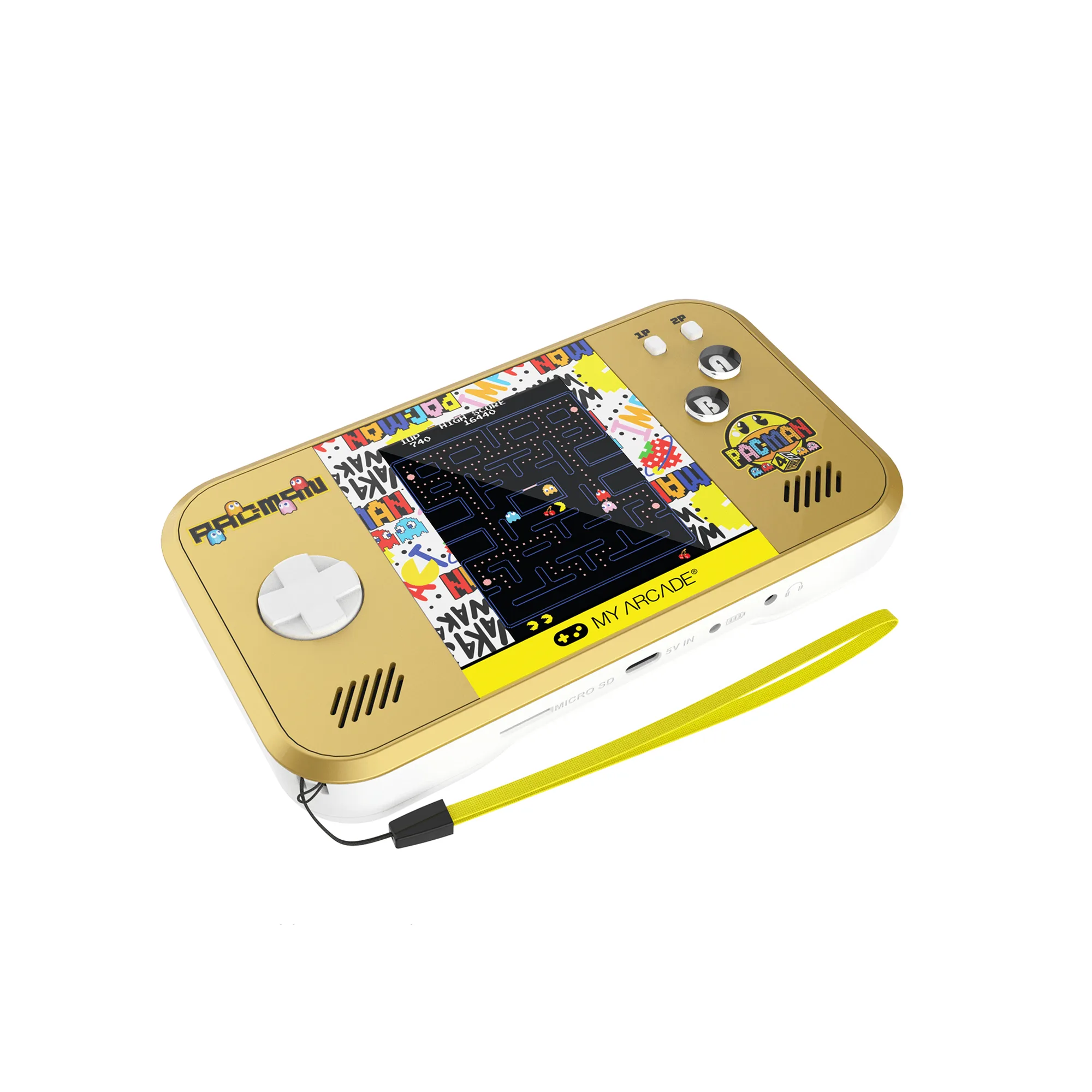
A Micro Player is a compact handheld-style unit with the game built in and a small back-lit screen. The PAC-MAN Micro Player Pro, for example, is a single-game unit built around the PAC-MAN maze, while the All-Star Stadium Micro Player bundles seven playable titles including BASES LOADED 1 through 4, GOAL!, RACKET ATTACK, and HOOPS on one 2.75-inch color screen.
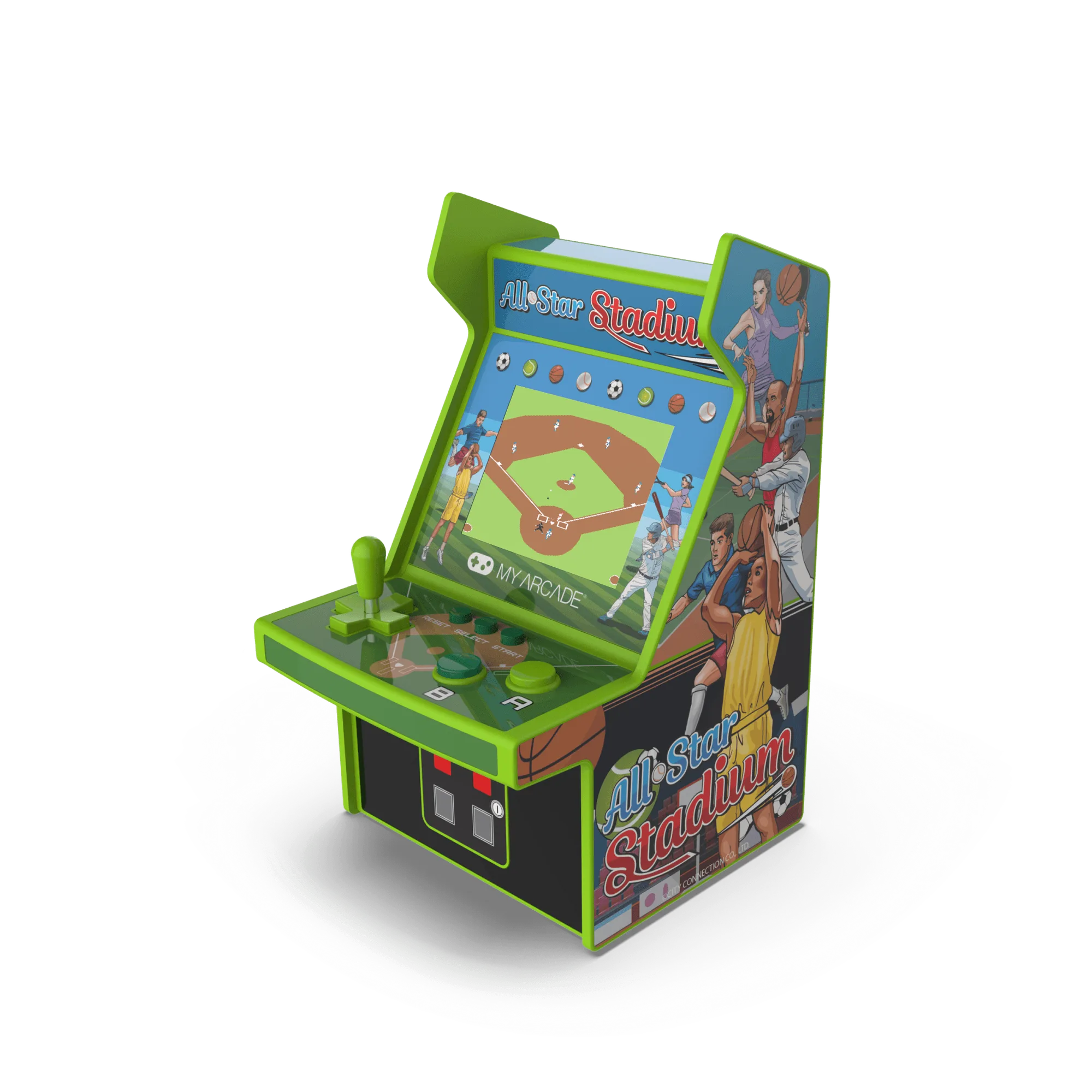
All-Star Stadium Micro Player
A video game console is a platform, not a single game. You connect it to a TV or monitor, add at least one controller, and buy or download games separately. That flexibility is the point, and it is also the cost. If you want one machine that grows with your library, a console is the natural pick.
- Micro Player: game included, screen included, no TV required.
- Console: system, controller, display, and games are separate purchases.
Cost, space, and setup compared
Micro Players sit at the low end of the spend. The PAC-MAN Micro Player Pro and https://myarcadercz.com/products/space-invaders-micro-player-pro-9bb69ba1a6aaf74ad09ada79-1804959SPACE INVADERS Micro Player Pro are both listed at USD 22.50 against a catalog comparison price of USD 44.99, and the PAC-MAN Micro Player is USD 20.00 against USD 39.99. You unbox it, power it on, and play. No cables to route, no TV to claim.
A console asks for more of everything: more money, more shelf or cabinet space, and more setup time. In exchange you get a bigger screen experience and a library you choose. The honest trade-off is that a console is a commitment, while a Micro Player is a small, immediate purchase you can justify on a whim.
- If you have one free shelf and no spare HDMI input, a Micro Player wins by default.
- If you already own a TV and controllers, the console's extra cost is smaller than it first appears.
Game library and replay value
Library size is where the two formats diverge most. A Micro Player is fixed: the All-Star Stadium Micro Player includes seven titles, and the PAC-MAN Micro Player Pro is built around one arcade classic. That focus is a feature if you want a specific game, and a limit if you get bored quickly.
A console library is open-ended, which means replay value depends on what you buy rather than what comes in the box. Neither approach is better in the abstract. The question is whether you want a curated slice of arcade history or a platform you keep feeding.
- Buy a Micro Player for one game you genuinely return to.
- Buy a console when you want to keep adding titles over time.
Portability and shared play
Micro Players are built to travel. The GAMER V CLASSIC Black/Blue packs 220 games into a pocket-sized system and is designed to fit in a pocket, purse, bag, or backpack, which makes it a strong car-trip or waiting-room pick. The Space Invaders Joystick Player takes a different route, using a joystick-style body for a more arcade-like feel at USD 30.00 against a USD 59.99 comparison price.
Consoles are not portable in any practical sense, but they are better for shared play. A console lives in one place, which makes it the easier choice for two players in the same room. If your gaming happens alone and on the move, portability matters more than screen size.
- Travel, commutes, and small apartments favor handhelds.
- Living rooms, guest visits, and multiplayer favor consoles.
Where each format falls short
Micro Players trade screen size and expandability for price and convenience. A 2.75-inch display is fine for a single arcade game and less comfortable for long sessions or text-heavy titles. You also cannot upgrade the hardware or add games that were not built in.
Consoles trade convenience for cost and friction. You need a display, power, and a controller before you play a single minute, and game prices add up quickly. If you want the cheapest possible route to playing PAC-MAN tonight, a console is the wrong tool.
- Do not buy a Micro Player expecting a growing library.
- Do not buy a console expecting a five-minute setup.
The trade-offs, stated plainly
- Price versus expandability: Micro Players start around USD 20 to USD 30 in this catalog and include the game. A console costs more once you add a controller and games, but it is the only format here that can grow. Pick the Micro Player if the budget is fixed; pick the console if the library is the point.
- Screen size versus portability: A 2.75-inch back-lit display is enough for arcade classics and travels anywhere. A TV gives you a large picture but locks you to one room. Decide where you actually play before you decide what to buy.
- Fixed library versus open library: The PAC-MAN Micro Player Pro is one game; the All-Star Stadium Micro Player is seven; the GAMER V CLASSIC Black/Blue is 220. A console has no built-in ceiling. If you already know the exact game you want, a Micro Player is the cheaper route to it.
Catalog facts worth knowing
- PAC-MAN Micro Player Pro: PAC-MAN is a classic arcade game with simple-to-learn but difficult-to-master maze gameplay, and the catalog notes over 400 million copies sold worldwide. A single, deep arcade game is exactly the case where a fixed-library Micro Player makes sense over a console.
- All-Star Stadium Micro Player: Includes fully playable versions of BASES LOADED 1, 2, 3 and 4, GOAL!, RACKET ATTACK, and HOOPS, shown on a 2.75-inch full color screen with an ergonomic, compact design. Seven sports titles on one unit gives you variety without buying a console or a single extra game.
- GAMER V CLASSIC Black/Blue: Loaded with 220 easy-to-play video games and sized to fit easily in a pocket, purse, bag, or backpack. The highest game count in this comparison, and the clearest pick when portability is the priority.
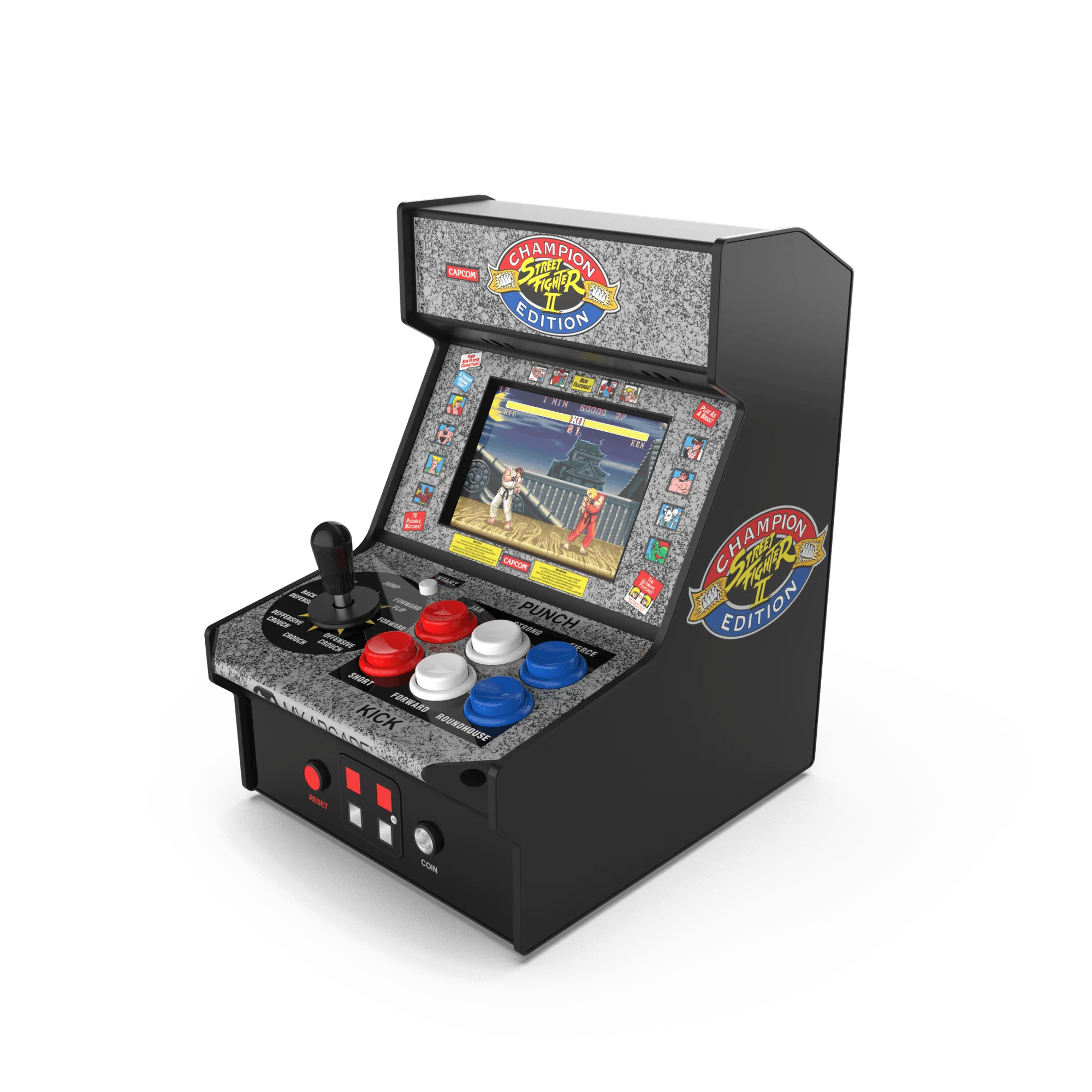
- Space Invaders Joystick Player: A joystick-style portable system built around the classic SPACE INVADERS arcade game, listed at USD 30.00 against a catalog comparison price of USD 59.99. A middle option between a tiny handheld and a full console, with arcade-style controls rather than a flat button layout.
Which one fits you
Buy a Micro Player if you
- want to play a specific arcade classic tonight without setup or a TV
- have limited shelf space, a small apartment, or a commute
- want a low-cost gift or a second gaming spot outside the living room
Buy a video game console instead if you
- want a library you can keep adding to over years
- mostly play with other people in the same room
- care about large-screen visuals more than portability
There is no single winner here, only a better fit. If you want the fastest, cheapest route to a specific arcade game, a Micro Player like the PAC-MAN Micro Player Pro or All-Star Stadium Micro Player does the job immediately. If you want a platform you build on, save for the console and accept the extra cost and setup.