Quick answer
For fine hair, choose micro claw clips when you want to pin small sections like bangs or face-framing pieces without visible bulk. Choose mini claw clips when you need to secure a half-up style or gather more hair with a gentler, all-day hold. If you are unsure, start with a mini clip for half-ups and add micro clips for detail work.
What actually separates micro from mini clips
The difference is not just a few millimeters. Micro clips are designed to grip a small, thin section of hair, often a single bang or a few strands. Mini clips are built to hold a larger section, such as the top half of your hair, and typically have a wider jaw and a slightly longer body. Both rely on spring tension rather than jaw size alone, so a well-made micro clip can hold fine hair securely without pulling.
For fine or thin hair, the risk with any claw clip is sliding or leaving dents. Micro clips reduce bulk because they sit close to the scalp and cover less surface area. Mini clips distribute pressure across a wider section, which can feel more comfortable for half-up styles but may show more if your hair is very sparse.
How to test whether a clip is the right size for your hair
You can size a claw clip without guessing. Gather the section of hair you want to hold, twist or fold it loosely, and measure the width of that bundle between your fingers. A clip should open wide enough to accept the bundle without forcing, and its teeth should reach through the hair to the scalp without pinching. If the clip closes with a gap or slides down after a few minutes, it is too large for that section. If it feels tight or leaves a deep crease, it is too small.
For bangs, a micro clip should hold the section with one click and stay put when you shake your head gently. For a half-up style, a mini clip should grip the gathered hair without needing a second clip. Always test on dry hair first, because wet hair compresses and can make a clip feel looser once it dries.
Trade-offs: hold, comfort, and visibility
Micro clips win on discretion. They are nearly invisible in fine hair, which makes them ideal for workplace styles or when you want a clean look. The trade-off is that they hold less hair, so you may need several to secure a full half-up. Mini clips hold more hair in one place and are faster to use, but they can look bulky if your hair is very thin, and the extra weight may cause slipping if the spring is not strong enough.
Neither size is inherently better. The right choice depends on how much hair you are securing and how long you need the style to last. For all-day wear, prioritize a clip with a durable spring and a gentle inner grip. For quick styling, a mini clip saves time but check that it does not slide after an hour.
Material and design details that affect sizing
Clips made from recycled plastic can be just as strong as virgin plastic, but the molding quality matters more than the material source. Look for a high-tension spring and smooth teeth that will not snag fine strands. A break-resistant design is especially useful if you clip and unclip frequently, because thin hair can catch in rough edges.
Some clips are designed specifically for fine or thinner hair, with a smaller diameter or a narrower jaw. These are not just smaller versions of standard clips; they are engineered to grip without pulling. If a product does not specify a hair type, treat it as a general-purpose clip and test it carefully on a small section first.
Decision rules for buying micro or mini claw clips
- If you are styling bangs or face-framing pieces: Choose micro claw clips. They hold small sections close to the scalp and stay hidden in fine hair. Check that the clip grips with one click and does not slide when you turn your head.
- If you are creating a half-up style: Choose mini claw clips. They gather more hair in one clip and distribute pressure for a comfortable hold. Test that the clip holds the entire section without needing a second clip or causing a headache.
- If your hair is very fine or sparse: Prioritize clips labeled for fine or thinner hair, which often have a smaller jaw and gentler tension. Avoid standard-size clips unless you are securing a very small section; they may slip or look bulky.
- If you need all-day hold: Look for a high-tension spring and a no-slide design, regardless of size. Micro clips may need to be repositioned if you have a lot of hair. Carry an extra clip in your bag for quick adjustments, especially if you are active.
Products that match these sizing rules
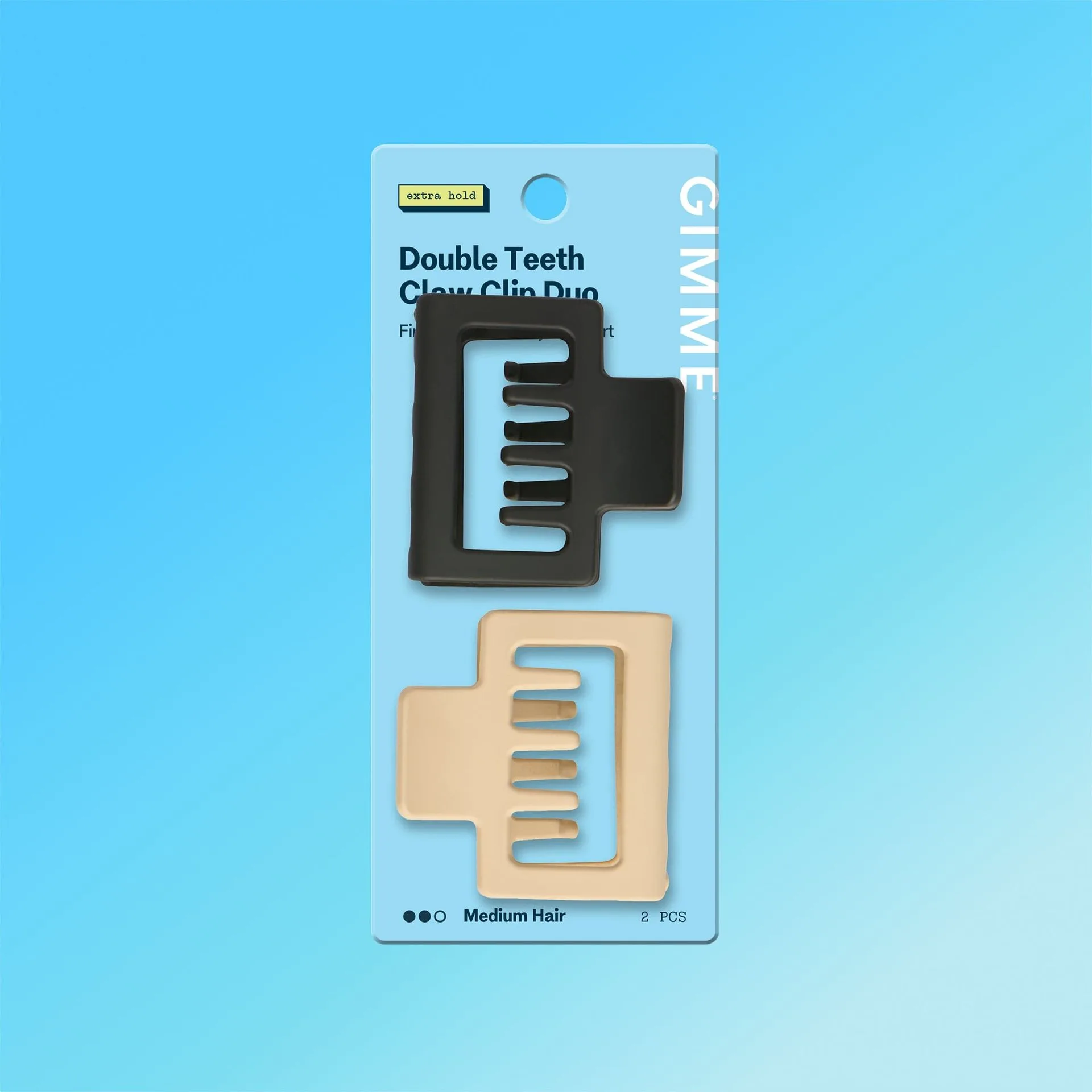
- Locked In Micro Claw Clips For Fine or Thinner Hair: Gimme Beauty Locked In Micro Claw Clips are designed for thin hair, strands, and bang styling, with a durable, high-tension spring and a gentle hold. These are the right pick when you need to pin small sections like bangs or face-framing pieces without bulk or pulling.
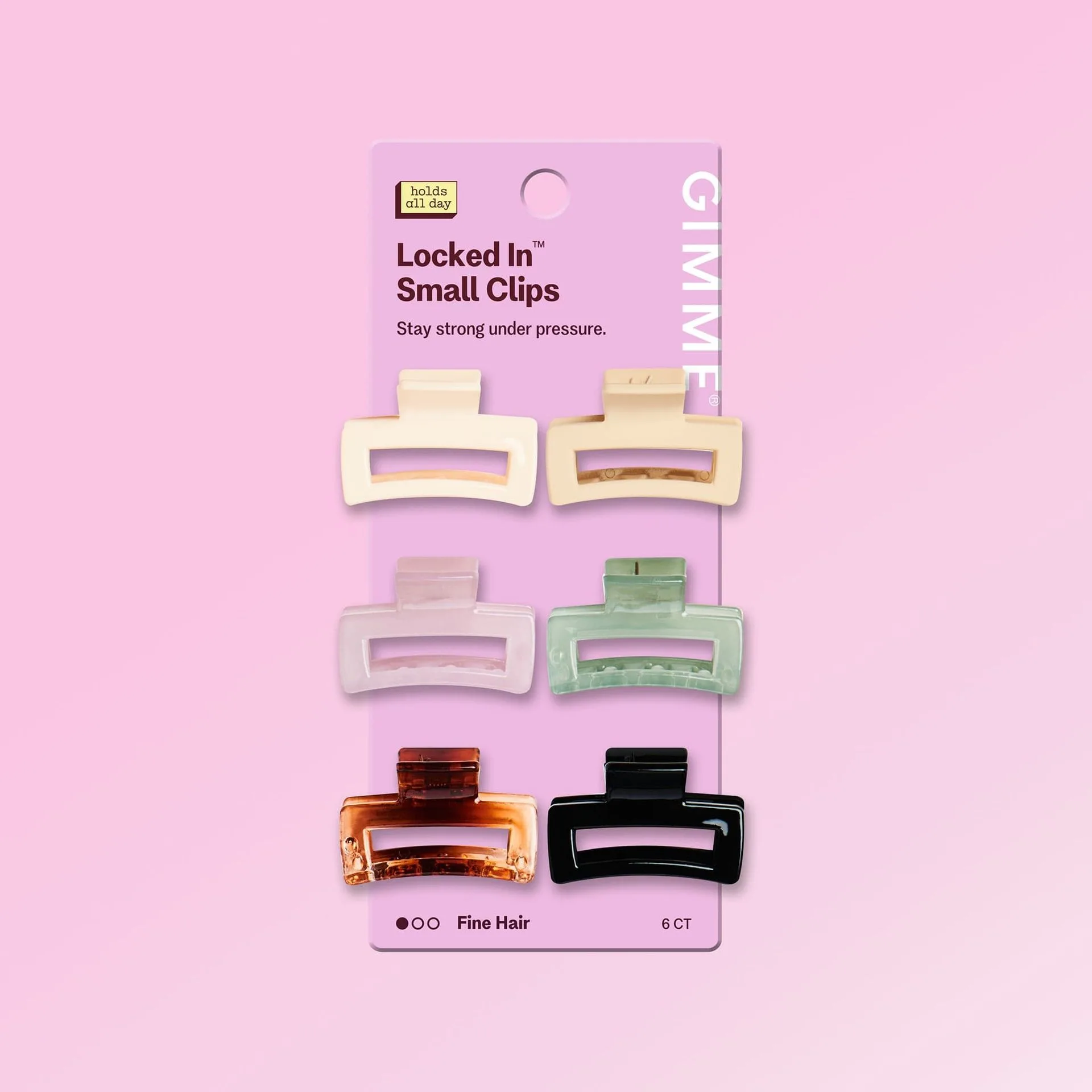
- Locked In Small Claw Clips For Fine or Thinner Hair: Gimme Beauty Locked In Small Claw Clips are made for fine hair and half-up styles, with a firm, no-slide hold and an assortment of colors. Choose these when you want to gather more hair for a half-up look and prefer a clip that stays put all day.
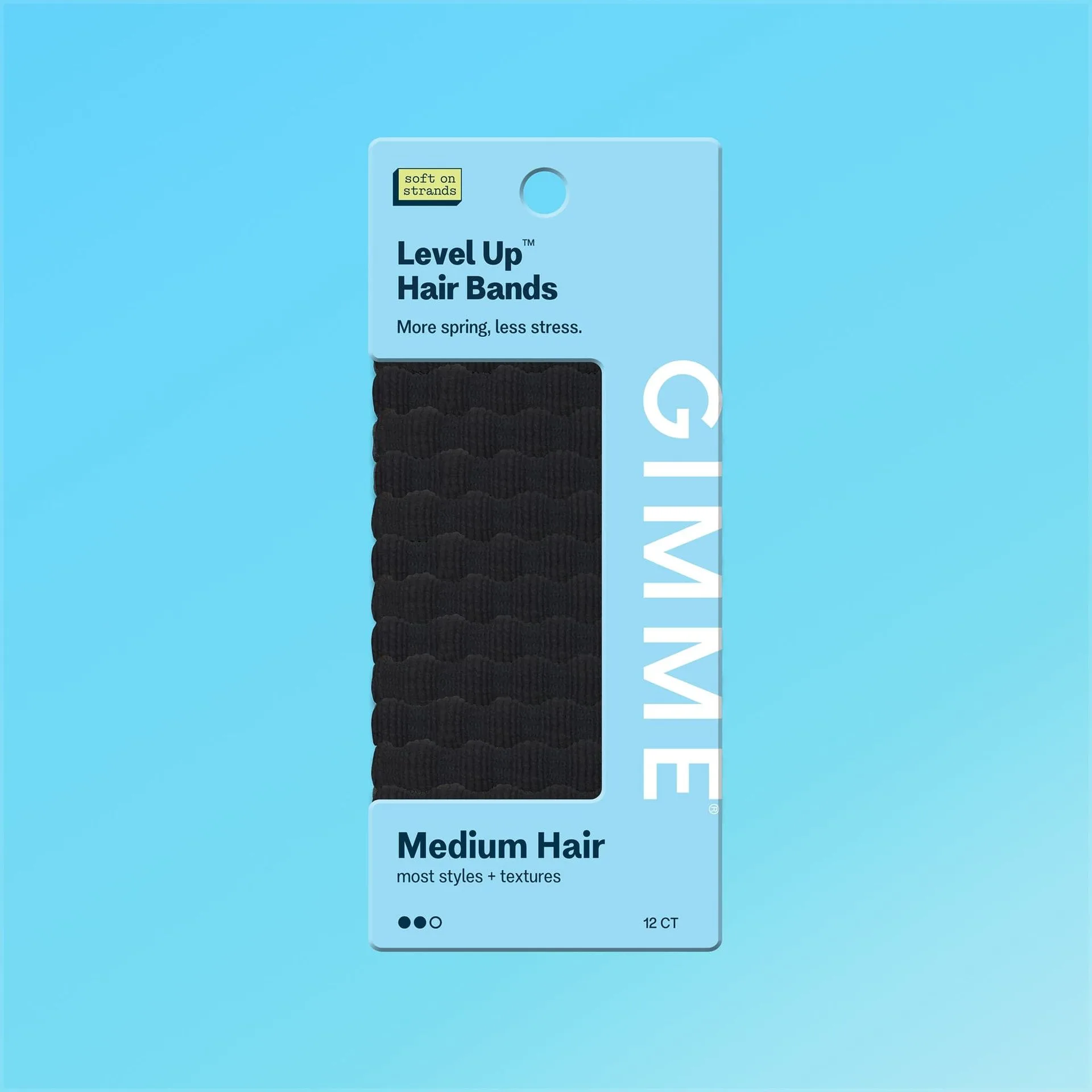
- Bounce Back Small Hair Ties For Fine or Thinner Hair: Gimme Beauty Bounce Back Small Hair Ties are designed for fine or thinner hair, with a 20% smaller diameter than fine hair bands and a stretch-to-fit design. If you use clips for styling but still need to secure ponytail or braid ends, these ties match the fine-hair sizing logic and prevent slipping.
Who should choose which size
Best for
- Fine or thin hair that needs gentle, no-pull hold
- Styling bangs, face-framing pieces, or small sections with micro clips
- Half-up styles and quick updos with mini clips
- Anyone who wants a discreet, lightweight clip for everyday wear
Not for
- Thick or heavy hair that needs a larger jaw and stronger spring
- Securing a full ponytail or a large amount of hair with one clip
- Those who prefer a statement accessory with visible size