Two sanding tools, two different jobs
The MicroLux 3D Contour Sander and the Dowl-It Sanding Block both remove material, but they solve different problems. The MicroLux is a powered contour sanding tool for curved surfaces, while the Dowl-It is a hand block for flat and gently shaped work. Choosing between them starts with the shape you need to sand, not the price tag.
This comparison sticks to what the catalog confirms. Where a detail is not listed, treat it as a question to check before you buy rather than a reason to assume the tool cannot do the job.
Powered contour sanding vs hand-block control
- MicroLux 3D Contour Sander: A powered tool with contour sanding wheels that spin from 100 to 1500 rpm. Disks are 1-9/16 inches in diameter and sand a 3-3/8 inch path. It requires a separately sold MicroLux transformer for operation.
- Dowl-It Sanding Block: A hand-held 2-inch-wide block (2" W x 8" L x 1-3/4" thick) with a sure-lock clamp that keeps sandpaper taut. The clamp sits at the back so you can use both sides before changing paper. A rubber pad on the working surface helps prevent gouging.
Where the 3D Contour Sander earns its place
The 3D Contour Sander is built for sanding curved surfaces. Its small 1-9/16-inch disks and 3-3/8-inch sanding path let you work into contours that a flat block cannot follow. The 100 to 1500 rpm range gives you speed control, but only if you pair it with the correct transformer.
One practical catch: the sander does not run on its own. You must supply either the variable speed MicroLux High-Power Digital Transformer #91133 or the Variable Medium Duty Transformer 91219, sold separately. Factor that into the total cost before you decide. Also note the catalog lists pre-orders shipping September 2026, so availability may lag behind the order date.
Key specs for the contour sander
-
MicroLux® 3D Contour Sander: Contour sanding wheels spin from 100 to 1500 rpm. Speed control helps match the tool to the contour and material, but the actual working speed depends on the transformer you use.
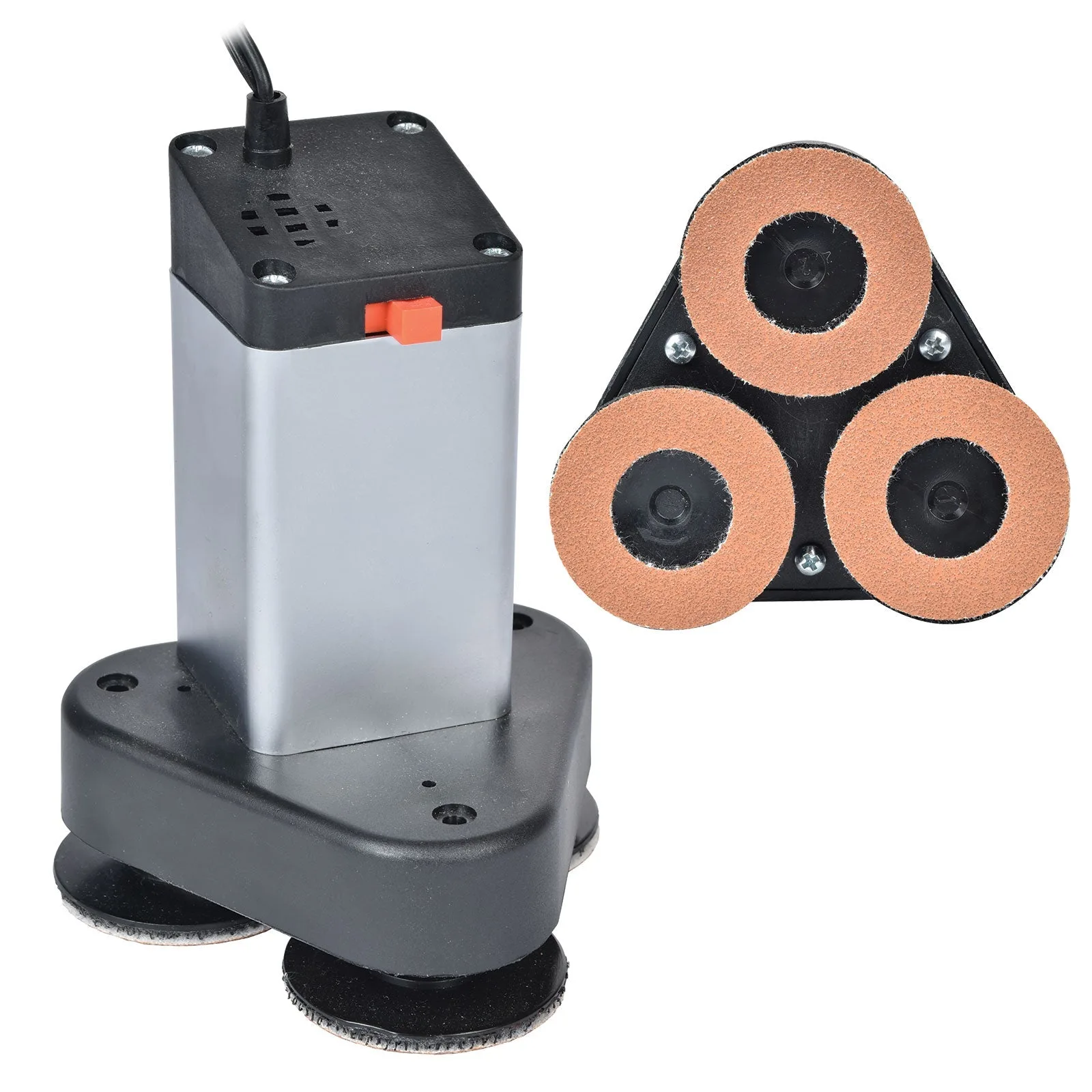
MicroLux® 3D Contour Sander
-
MicroLux® 3D Contour Sander: Disks are 1-9/16 inches in diameter and sand a 3-3/8 inch path. That small footprint is what lets the tool follow curves rather than flatten them.
-
MicroLux® 3D Contour Sander: Requires the variable speed MicroLux High-Power Digital Transformer #91133 OR the Variable Medium Duty Transformer 91219 (sold separately) for operation. The sander is not a standalone purchase; budget for a compatible transformer or confirm you already own one.
Where the Dowl-It block wins
The Dowl-It Sanding Block is a hand tool for flat and gently curved surfaces. Its 2-inch width and 8-inch length give you a stable reference face, and the rubber pad helps avoid gouging. The sure-lock clamp holds paper taut, and because the clamp is at the back, you can flip the block and use both sides before changing paper.
It is made in the USA from sanded hardwood, and the milled no-slip finger grooves are designed for comfort during longer sanding sessions. For model sanding tools, this is the low-cost, no-power-required option. The trade-off is that a flat block cannot follow tight contours the way a contour sanding tool can.
Key specs for the Dowl-It block
-
Dowl-It® Sanding Block, 2-Inch: Dimensions: 2" W x 8" L x 1-3/4" thick. The size suits flat panels and broad curves; it is not intended for tight internal contours.
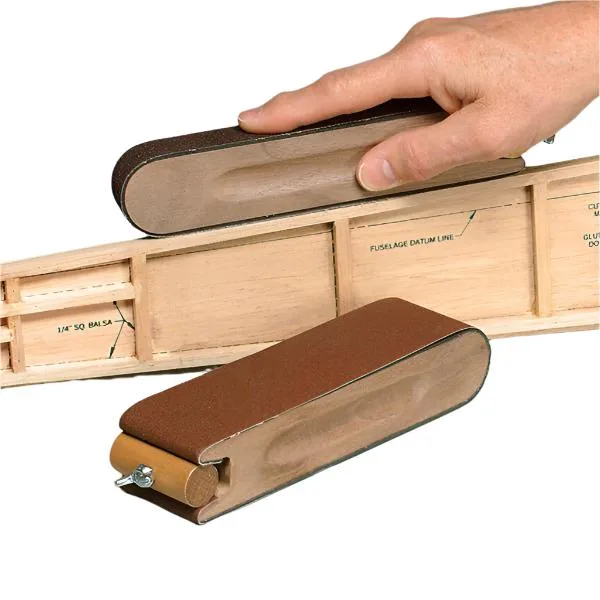
Dowl-It® Sanding Block, 2-Inch
-
Dowl-It® Sanding Block, 2-Inch: Sure-lock clamp keeps sandpaper taut and won't slip out; clamp is in the back so you can use both sides before changing paper. Less paper waste and fewer interruptions compared with blocks that rely on wedges.
-
Dowl-It® Sanding Block, 2-Inch: Rubber pad on the working surface prevents gouging. A useful safeguard on softer materials or finish coats where a hard block might dig in.
Decision rules for model sanding tools
- Choose the 3D Contour Sander if:: Your work involves sanding curved surfaces, you already own or will buy a compatible MicroLux transformer, and you want powered speed control from 100 to 1500 rpm.
- Choose the Dowl-It Sanding Block if:: You need a dependable hand block for flat or gently shaped parts, you prefer no power setup, and you want a low-cost tool with a proven clamp design.
- Consider both if:: You sand a mix of flat panels and contoured details. The block handles the flats; the contour sander handles the curves. Just remember the sander's transformer requirement.
What the catalog does not tell you
Neither product record lists grit recommendations, paper attachment method for the contour sander, or specific materials each tool is rated for. Those details are not confirmed by the supplied information, so check the product pages or manufacturer documentation before committing to a workflow. The absence of a detail here is not evidence that the tool lacks a feature; it simply means the catalog excerpt does not cover it.
For a fair sanding block comparison, also weigh the hidden costs. The MicroLux sander needs a transformer, and its pre-order status may affect timing. The Dowl-It block needs sandpaper, which you likely already have. Neither tool includes abrasives in the listed contents.