Why Organic 2860 Works for Natural Palettes
Milan Card Organic 2860 is a single-color thread card from Planet Earth's Milan fiber line. With its 50% silk and 50% wool blend, it offers a soft sheen and a gentle texture that suits natural, tonal designs. The color itself is a muted, organic shade that can serve as a foundation for palettes inspired by earth, stone, and foliage.
Because it is non-strandable and comes in a 10-yard card, Organic 2860 is easy to use as a single thread for stitching areas where you want a consistent, smooth appearance. It is suited for 13 or 18 mesh canvases, making it versatile for many hand-painted designs.
Organic 2860 at a Glance
-
Milan Card - Organic 2860: Planet Earth Milan Fiber: 50% silk / 50% wool The silk-wool blend gives a subtle luster and soft hand, ideal for natural, understated palettes.
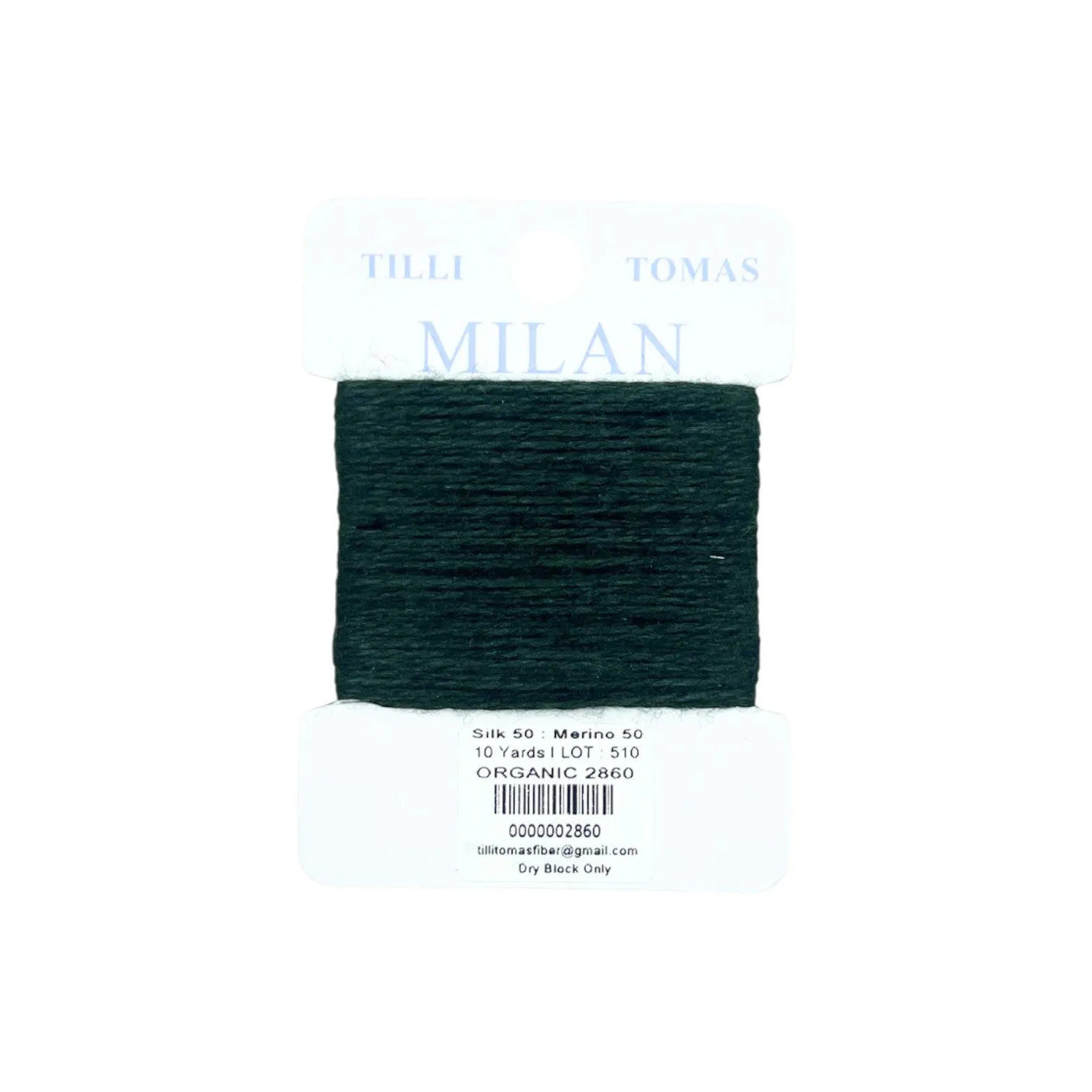
Milan Card - Organic 2860
-
Milan Card - Organic 2860: Non-strandable, 10 yards You use it as-is, simplifying thread management and ensuring consistent coverage.
-
Milan Card - Organic 2860: Suited for 13 or 18 mesh This thread works on both common needlepoint mesh sizes, so you can use it across different canvases.
Building a Natural Tonal Palette Around Organic 2860
Start by identifying the dominant hue of Organic 2860. It is a muted, earthy tone that leans neutral. To create a natural thread palette, pair it with other colors that share a similar value and saturation. Think of shades you see in nature: moss green, bark brown, stone gray, and muted gold.
A tonal palette relies on subtle shifts in color rather than high contrast. Choose threads that are one or two steps lighter or darker than Organic 2860, and avoid overly bright or saturated colors that would break the harmony. This approach works well for canvases depicting landscapes, animals, or abstract organic forms.
Thread Pairing Ideas for Earth Tone Needlepoint
- Muted greens: Sage, olive, or moss green threads complement the earthy base of Organic 2860 without competing.
- Warm browns: Soft browns and tans create a grounded, natural feel when used alongside Organic 2860.
- Stone grays: Cool or warm grays add depth and mimic rocky or neutral backgrounds.
- Soft golds: A muted gold or ochre can introduce warmth while staying within a natural palette.
A Practical Process for Pairing Organic 2860
- Step 1: Assess your canvas: Look at the painted colors in your canvas. Identify areas where Organic 2860 could serve as a base or accent. Note the mesh size to ensure compatibility (13 or 18 mesh).
- Step 2: Pull candidate threads: Gather threads from your stash that share Organic 2860's muted, earthy quality. Include a range of values from light to dark.
- Step 3: Test in natural light: Lay the threads next to each other and next to the canvas. Natural light reveals undertones and helps you see if the palette feels cohesive.
- Step 4: Limit your palette: A natural tonal palette often works best with three to five colors. Too many shades can muddy the effect. Choose threads that create a smooth gradient.
- Step 5: Stitch a sample: Before committing to a large area, stitch a small sample on a scrap of canvas to see how the colors interact when stitched. This also helps you check coverage and texture.
Checkpoints Before You Commit
Before you begin stitching a full project, verify that your chosen threads are compatible with your canvas mesh. Organic 2860 is suited for 13 or 18 mesh, but other threads in your palette may have different requirements. Also, consider the dye lot: the product information notes that colors may differ based on computer graphics and dye lots, so it's wise to purchase enough thread for your project in one order.
Finally, think about the finish. The silk-wool blend of Organic 2860 has a slight sheen that may contrast with matte threads. If you want a uniform look, choose companion threads with similar fiber content or test how they blend.