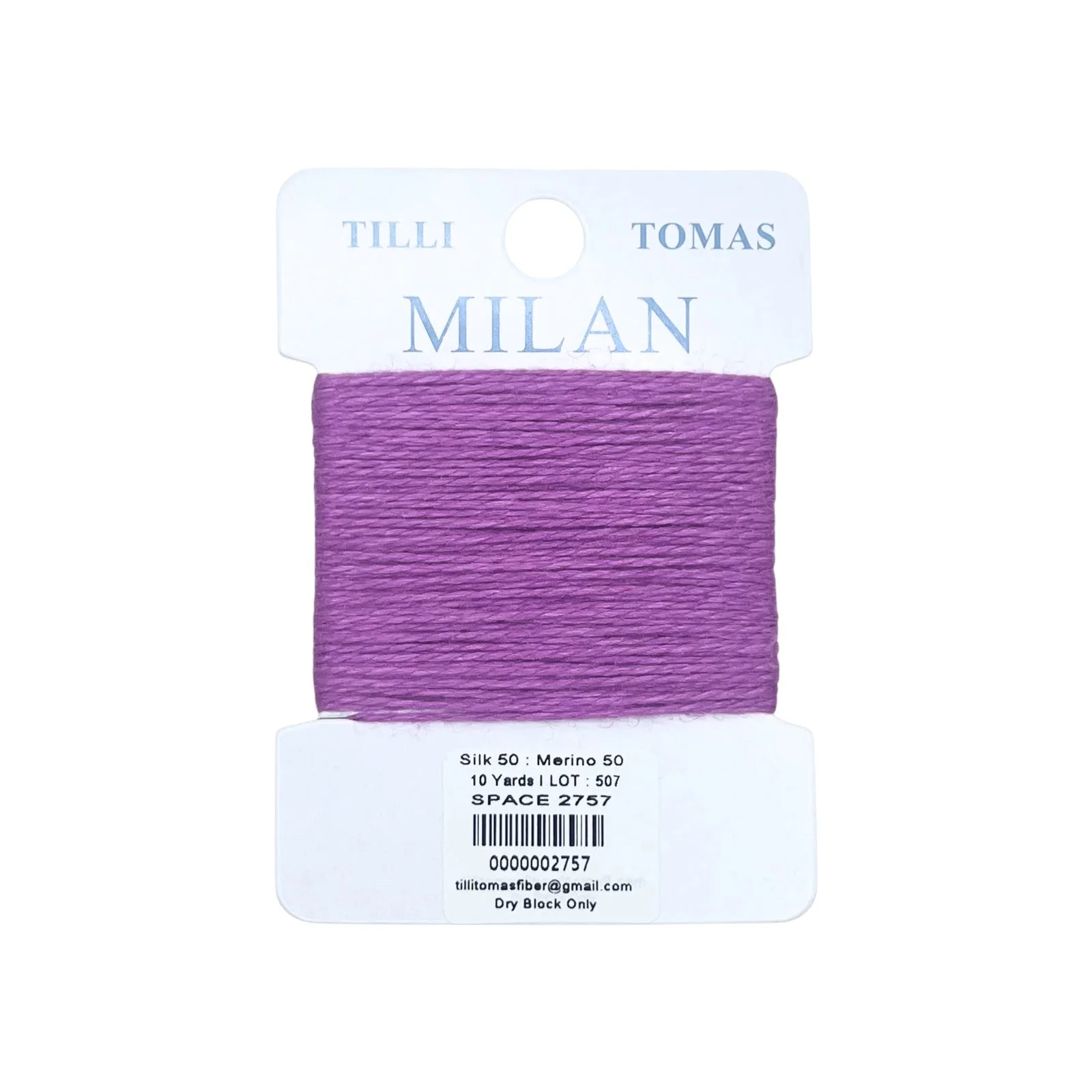
Quick answer
Pair Milan Card threads with ocean canvases by matching cool-toned marine subjects to complementary warm accents, using the non-strandable 50/50 silk-wool blend for consistent coverage on 13 or 18 mesh.
Why Milan Card threads work for ocean themes
The Planet Earth Milan Fiber is a 50% silk and 50% wool blend that gives a soft sheen and durable matte finish—ideal for capturing the varied textures of ocean life. Because the thread is non-strandable, you work with the full 10-yard card, which ensures even color distribution across large water areas.
The main trade-off: the color on screen may differ from the actual dye lot, so always compare a small swatch against your canvas under natural light before committing to a full section.
How to pair Milan Card threads with ocean canvases
- 1. Identify the dominant ocean element: Look at your canvas and note the main subject—lobster, shark, reef, or open water. For a lobster, choose a warm accent like Milan Card - Lobster 2565 to make it stand out. For a shark, Milan Card - Shark 2512 blends with the water while defining the shape. Common mistake: picking a thread that matches the background too closely, losing the subject. Use a contrasting tone for the focal point.
- 2. Select a base water color: For large ocean areas, pick a mid-tone blue or teal from the Milan Card range. Since the thread is non-strandable, you cannot mix strands, so the card color is your only shade. Test a 2-inch stitch sample on the canvas edge. Checkpoint: the dyed thread may appear different on 13 vs 18 mesh due to fabric density. Always test on your actual canvas.
- 3. Add depth with dark accents: Use Milan Card - Space 2757 for shadows, reef crevices, or night ocean backgrounds. Its deep tone creates visual depth without needing multiple strands. Avoid using Space 2757 for large flat areas—it can make the canvas feel too heavy. Reserve it for small, high-contrast sections.
- 4. Balance with neutral or warm highlights: If your canvas has coral, shells, or sunset reflections, bring in a warm Milan Card shade like Lobster 2565. For sandy bottoms or light reflections, choose a pale neutral from the same line. Common mistake: using too many warm tones in a cool ocean scene. Limit warm accents to 10-20% of the total thread area.
- 5. Stitch and evaluate under natural light: Complete a small section (about 2x2 inches) and hold it in daylight. The silk component reflects light differently indoors, so natural light gives the truest color relationship. If the contrast feels off, rip out the test section and swap the thread. It is easier to adjust early than to redo a large area.
Thread options for ocean canvases
-
Milan Card - Lobster 2565: Milan Card - Lobster 2565 is a 50% silk/50% wool non-strandable thread, 10 yards, suited for 13 or 18 mesh. Its warm reddish tone adds a pop of contrast against blue water, perfect for lobster or coral details.
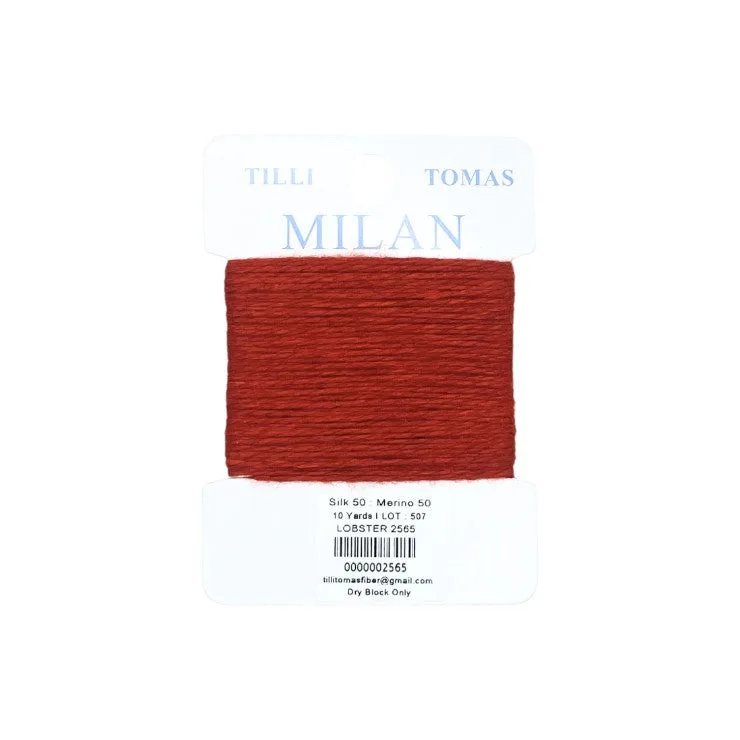
Milan Card - Lobster 2565
-
Milan Card - Shark 2512: Milan Card - Shark 2512 is a 50% silk/50% wool non-strandable thread, 10 yards, suited for 13 or 18 mesh. The gray-blue hue blends naturally with ocean shadows and shark silhouettes without overpowering the canvas.
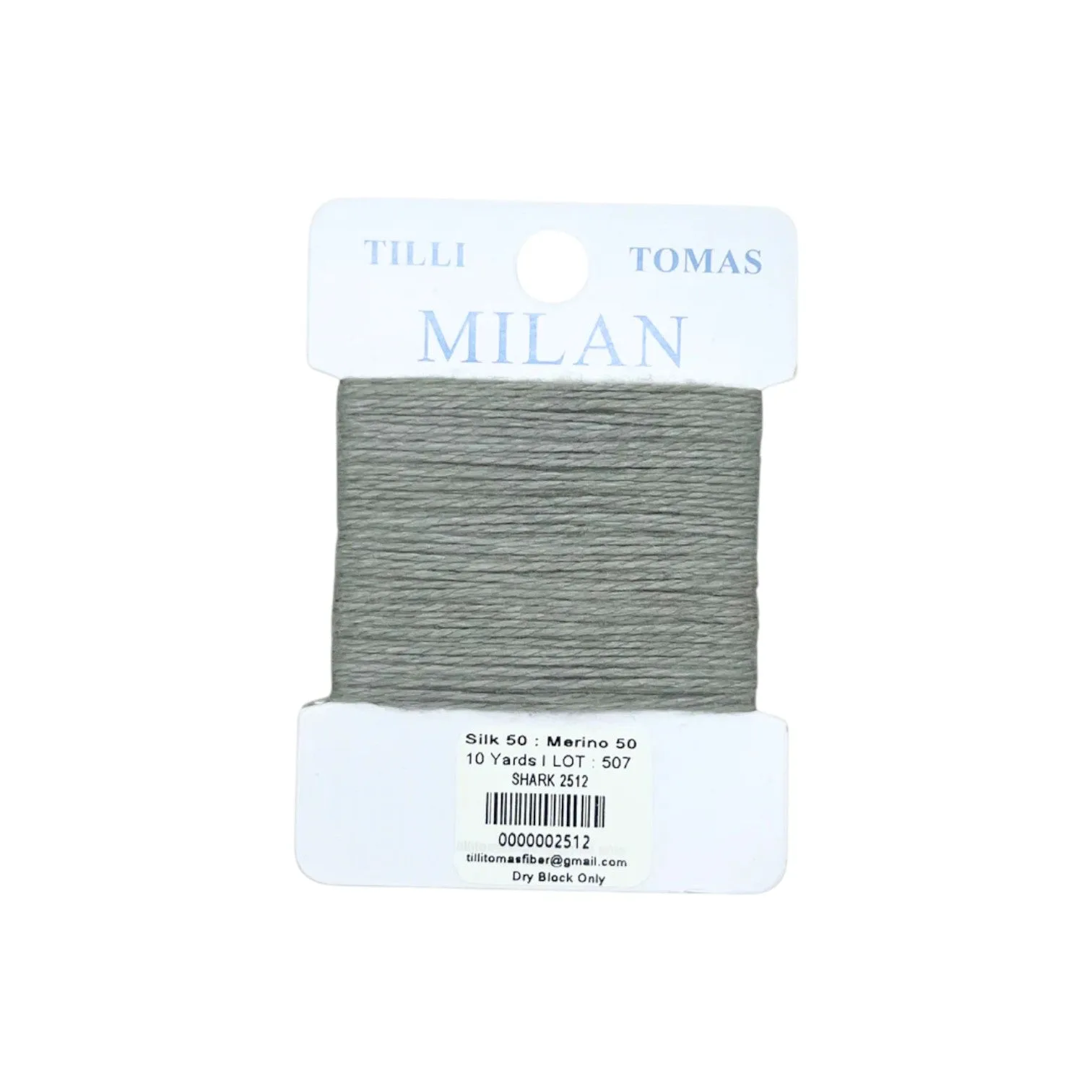
Milan Card - Shark 2512
-
Milan Card - Space 2757: Milan Card - Space 2757 is a 50% silk/50% wool non-strandable thread, 10 yards, suited for 13 or 18 mesh. Its deep, moody tone works for dark reef crevices or night-time ocean scenes, providing strong contrast.