Two styles, one family
Oolong tea covers a remarkably wide spectrum, from light and floral to dark and roasted. The main difference between milky oolong and traditional oolong comes down to flavor profile and body. Milky oolong is known for its creamy, smooth character, while traditional oolongs can range from buttery to toasty. This guide compares what you can expect from each, so you can pick the style that fits your taste.
Milky oolong vs. traditional oolong at a glance
- Flavor profile: Milky oolong has a naturally sweet, creamy taste reminiscent of steamed milk and fresh cream. Traditional oolongs vary widely: some are floral and light, others are woody or nutty, depending on oxidation and roast level.
- Body and mouthfeel: Milky oolong is light-bodied and silky, with a smooth, mellow texture. Traditional oolongs can be light or full-bodied; roasted styles tend to have a heavier, more astringent mouthfeel.
- Aroma: The aroma of milky oolong is warm and inviting, often compared to gently steamed milk. Traditional oolongs may smell like honey, orchids, or toasted nuts depending on the specific variety.
- Brewing convenience: Milky oolong is available in convenient sachets that brew one 12 oz. cup each. Traditional oolongs are often sold as loose leaf, requiring a strainer or infuser.
Flavor: what you actually taste
If you enjoy a cup that tastes naturally sweet and creamy without any added milk or sugar, milky oolong is a strong candidate. The catalog describes Milky Oolong as having a natural sweetness of warmed milk and fresh cream, with a smooth, mellow experience from first sip to last. Traditional oolongs, by contrast, offer a broader range: a lightly oxidized oolong might taste floral and grassy, while a darker roast leans toward caramel and spice. Your choice depends on whether you want a consistent creamy profile or the variety of traditional oolong.
What the catalog confirms about Milky Oolong
-
Milky Oolong, Bag of 50 Sachets: Each bag of Milky Oolong contains 50 tea sachets, and each sachet brews one 12 oz. cup of tea. This tells you exactly how many servings you get and how to prepare a single cup without measuring loose leaf.
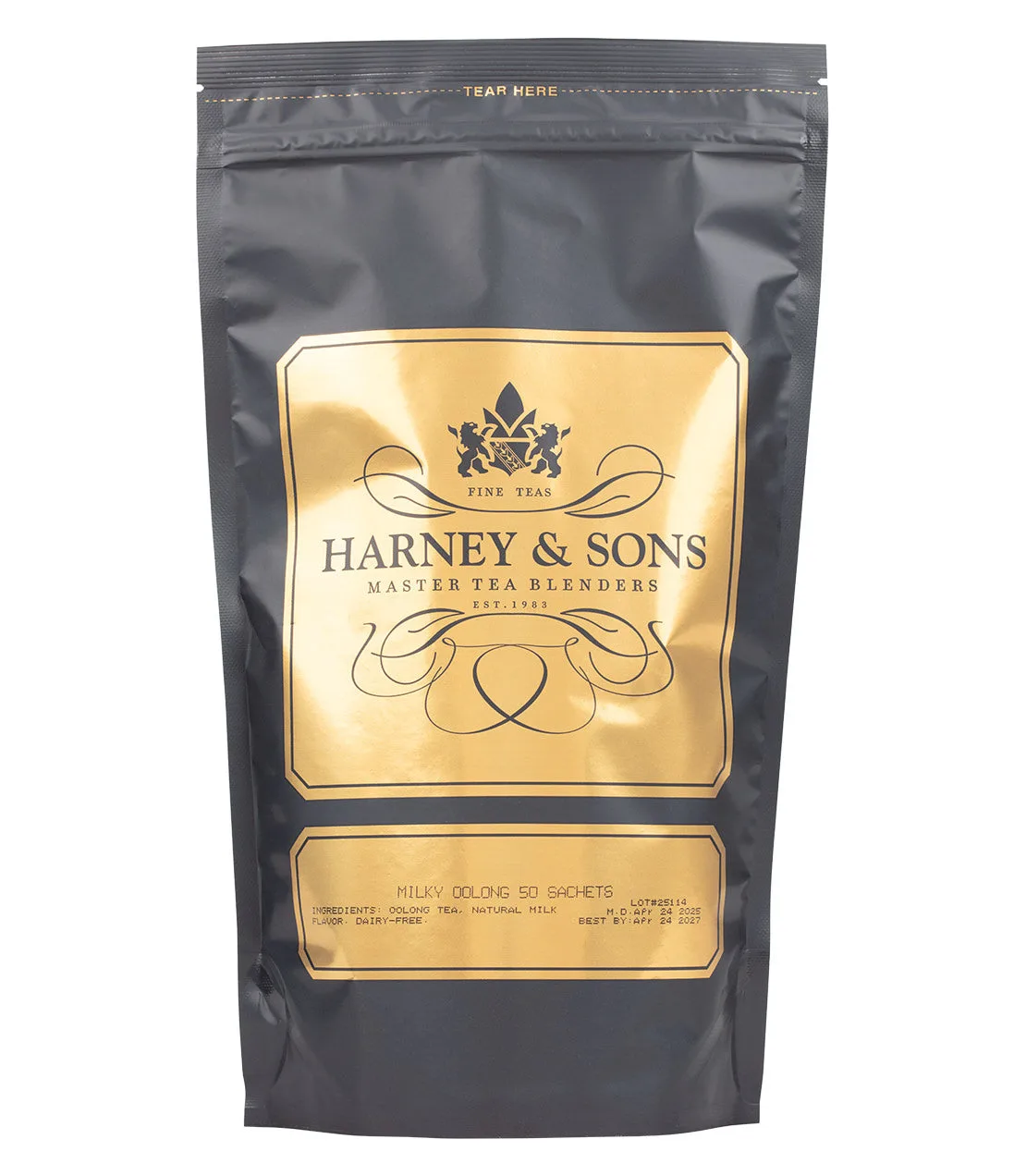
Milky Oolong, Bag of 50 Sachets
-
Milky Oolong, Bag of 50 Sachets: The tea is light-bodied with deep green rolled leaves that unfurl to reveal a soft, pale green liquor. The appearance and body are consistent with a lightly oxidized oolong, which contributes to its creamy, non-astringent character.
-
Milky Oolong, Bag of 50 Sachets: The bag is resealable to keep your tea fresh. Resealable packaging helps maintain freshness between uses, which is useful if you don't go through 50 sachets quickly.
How to choose between the two
Start by thinking about your daily tea routine. If you want a reliably smooth, creamy cup that requires no measuring or straining, Milky Oolong sachets are a convenient choice. If you prefer exploring different flavor profiles—floral, nutty, roasted—and are willing to use loose leaf, traditional oolong gives you more variety. Both styles come from the same broad tea family, so there is no wrong answer, only a question of what you are in the mood for today.
Limits to know before you buy
The supplied catalog does not specify the exact oxidation level or roast of this Milky Oolong, nor does it confirm whether the creaminess is natural or added. The description emphasizes natural sweetness, but the degree of processing is not detailed. For traditional oolongs, the catalog may vary by product. If precise processing details matter to you, check the individual product listings or contact the seller.