Start with one page, not the whole list
The A Million Things to Do Before You Die Prompted Journal is built as an entertaining to-do list of fun and crazy things to accomplish before you turn into some boring old person. With 200 pages of random prompts, the worst way to begin is to read every page and feel behind. Instead, open to a single prompt that sounds doable this month, and treat that page as your next move.
This is a bucket list prompted journal, not a productivity system. The supplied description makes the tone clear: you will not find gutter-cleaning chores here. You will find experiences worth writing about, like watching the Northern Lights while eating a taco, and space to journal about your favorites. That mix of action and reflection is the point.
A simple way to work through the journal
Use this loop whenever you sit down with the book. It keeps the journal active instead of letting it become a shelf ornament.
- Pick one prompt you can act on soon: Flip through and choose a page whose activity fits your real life in the near future. The journal supplies the ideas; you supply the timing.
- Do the thing before you write about it: The supplied product description frames the book as a to-do list of things to accomplish. Let the experience happen first, then use the page to capture it.
- Write the story, not just a checkmark: The journal includes space to journal about your favorites. Note what happened, who was there, and what you would repeat. That record is what makes the book worth keeping.
- Move to the next prompt: The description says to write about the experience and move on to the next one. Keep the momentum by choosing your next page before you close the book.
What the journal actually gives you
-
A Million Things to Do Before You Die Prompted Journal: 200 unique pages filled with countless random things that everyone should do before they kick the bucket. Plenty of prompts means you can skip ones that do not fit and still have a full book to work through.
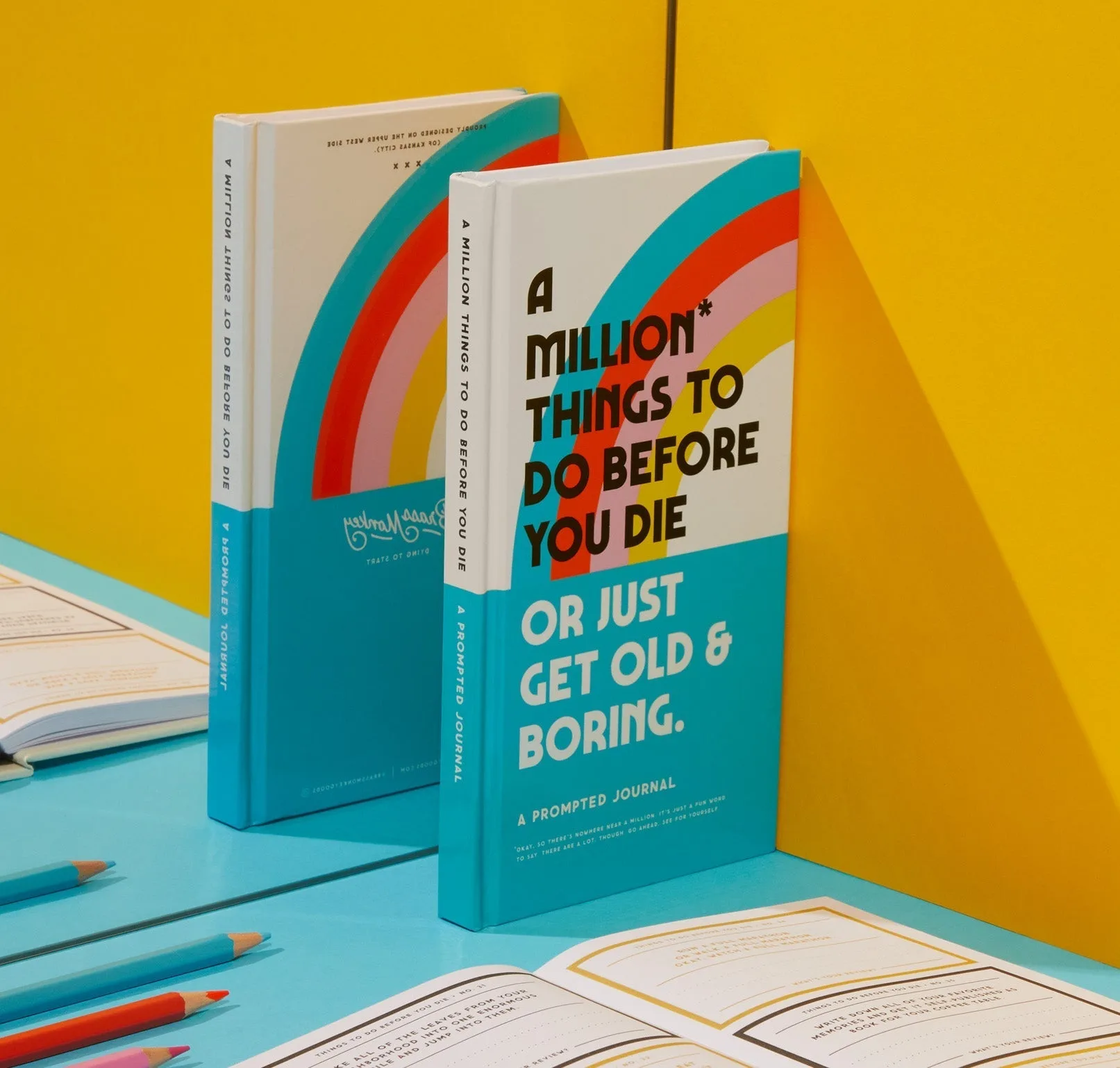
A Million Things to Do Before You Die Prompted Journal
-
A Million Things to Do Before You Die Prompted Journal: Includes space throughout to journal about some of your favorites. The book is designed for reflection, not just a checklist, so plan to write after each experience.
-
A Million Things to Do Before You Die Prompted Journal: Vintage-inspired spot-varnished hardcover with color pages throughout. A sturdy hardcover with color pages suits a journal you will handle often and keep as a record.
-
A Million Things to Do Before You Die Prompted Journal: Book measures 4.5" wide by 8.5" tall. A compact footprint makes it easy to tuck into a bag or keep on a nightstand so it stays part of your routine.
Make the prompts fit your life
Not every prompt will be practical right now, and that is fine. The journal is described as filled with fun and crazy things, so some pages will ask for more effort, travel, or nerve than others. Use the book as a menu: pick what you can do, note what you want to save for later, and do not treat an untouched page as a failure.
If you want a life list journal that feels personal, let your own favorites guide which pages you prioritize. The supplied description includes space to journal about your favorites, so after a few entries you will start to see patterns in what you enjoy. Use those patterns to choose the next prompt rather than working front to back out of obligation.
Ways to keep the journal moving
- Keep it visible: Leave the journal where you will see it, such as a coffee table or bedside stack, so it competes with your phone for attention.
- Pair it with a plan: When a prompt needs an outing or a specific season, put a date on your calendar. The journal supplies the idea; your calendar supplies the follow-through.
- Write soon after the experience: Details fade. Jot a few lines the same day, then expand later if you want. The color pages and hardcover are built to be written in and kept.
- Use it as a goal journal guide, not a scorecard: The book is about fun and adventure, not meeting a quota. A slow month with one great entry is still a win.
Who this prompted journal suits
This journal fits someone who likes the idea of a bucket list but wants a playful nudge rather than a rigid plan. It also works as a gift for a friend who enjoys humorous, vintage-inspired stationery and needs a reason to try new things. Because the supplied description leans on fun and crazy prompts, it is less suited to someone looking for a structured goal-setting workbook with deadlines and metrics.
At a catalog price of USD 10.50, it is an affordable way to start a life list journal without committing to a big system. The compact size and hardcover make it easy to carry, and the 200 pages give you plenty of room to skip around. If you want a straightforward answer to how to use a prompted journal like this one, the method is simple: choose a prompt, do it, write it down, and repeat.