The short answer: start with the Mini Cutter
If you are introducing a toddler to kitchen cutting for the first time, the Mini Cutter comes first. It is a wooden, Montessori-inspired knife described as super safe and not breaking the skin, which makes it the lower-risk starting point for learning the motion of chopping.
The Kids Cutting Board is the surface that makes that chopping possible. It is a child-sized board for cutting strawberries, bananas, cucumbers, and more. Think of the cutter as the tool and the board as the workspace: you need both, but the cutter is the piece that introduces the skill.
What each tool actually is
-
Mini Cutter: Wooden, Montessori-inspired knife described as super safe and not breaking the skin. This is the core reason it can come first: the design is intended for supervised toddler chopping without skin injury.
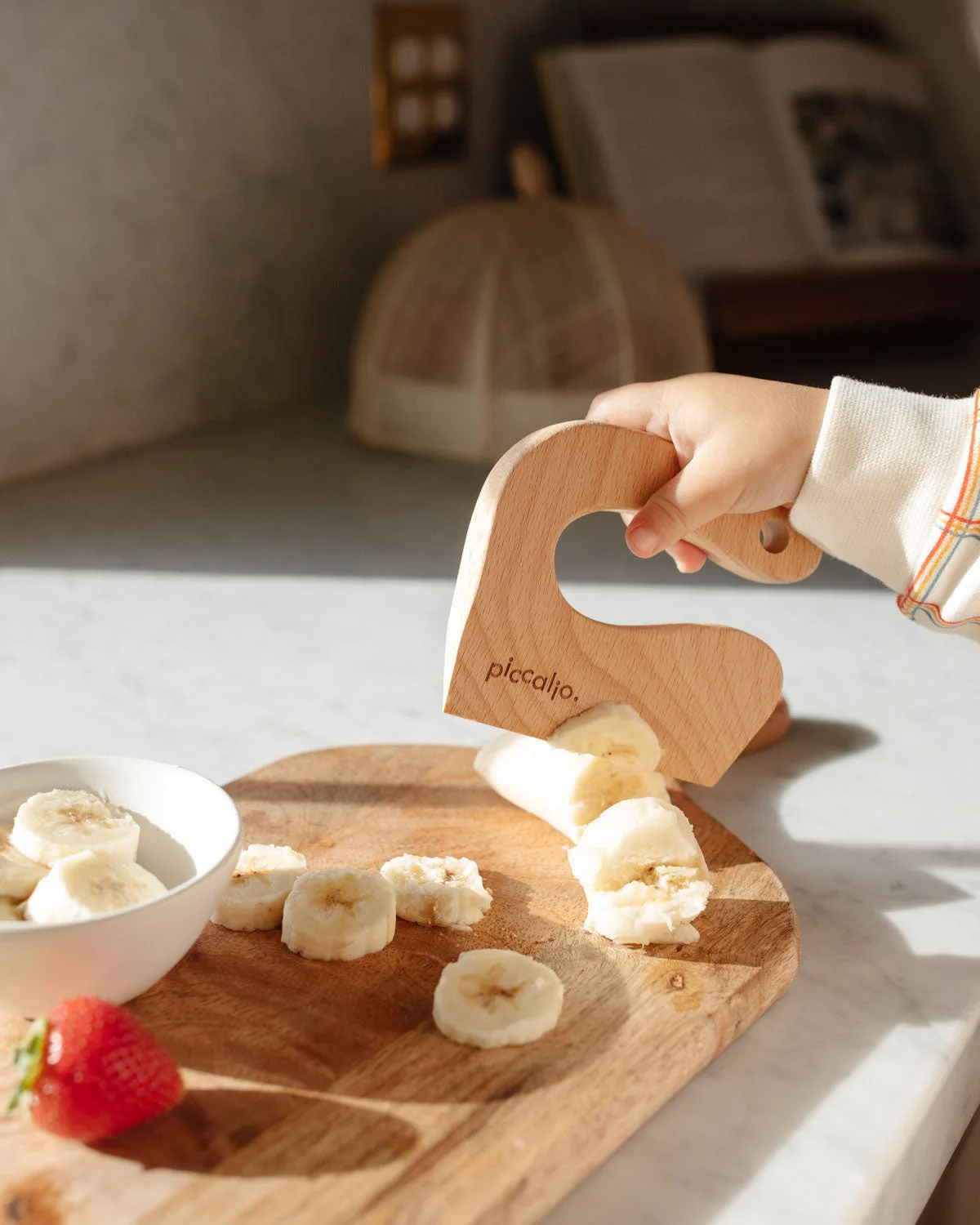
Mini Cutter
-
Cutting Board: Child-sized cutting board for chopping strawberries, bananas, cucumbers, and more. The board defines the cutting task and gives your child a dedicated surface, but it does not itself teach the chopping motion.
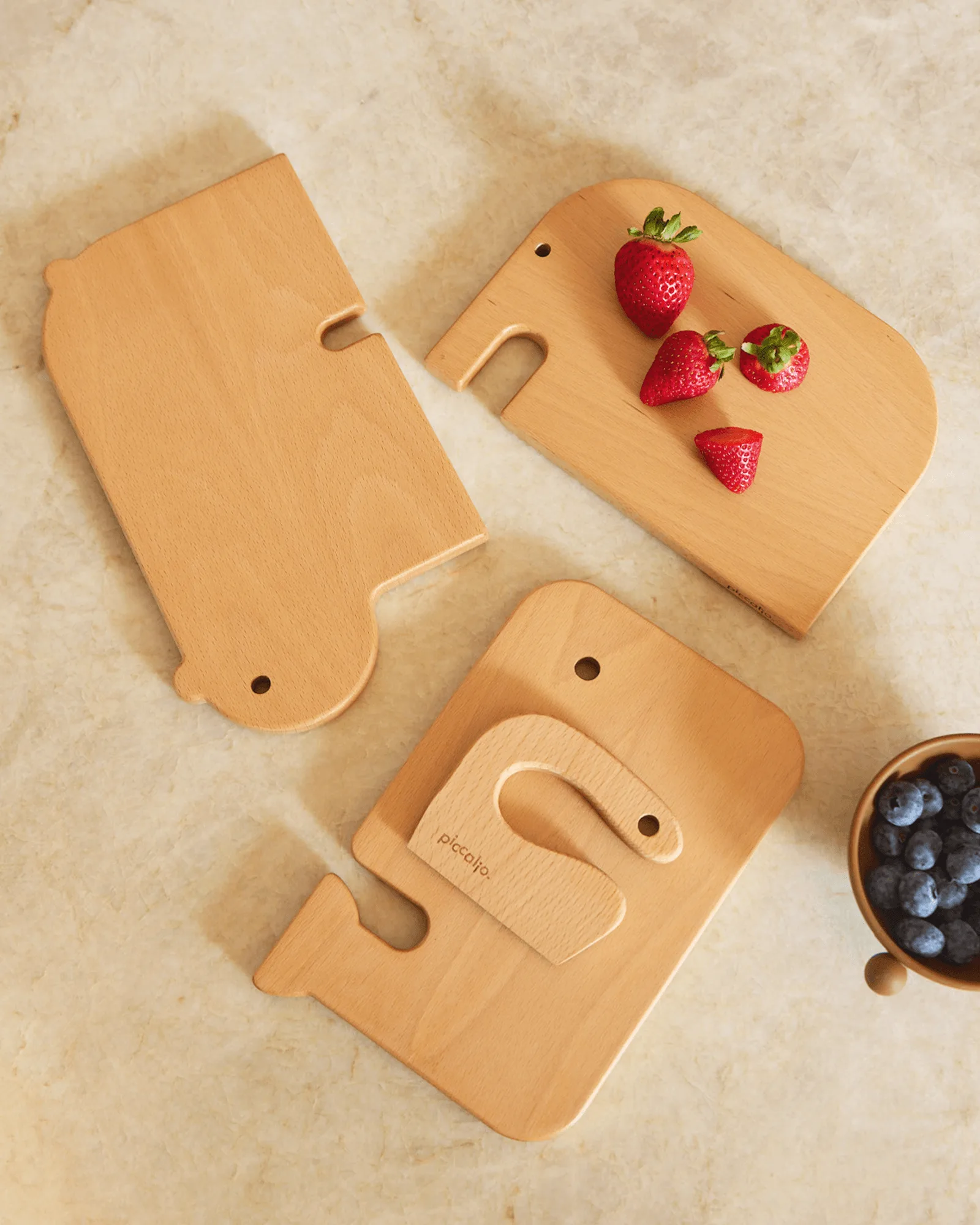
Cutting Board
Mini Cutter vs Kids Cutting Board at a glance
- Role in the kitchen: Mini Cutter: the cutting tool your child holds. Kids Cutting Board: the surface your child cuts on.
- Safety profile: Mini Cutter is described as super safe and not breaking the skin. The Kids Cutting Board is described as non-toxic and FDA compliant; no separate safety claim about cut resistance is supplied.
- Materials and origin: Mini Cutter: wooden, eco-friendly, non-toxic, FDA compliant. Kids Cutting Board: eco-friendly, non-toxic, FDA compliant, ethically and sustainably made in Europe.
- Variants: Mini Cutter comes in Beech. Kids Cutting Board comes in three shapes: Bear, Elephant, and Whale, all in Beech.
- Catalog price: Mini Cutter: USD 13.42 (comparison price USD 22.00). Kids Cutting Board: USD 22.10 (comparison price USD 34.00).
- Best first step: Mini Cutter, because it introduces the chopping action with a tool designed to be safe for toddlers.
A simple toddler knife skills progression
This sequence uses only the two tools and the foods named in the supplied product information. It assumes adult supervision throughout.
- 1. Introduce the Mini Cutter with soft foods: Start with bananas, strawberries, or cucumbers, the foods named for both products. Let your child hold the wooden cutter and practice chopping while you watch.
- 2. Add the Kids Cutting Board as the dedicated workspace: Set the board in front of your child so the cutting happens in one predictable place. The board is child-sized, which helps your toddler work comfortably.
- 3. Let your child choose a board shape: The board comes in Bear, Elephant, and Whale shapes. Letting your child pick one can make the routine feel like theirs, which supports the independence both products are designed to build.
- 4. Repeat with the same foods before expanding: The supplied information names bananas, strawberries, and cucumbers. Stick with those familiar foods while your child builds confidence, rather than adding new foods the catalog does not mention.
When to introduce a knife to toddlers
The supplied product information does not specify an age or readiness milestone for the Mini Cutter. What it does say is that the cutter is intended to support fine motor skill development and independence, and that it is described as not breaking the skin.
That makes the practical starting point a supervised chopping session with soft foods, not a particular birthday. If you are unsure whether your child is ready, the safer choice is to wait and practice with the board and pretend play first. The Mini Cutter is also described as great for heuristic play, pretend play, and open-ended play, so it can be introduced as a play tool before it becomes a real chopping tool.
What the supplied information does not settle
- Exact age or supervision requirements: No age range or supervision instruction is supplied for either product. Treat adult supervision as your own decision, not a stated manufacturer rule.
- Cleaning and care instructions: No care, washing, or drying instructions are supplied for the Mini Cutter or the Kids Cutting Board in this evidence. Do not assume dishwasher safety or a particular cleaning method.
- Board dimensions and cutter size: No measurements are supplied for either product, so fit with your child's hands or your counter cannot be confirmed from this information.
- Which foods are suitable beyond the examples: The catalog names bananas, strawberries, and cucumbers. It does not provide a full list of foods the cutter can handle.
The practical buying order
Buy the Mini Cutter first if your goal is to introduce the chopping motion. Add the Kids Cutting Board when you want a dedicated, child-sized surface and your child is ready to cut real foods in one place.
If you are buying both at once, the Mini Cutter is the tool that carries the safety claim, and the Kids Cutting Board is the workspace that makes the activity feel official. Neither product's supplied information promises a specific skill outcome, so treat them as tools for supervised practice rather than a guaranteed progression.