Start with the battery, not the meter
Dark, thin negatives or a meter needle or LED that behaves erratically often send people straight to a faulty light meter. On a Minolta X-370, the first thing to rule out is power. The camera depends on its battery for metering and shutter timing, so a weak or incorrect cell can mimic meter trouble. Cute Camera Co. supplies fresh batteries with each restored X-370, which gives you a known starting point. If you have been shooting on a cell of unknown age, replace it before you diagnose anything else.
The supplied record does not list the exact battery type or the procedure for checking or replacing it, so confirm those details against the camera's own documentation rather than guessing. What the record does confirm is that a restored X-370 ships with fresh batteries, so a new camera arriving with metering trouble is more likely to involve settings or film handling than a dead cell.
A simple exposure check before you blame the meter
These steps use only what the supplied record confirms about the X-370. They help you separate a settings mistake from a genuine metering problem.
- 1. Confirm the battery is fresh: Use the fresh battery supplied with the camera, or replace an old one. Do not assume a battery of unknown age is good.
- 2. Set a shutter speed deliberately: The X-370's shutter speed range runs from four seconds to a split second. Choose a speed you can identify clearly, so you know what the camera is being asked to do.
- 3. Choose an aperture and note it: The record confirms the camera supports full manual settings or a more relaxed auto mode, and that it is supplied with a 50mm lens. Note the aperture you set so you can compare it with the result.
- 4. Watch the meter response as you change settings: Move the aperture or shutter speed and see whether the meter indication changes. A meter that does not respond at all is a different problem from one that responds but gives results you did not expect.
- 5. Check the film and processing before the camera: Underexposed frames can come from film that was stored badly or from processing, not just from the camera. If only some frames are dark, look at what changed between them.
Aperture settings: use the control the X-370 gives you
The X-370 was designed to make creative control approachable, and the record confirms it offers both full manual settings and a more relaxed auto mode. If your photos are consistently underexposed in auto mode, switch to manual for a test roll. Set a shutter speed and aperture you can verify, then compare the results. That tells you whether the problem follows the mode or the meter.
The record does not list specific aperture values, metering patterns, or exposure compensation steps, so do not treat any particular f-stop as a manufacturer recommendation. What it does confirm is that the camera gives you a wide range of shutter speeds and the choice between manual and auto, which is enough to run a controlled comparison.
What the X-370 record actually confirms
-
Minolta X-370 | 35mm Film Camera: The Minolta X-370 is a manual-focus 35mm SLR with a shutter speed range from four seconds to a split second. That range is wide enough to test the meter at slow and fast settings, which helps you see whether the problem is consistent or speed-dependent.
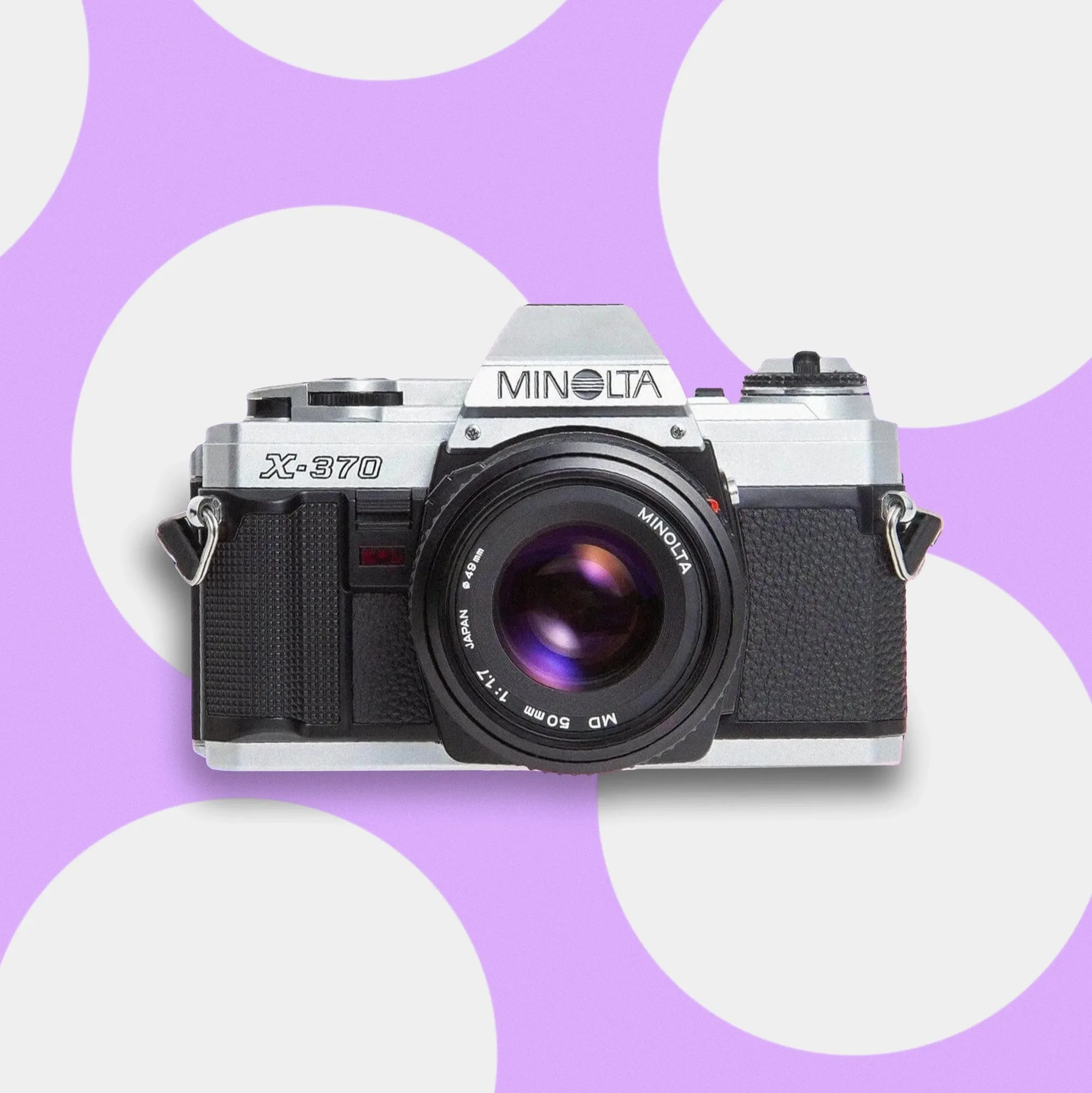
Minolta X-370 | 35mm Film Camera
-
Minolta X-370 | 35mm Film Camera: The camera offers full manual settings or a more relaxed auto mode. Switching between the two is the simplest way to check whether underexposure follows the mode or the meter.
-
Minolta X-370 | 35mm Film Camera: Each restored Minolta X-370 is supplied with fresh batteries and a 50mm lens. A fresh battery removes one common cause before you start diagnosing, and the 50mm lens gives you a known starting point for exposure tests.
When the problem is the camera, not your technique
If a fresh battery, a deliberate manual setting, and a known-good roll of film still produce underexposed frames, the camera may need service. The supplied record does not describe meter calibration, repair procedures, or troubleshooting steps beyond confirming that each X-370 is restored by the Cute Camera Co. team. It also does not confirm a specific metering pattern or ISO range, so avoid assuming the meter works in a particular way.
One honest limitation: the record does not include a preparation or operating instruction set for the X-370. Any statement that a particular step is missing refers only to the supplied evidence, not to all manufacturer documentation. If you need exact procedures, consult the camera's original manual or a qualified technician.
Condition grades and metering confidence
The X-370 is offered in Average, Good, and Very Good condition. The record does not state how condition affects meter accuracy, so treat the grade as a general guide rather than a metering guarantee.
- Average: A lower-cost entry point. If metering precision is your main concern, plan to test the camera carefully on arrival.
- Good: A middle option. The record does not specify what distinguishes Good from Very Good beyond the grade name.
- Very Good: The top grade offered. It may suit buyers who want the most confidence, but the record does not confirm meter performance by grade.
A realistic exposure routine for the X-370
Use the fresh battery, pick a shutter speed and aperture you can note, and shoot a short test sequence in both manual and auto. Keep the 50mm lens on for consistency. If the results are uneven, check the film and processing before you conclude the meter is faulty. The X-370 is a capable camera for learning exposure, but the supplied record stops short of confirming specific meter behavior, so let your own test roll be the guide.