Quick answer
Place the cage in a quiet, temperature-stable spot away from direct sun and drafts, secure the casters, and line the tray with safe bedding. Clean soiled areas daily and do a full bedding change weekly.
Why placement matters more than the cage itself
Rabbits are sensitive to heat, loud noises, and sudden movements. A spot near a window that gets afternoon sun can overheat quickly, while a busy hallway can keep a rabbit stressed. Choose a room where your rabbit can see household activity but retreat to a quiet corner.
Because this cage is mobile, you can test a spot for a few days and roll it to a better location if your rabbit seems nervous or too warm. Always lock the casters before leaving the cage in place.
Bedding and tray setup that makes cleaning easier
The cage has two tray divisions, so you can use one side for a litter area and the other for resting space. Line the litter side with paper-based bedding or hay, and keep the resting side with a soft mat or fleece. Avoid cedar or pine shavings, which can irritate a rabbit’s respiratory system.
A removable top and side latches make it easier to reach into the cage for spot cleaning. If you use loose bedding, a small hand broom and dustpan kept nearby will save time.
Step-by-step setup and care routine
- Choose a safe location: Pick a quiet room away from direct sunlight, heating vents, and loud appliances. Keep the cage at floor level or on a stable surface, and lock the casters once positioned. Check the spot at different times of day to make sure it stays cool and calm.
- Assemble with the correct instructions: Download the correct assembly instructions from the product page before you start, because the in-box instructions are incorrect. Attach the casters, set the tray divisions in place, and confirm the positive-lock latches click shut. Test the latches by gently pulling the top upward; it should not separate when locked.
- Set up the tray and bedding: Use one tray division as a litter area with paper-based bedding or hay, and the other as a resting area with a soft mat. Avoid cedar and pine shavings. Place a water bottle or bowl and a hay rack within easy reach. Keep bedding shallow on the resting side so your rabbit can lie down comfortably.
- Do a daily spot clean: Remove soiled bedding and uneaten fresh food each day. Wipe down the tray with a pet-safe cleaner and refill the litter area. Check that the cage latches are still secure after cleaning. Daily spot cleaning prevents odors and makes the weekly deep clean much faster.
- Do a weekly deep clean: Move the cage to a washable area, unlock the side latches, and lift off the top. Empty all bedding, wash the tray and cage bottom with mild soap and warm water, rinse well, and dry completely before adding fresh bedding. Let all parts dry fully to prevent mold and respiratory irritation.
- Adjust the cage as your rabbit grows: Recheck the placement and bedding every few weeks. If your rabbit chews the cage bars or seems cramped, consider a larger enclosure or more exercise time outside the cage. A cage is a home base, not a full-time habitat; daily exercise is essential.
Product facts
-
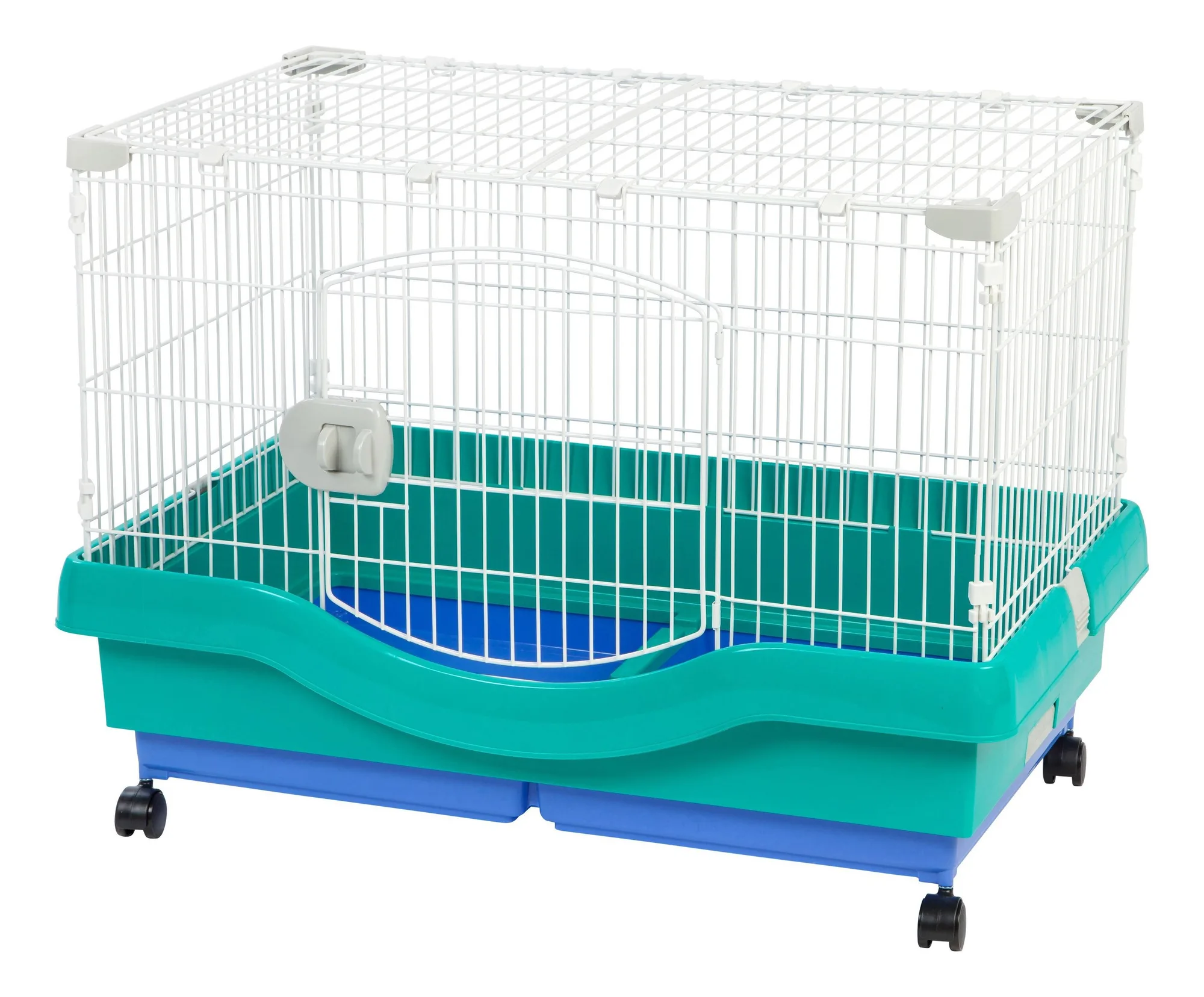
Rabitt Cage - Mobile: The cage has casters and a positive-lock latching system. You can move the cage easily, but the latch keeps the top secure when locked.
Rabitt Cage - Mobile
-
Rabitt Cage - Mobile: Floor panels are not included, and the instructions in the box are incorrect. Download the correct instructions from the product page before assembly, and plan a solid base or mat for the cage to sit on.
-
Rabitt Cage - Mobile: The cage ceiling can be left half-open or fully open, and the top detaches via side latches. This gives you easy access for cleaning and lets you adjust ventilation.