Quick answer
Choose the A by AMC Modular Knife Block 4 Blades if you want a compact, expandable home for four working knives and you are willing to assign each slot a clear job. Skip it if you already own more than four knives you use daily or prefer a drawer insert over countertop storage.
Why four slots is a decision, not a limitation
A four-blade block forces you to name the knives you actually reach for. That is useful: most home cooks use a chef's knife, a paring knife, a serrated knife, and one utility or boning blade for nearly every task. If your cooking leans on those four, the block keeps them visible and protected without crowding the counter.
The trade-off is real. A fourth slot cannot hold a bread knife, a cleaver, and a second chef's knife at once. If your cooking regularly calls for more than four distinct blades, the modular design lets you expand later, but the starting block will not cover that gap on day one.
What the wood finish and modular design change in daily use
The natural wood finish is a storage material, not a sharpening system. It protects edges from knocking against each other, but it does not restore a dull blade. Plan to hone or sharpen separately, and never put a wet knife back into the slot.
Modularity matters most when your collection grows. You can add storage rather than replace the whole block, which is a sensible path if you are building a knife set over time. The compact footprint is the other practical benefit: it leaves more prep space than a wide, fixed block.
Decision rules for assigning your four slots
- Start with the blade you touch most: Give the first slot to your primary chef's or santoku knife. If you cook daily and reach for one blade for most chopping, that knife earns the most accessible position. If you cannot name a single most-used knife, you are not ready to commit four slots.
- Add a small blade for off-board work: Use the second slot for a paring knife. It handles peeling, trimming, and small cuts in hand that a chef's knife makes awkward.
- Reserve a slot for serrated tasks: Put a serrated knife in the third slot if you cut bread, tomatoes, or delicate pastries. Serrated edges need their own protected space because they can damage neighboring edges if stored loose. If you never cut bread or fragile produce, this slot can go to a utility knife instead.
- Use the fourth slot for your flexible blade: Choose a boning, fillet, or utility knife based on what you cook. Boning suits meat and poultry; fillet suits fish; utility suits general small prep. Pick one, not all three. Leave the fourth slot empty until you know which blade you actually use weekly.
- Expand only when a fifth knife becomes routine: The modular system lets you add storage later. Wait until a fifth blade is used at least weekly before expanding, so you do not buy capacity for knives that stay in a drawer. A knife used less than once a week does not need a permanent slot.
Product facts
-
Modular Knife Block 4 Blades: Holds up to 4 knives securely in a compact wood block with a natural finish. Four protected slots keep your most-used blades accessible without taking over the counter.
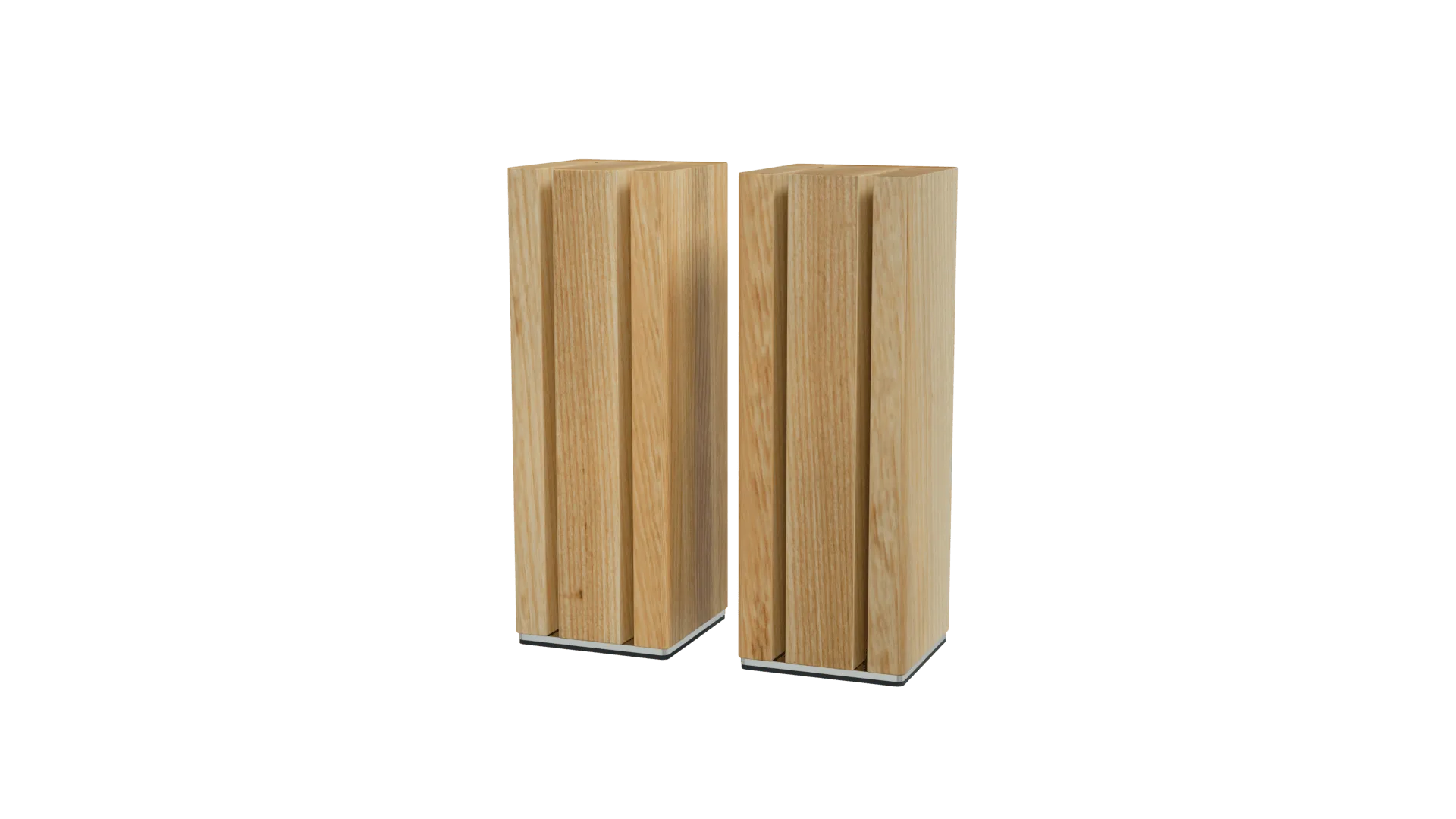
Modular Knife Block 4 Blades
-
Modular Knife Block 4 Blades: The modular design lets you expand the storage system as your knife collection grows. You can start with four knives and add capacity later instead of replacing the block.
Who this block fits
Best for
- Home cooks who use four knives or fewer for most meals
- Small kitchens where counter space is limited
- Buyers who want to expand storage gradually as their knife collection grows
Not for
- Cooks who regularly use five or more distinct blades
- Anyone who prefers drawer storage or magnetic strips
- Buyers looking for a block that sharpens or hones knives