Quick Answer
Choose RTV silicone putty when you need a fast, accurate mold of a rigid original; choose moldable thermoplastic when you want a reusable, sculptable part or mold that you can rework until it's right.
Working Time and Cure Speed
RTV silicone putty gives you about 8 minutes of total working time and cures in 30 minutes, making it ideal for quick one-off molds. Moldable thermoplastic, on the other hand, becomes pliable when heated to 220°F and stays workable as it cools, giving you more time to position and adjust before it hardens.
If you're molding a complex part with undercuts or fine details, the longer working time of thermoplastic can be forgiving. But if you need to produce a mold quickly and move on, the silicone putty's fast cure is a clear advantage.
Reusability and Rework
A key difference is reusability. Moldable thermoplastic can be reheated and reshaped repeatedly, so you can refine a sculpt or reuse the material for a new project. RTV silicone putty, once cured, is a permanent mold—it can't be melted down or repurposed.
If you're still iterating on a design, thermoplastic lets you experiment without wasting material. But if you need a durable, one-time mold that will hold its shape for casting, silicone putty is the better choice.
Hardness and Detail Reproduction
The cured hardness of the mold material affects how well it holds fine details and how easy it is to demold. The RTV silicone putty we carry cures to a 50 Durometer hardness, which is rated as hard—good for capturing crisp detail while still being flexible enough to release parts.
Moldable thermoplastic doesn't have a published hardness rating, so if you need a precise, rigid mold for casting, silicone putty is the safer bet. Thermoplastic is more about creating parts or molds you can sculpt and adjust by hand.
Trade-Offs at a Glance
- Speed vs. Flexibility: RTV silicone putty cures in 30 minutes for a fast, one-time mold; moldable thermoplastic gives you unlimited working time but requires reheating to change shape. If speed matters, choose silicone putty; if you need to adjust, choose thermoplastic.
- Reusability vs. Permanence: Thermoplastic can be reheated and reused for new sculpts; silicone putty is a permanent mold that can't be remelted. For a one-off mold, silicone putty is fine; for repeated use, thermoplastic saves material.
- Hardness vs. Sculptability: Silicone putty cures to a hard 50 Durometer for crisp detail; thermoplastic remains soft enough to carve, drill, or laser-cut after cooling. Choose based on whether you need a rigid mold or a workable part.
Product Facts
-
Micro-Mark RTV Silicone Mold Putty 50 (Hard): RTV silicone putty has a 1:1 mix ratio, 8 minutes total working time, and cures in 30 minutes to a 50 Durometer hardness. This fast, foolproof cure makes it ideal for quick, accurate molds of rigid originals without guesswork.
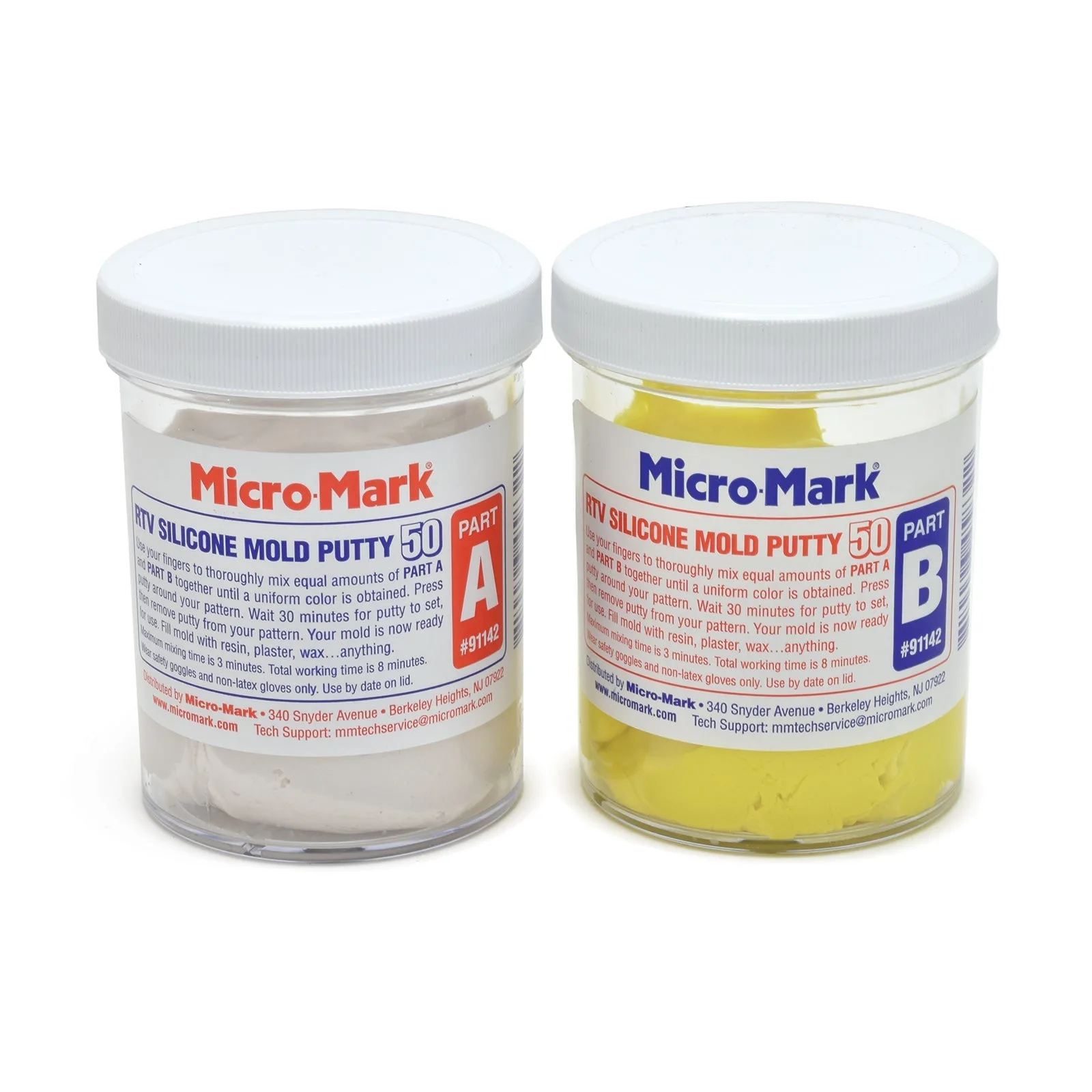
Micro-Mark RTV Silicone Mold Putty 50 (Hard)
-
Micro-Mark MTP Moldable Thermoplastic Medium, Pack of 5: Moldable thermoplastic becomes pliable at 220°F and can be layered, carved, sculpted, drilled, or laser-cut, and reheated and reused. Its reworkability lets you adjust or reuse the material, perfect for prototyping and iterative sculpting.

Micro-Mark MTP Moldable Thermoplastic Medium, Pack of 5
Which Should You Choose?
Best for
- Quick, accurate molds of rigid originals with fine detail
- One-off casting projects where you need a durable, permanent mold
Not for
- Projects that require repeated reshaping or reusing the material
- Sculpting or prototyping where you want to adjust the shape over time