Start with the Monarch’s articulation, not a fixed angle
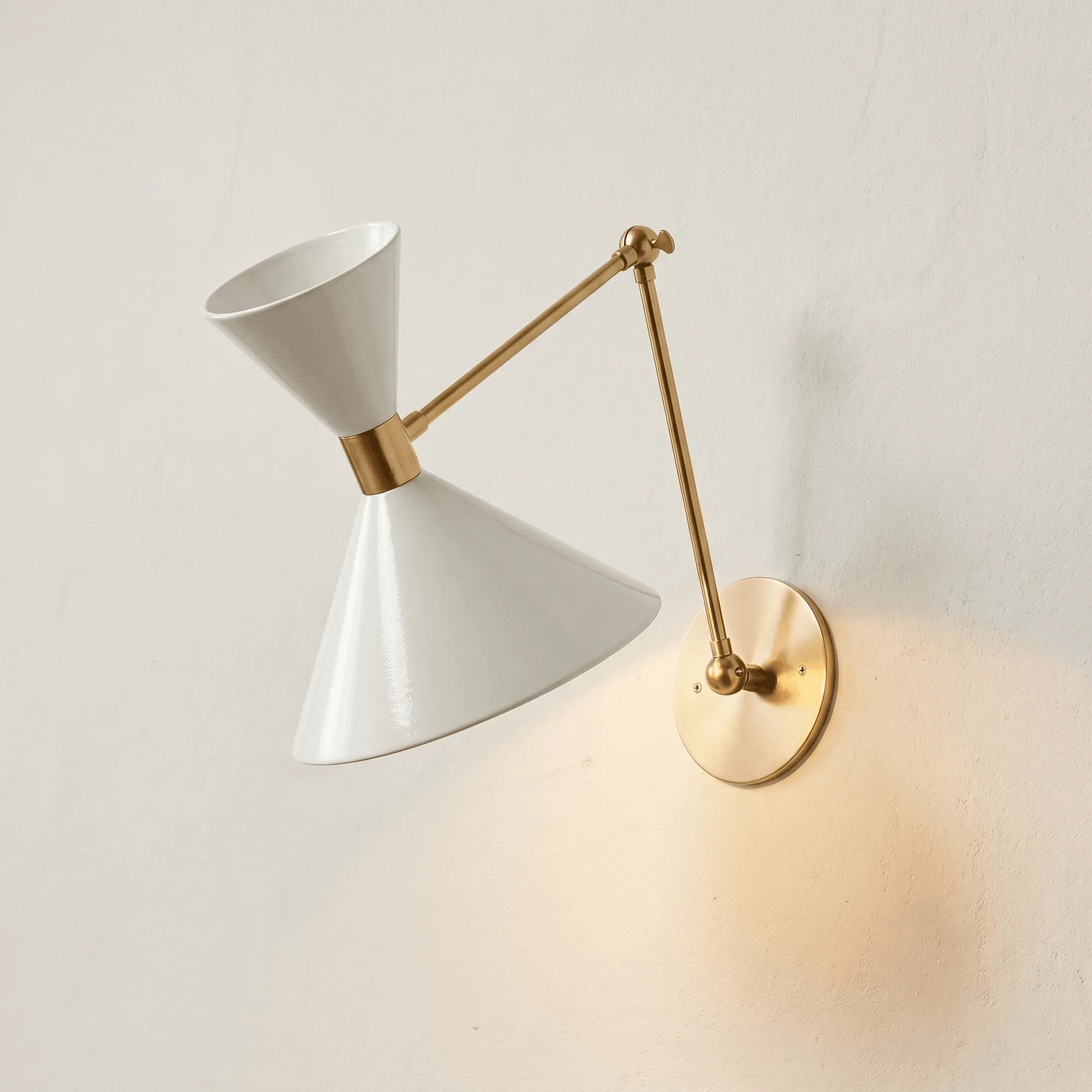
The Monarch Articulating Wall Lamp is built to move. Its arms articulate at both the backplate and the joint, and the swiveling head lets you adjust the flared cone. That means you can aim light where you need it—but it also means placement should begin with the range of motion, not a preset angle.
Because the catalog does not list a maximum reach or rotation limit, treat the first adjustment as a test. Move the arms slowly and note where the lamp naturally wants to sit before you commit to a wall location.
What the catalog confirms about the Monarch
-
Monarch Articulating Wall Lamp: Arms articulate at both the backplate and the joint. Two articulation points give you more ways to direct the cone—useful for reading or highlighting a specific spot.
Monarch Articulating Wall Lamp
-
Monarch Articulating Wall Lamp: Swiveling head allows for cone adjustment. The head swivel adds a second layer of aiming, so you can fine-tune the light after positioning the arms.
-
Monarch Articulating Wall Lamp: Shown in Natural Brass and Malachite enamel. Finish affects how visible the fixture is on the wall; a strong finish may influence where you place it.
How to aim the Monarch for reading, art, or ambient light
Use these steps as a starting point. Adjust based on your room and what you see in person.
- Set the backplate arm first: Position the arm at the backplate to establish the overall reach. This is the anchor point for all other adjustments.
- Adjust the joint arm for height: Use the second articulation point to raise or lower the cone. For reading, aim the cone toward the page from the side to reduce shadows.
- Swivel the head for fine aiming: Rotate the swiveling head so the flared cone points where you want the light. Small changes here can shift the beam significantly.
- Check from your seated position: Sit or stand where you will actually use the light. Look for glare and adjust the head or arm until the light falls where you need it.
Placement decisions the Monarch supports—and what it doesn’t
The Monarch’s articulation gives you flexibility, but some placement questions depend on details not included in the supplied catalog.
- Good candidates for adjustable aiming: Reading nooks, bedside walls, and spots where you want to highlight art or a architectural feature. The dual articulation and swiveling head let you redirect light without moving the fixture.
- What the catalog does not confirm: Maximum arm extension, rotation limits, and wall-mounting height are not listed. Measure your space and test the range of motion before drilling.
- Finish visibility: The wide brass band and dramatically scaled flared cone make the Monarch a strong design statement. In a busy room, consider whether the fixture should blend in or stand out.
The trade-off: flexibility versus a fixed look
Articulating wall lamps like the Monarch offer adjustable wall sconce benefits: you can change the light direction as your needs change. But the same joints that provide flexibility also create a more complex silhouette than a fixed sconce. If you prefer a clean, static look, the Monarch’s adjustable arms may feel too busy.
For a reading wall lamp setup, the payoff is usually worth it—you can aim light exactly where you need it. For purely ambient lighting, you may find yourself setting the arms once and leaving them.
Design context for placement
- Monarch Articulating Wall Lamp: Design is strongly influenced by both French and Italian Mid-Century Modernism. This style cue can help you decide whether the Monarch fits a modern or mid-century room, and how prominently to place it.
- Monarch Articulating Wall Lamp: The wide brass band and dramatically scaled flared cone make the Monarch a strong design statement. A statement fixture may work best on a wall with some breathing room, rather than crowded by other objects.