The week start matters more than the cover
If your shifts rotate, the first question is not which planner looks best. It is where your week actually begins. A Monday start planner groups Monday through Sunday on one spread. A Sunday start planner groups Sunday through Saturday. That single choice changes which days sit next to each other when you plan, and for shift workers it can decide whether your rest days land in the middle of a spread or at its edges.
The MUJI B6 Monthly/Weekly Planner From Dec. 2026 uses a Monday start. Its weekly spreads run horizontally on the left pages, with a blank grid page on the right. That layout is the one to test against your roster before you commit.
Monday start vs. Sunday start for irregular schedules
Neither start is universally better for shift work. The right choice depends on how your days off cluster and when you do your planning.
- Monday start keeps the workweek together: If your shifts are mostly Monday to Friday with occasional weekend cover, a Monday start puts the standard workweek in one block and your weekend at the end of the spread. That makes it easier to see overtime or on-call days against a familiar baseline.
- Sunday start can suit weekend-heavy rosters: If your working week regularly begins on Sunday, a Sunday start planner keeps that shift at the front of the spread instead of split across two pages. The supplied evidence does not include a Sunday start version of this B6 planner, so this is a layout consideration rather than a direct product comparison.
- Rotating shifts expose the weak point of either start: When your days off move every week, no fixed start perfectly matches every roster. A Monday start still gives you a consistent anchor: you always plan the same seven-day block, even if the shifts inside it change.
- The B6 format limits how much you can write per day: The B6 size is compact. The weekly spread divides the left page into seven horizontal rows, and the supplied information describes optional guides to divide each day into thirds or separate tasks by topic. For shift workers juggling times, locations, and handover notes, that is workable but not generous.
What the B6 planner actually provides
-
B6 Monthly/Weekly Planner From Dec. 2026 - Mon. Start: B6 Monthly/Weekly Planner for 2027 with horizontal Monday-start weekly spreads on the left pages and a blank grid page on the right. The Monday start is built in, and the right-hand grid gives you space for notes that do not fit in the daily rows.
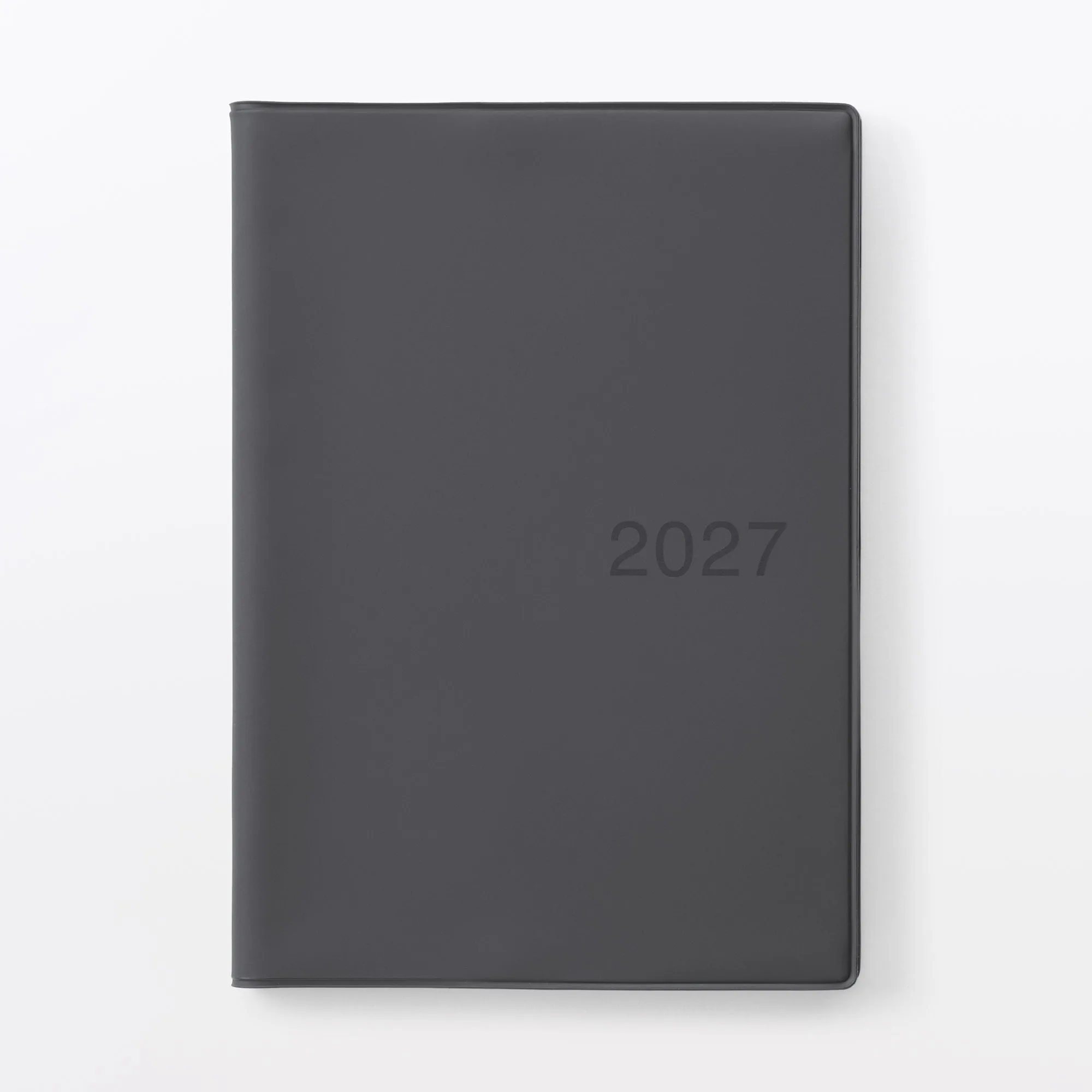
B6 Monthly/Weekly Planner From Dec. 2026 - Mon. Start
-
B6 Monthly/Weekly Planner From Dec. 2026 - Mon. Start: Weekly spreads include optional guides to divide your day into thirds or separate tasks by topics. For shifts with distinct blocks, such as early, late, and night, the thirds guide can map onto a three-shift pattern without extra ruling.
-
B6 Monthly/Weekly Planner From Dec. 2026 - Mon. Start: Monthly calendar begins in December 2026, with a 2026–2028 monthly overview and a 2027 yearly overview. A December start lets you set up your roster before January, which matters if your shift pattern is published in advance.
-
B6 Monthly/Weekly Planner From Dec. 2026 - Mon. Start: Inner cover pockets store notes and documents, and a bookmark string marks your place. Shift workers often carry printed rosters or handover slips; the pocket keeps them with the planner instead of loose in a bag.
Where a Sunday start would win for shift workers
A Sunday start planner has one clear advantage for people whose working week runs Sunday to Thursday or whose rest days fall on Friday and Saturday. In that pattern, a Sunday start keeps the working block together and pushes the weekend to the end, mirroring how the week is actually lived.
The trade-off is that a Sunday start splits the conventional Saturday–Sunday weekend across the start and end of the spread. If your days off are Saturday and Sunday, a Monday start keeps them together at the end of the week, which many people find easier to read when planning rest.
The supplied product information does not include a Sunday start version of this B6 planner. If a Sunday start is essential to your routine, treat that as a reason to look at other options rather than a flaw in this one.
How to test a Monday start against your roster
Before buying, run your next four weeks through this quick check. It takes about ten minutes and prevents a planner that looks right but reads wrong.
- Write out your last four weeks of shifts: Mark each day as early, late, night, off, or on-call. Use your actual roster, not a typical week.
- Group the days Monday to Sunday: Draw a box around each Monday-to-Sunday block. Notice whether your days off fall together or are split by working days.
- Repeat with Sunday to Saturday: Compare which grouping keeps your rest days and your heaviest shifts in the same block more often.
- Check whether you plan ahead on a Sunday: If you sit down on Sunday evening to plan the week, a Monday start matches that habit. If you plan on Saturday, a Sunday start may feel more natural.
- Decide whether the B6 page size fits your notes: If you need to record shift times, locations, handover notes, and travel in one row, the compact B6 weekly rows may be tight. The right-hand grid page can absorb overflow, but it is a separate page.
What the supplied information does not settle
The product record does not confirm paper weight, whether the planner lies flat, or how the optional guides are printed. It also does not confirm a Sunday start alternative in the same B6 format. Those details matter for daily use, but they are not part of the supplied evidence, so treat them as questions to check in store or on the product page rather than assumptions.
What the record does establish is enough to make the main decision: this is a Monday start planner with a horizontal weekly layout, a right-hand grid for notes, and a December 2026 start. For shift workers, that combination favors anyone whose week is anchored on Monday and whose notes need a separate page. It is less suited to someone whose working week reliably begins on Sunday and who wants that day at the front of the spread.