Quick answer
Treat the Claude Monet Water Lilies Tea for One as both a brewing vessel and a small display piece: preheat the pot, brew loose leaf tea with enough room for the leaves to open, and store the cup and pot separately or with a soft barrier so the decorated surfaces do not rub.
Why a stacking set needs a different brewing routine
A tea for one set stacks a teapot and cup into one compact piece, which saves shelf space but changes how you brew. The pot is small, so leaf quantity and steep time matter more than in a large teapot. If you normally brew by eye, measure the first few pots so you can repeat the result.
The decorated exterior also means you should avoid abrasive cleaners and sudden temperature changes. Hot water straight into a cold pot is harder on porcelain than warming it first, and scouring pads can dull the glaze over time.
When the set is better for display than daily brewing
This set suits a solo cup and a quiet moment, not a household of tea drinkers. If you regularly brew multiple cups or use very large leaf pieces that need lots of room, a larger teapot will be more practical. The Monet set is at its best when you want one well-made cup and enjoy the Water Lilies design as part of the ritual.
Step-by-step brewing and display routine
- Warm the pot before adding leaves: Fill the teapot with hot tap water, fit the lid, and let it stand for about a minute. Empty it before brewing. Common mistake: pouring boiling water into a cold pot, which stresses the glaze and cools your brew. A warm pot keeps the water temperature steadier during the steep.
- Measure loose leaf tea for a small pot: Start with one teaspoon of loose leaf per cup the pot holds, then adjust after the first brew. If the pot has no supplied capacity figure, fill it with water and measure how much it holds before you choose a leaf amount. Write down the leaf amount and steep time that worked so you can repeat it.
- Add water and time the steep: Pour water just off the boil for black tea, or slightly cooler for green and white tea, then replace the lid. Set a timer rather than guessing. Common mistake: leaving the leaves in too long because the small pot makes it easy to walk away. Taste at the early end of the range first; you can always steep longer.
- Separate the cup and pot for serving: Lift the cup from the base of the stack rather than pulling the teapot by its handle. Pour through the spout and set the pot down before adding milk or sweetener. Common mistake: carrying the whole stacked set by the teapot handle, which can tip the cup. Move the pieces one at a time when the set is full.
- Clean without abrasives: Rinse the pot, lid, and cup in warm water with a little mild dish soap, then dry with a soft cloth. Do not use scouring pads or soak the set overnight. Common mistake: putting a decorated piece in the dishwasher when you are unsure of its care instructions. If a tea stain remains, a soft cloth and a little warm soapy water is safer than scrubbing.
- Display with a soft barrier between stacked pieces: If you keep the set stacked on a shelf, place a thin felt pad or soft cloth between the cup and pot. Keep it out of direct sunlight and away from radiators. Common mistake: stacking the pieces while still damp, which traps moisture between the glazed surfaces. Let all pieces air-dry completely before stacking for display.
Product facts
-
Claude Monet 'Water Lilies' Tea for One: Stacking tea for one set with a teapot, lid, and cup decorated with Claude Monet's Water Lilies. The two-piece stack saves space, but you need to handle the lid and cup separately when brewing and cleaning.
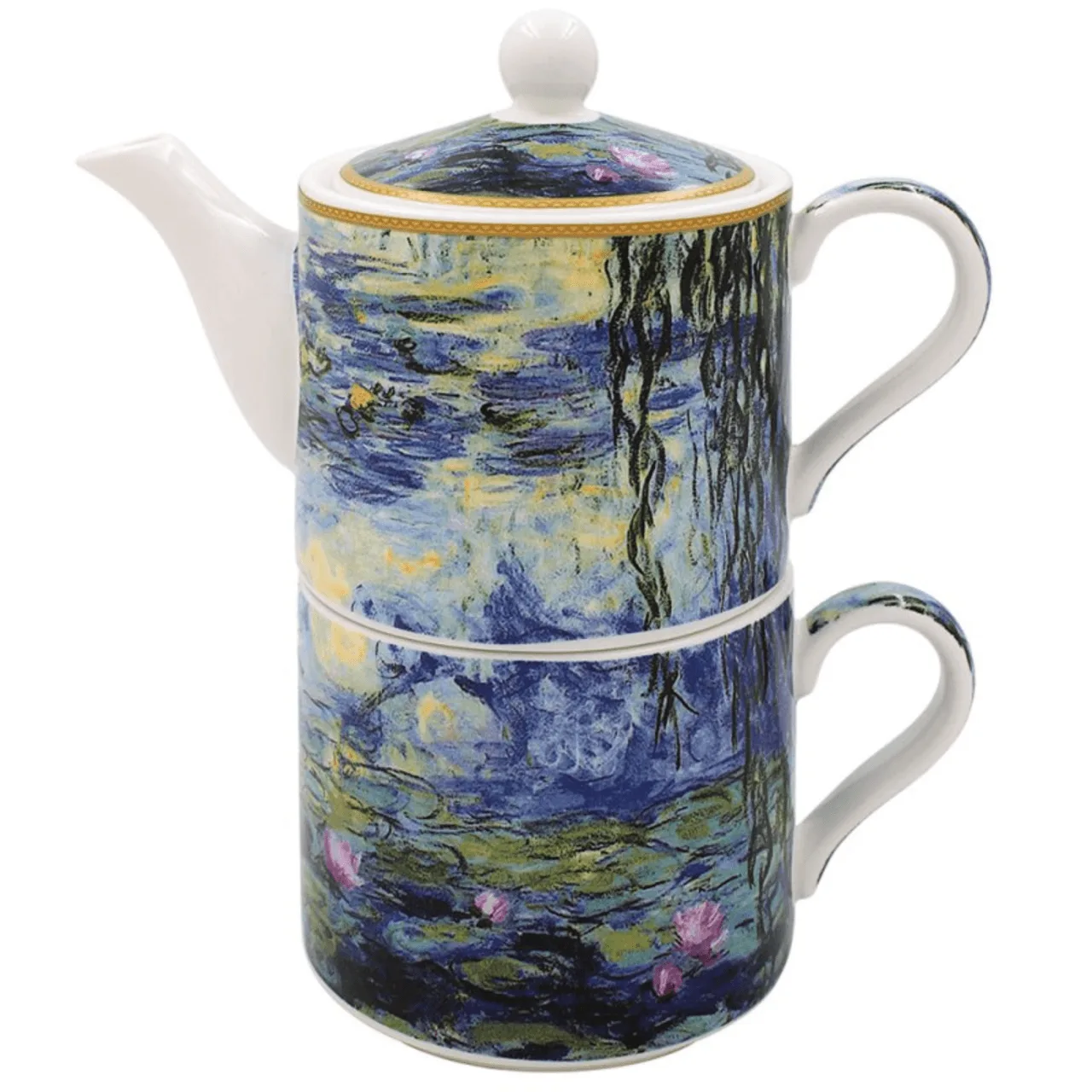
Claude Monet 'Water Lilies' Tea for One