Quick Answer
The main difference is that a monitor arm is a generic term for any arm that holds a monitor, while a https://snuglivingcoai.shop/products/monitor-arm-desk-mount-275684https://snuglivingcoai.shop/products/monitor-arm-desk-mount-275685monitor arm desk mount specifically refers to an arm that attaches to the desk via a clamp or grommet. For most users, a desk mount offers better stability and adjustability, but the right choice depends on your desk type and space.
When you're setting up an ergonomic workstation, you'll often see terms like 'monitor arm' and 'monitor arm desk mount' used interchangeably. But they aren't always the same thing. Understanding the distinction can help you choose the right solution for your monitor setup, whether you're working from a small desk or a height-adjustable standing desk.
In this comparison, we'll break down what each term means, look at real product examples, and give you practical guidance on which type to choose based on your specific needs.
What Is a Monitor Arm?
A monitor arm is a broad category that includes any device designed to hold a computer monitor off the desk surface. This can include arms that clamp to the desk, bolt through a grommet hole, or even mount to a wall. The key benefit is that it frees up desk space and allows you to adjust the screen height, tilt, and swivel to achieve a neutral viewing position.
When people say 'monitor arm,' they often mean a simple arm that attaches to the back of the monitor and sits on the desk or clamps to the edge. These are popular for home offices and setups where drilling into the desk isn't an option.
What Is a Monitor Arm Desk Mount?
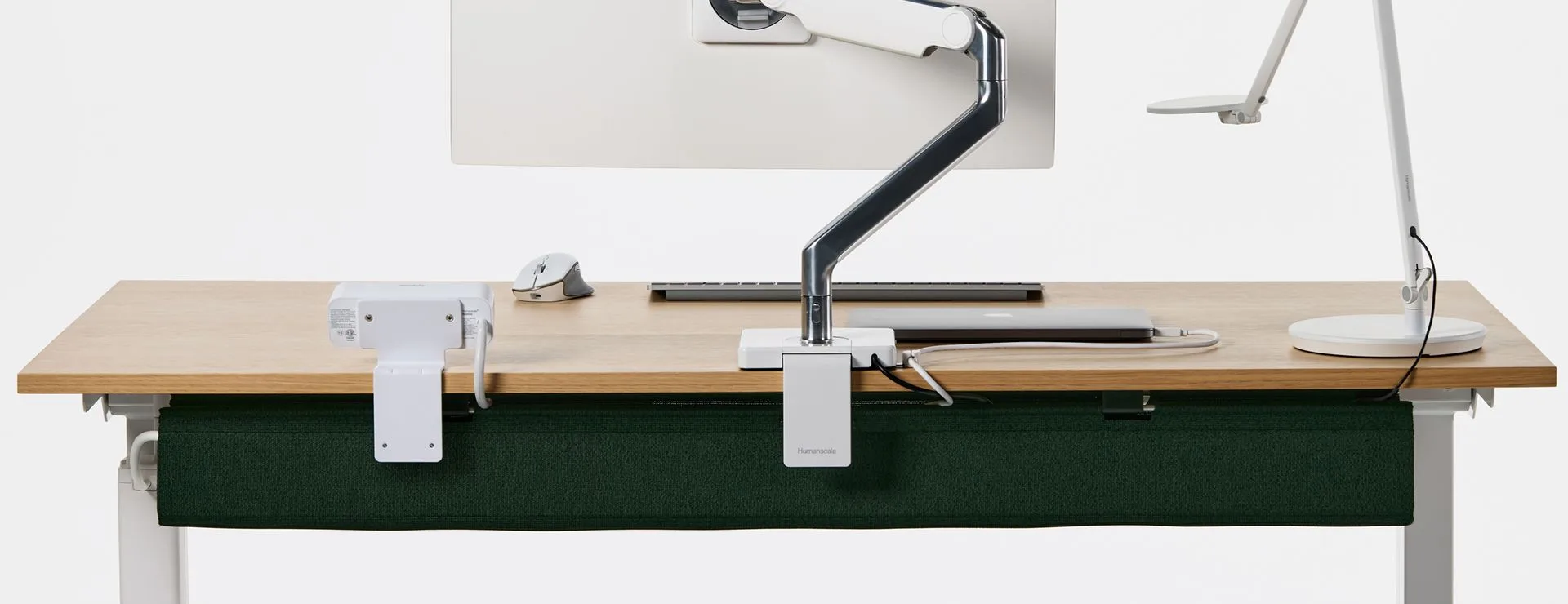
A monitor arm desk mount is a more specific type of monitor arm that attaches directly to the desk surface, usually via a C-clamp or a grommet mount. This provides a stable base that can support heavier monitors or multiple monitors without taking up desk space. Desk mounts are often preferred in professional settings because they offer more adjustability and a cleaner look.
For example, Humanscale's Monitor Arm Desk Mount is part of the M/Flex multi-monitor arm system, which is designed for agile work environments. This type of mount allows you to position your screens exactly where you need them, reducing neck and eye strain.
Humanscale
Key Differences at a Glance
The main differences lie in installation, adjustability, and the types of desks they work with. A standard monitor arm might sit on a desk base, while a desk mount requires a clamp or grommet. Desk mounts generally offer a greater range of motion and can handle heavier loads, making them suitable for dual or ultrawide monitors.
Another difference is the visual impact: a desk mount typically has a cleaner, more professional appearance because it doesn't take up desk surface area. However, it requires a desk edge or a hole for mounting, which might not be possible on all desks.
Trade-Offs to Consider
- Installation complexity: Desk mounts require clamping or drilling, which might be more involved than placing a simple arm on the desk. However, they provide a more secure and stable base. If you're not comfortable with tools, a simple arm might be easier, but a desk mount offers better long-term stability.
- Desk compatibility: Not all desks can accommodate a clamp or grommet mount, especially glass or thin desks. A freestanding arm might be the only option for such surfaces. Check your desk's edge thickness and material before choosing a desk mount.
- Monitor weight and size: Desk mounts generally support heavier monitors and multiple screens. If you have a large or dual-monitor setup, a desk mount is often necessary. Consider the weight capacity and number of monitors you need to support.
Product Facts
- Monitor Arm Desk Mount: Humanscale's M/Flex multi-monitor arm system provides unprecedented flexibility and ergonomic performance for today's agile work environment. If you need to support multiple monitors or want maximum adjustability, this desk mount is designed for dynamic workspaces where you frequently change screen positions.
- Lightweight Adjustable Monitor Arm: Humanscale's M2 Pro monitor arm is the slimmest and lightest solution for adjustable monitor arms, with a sleek new design that makes it easy to use. For a minimalist setup or a smaller monitor, this lightweight arm offers easy adjustability without the bulk, making it ideal for small desks or home offices.
- Monitor Arms: Chosen by 98% of Fortune 500 companies Humanscale offers the world's best-selling monitor arm. Clear clutter and add flexibility with our ergonomic monitor arms. This general category includes various models that can suit different needs, but you'll need to decide between a desk mount or a simpler arm based on your desk and monitor setup.
Which Should You Choose?
Best for
- Users with dual or ultrawide monitors who need maximum adjustability and a stable base.
- Professionals working at height-adjustable desks who want to keep the desk surface clear and maintain ergonomic screen positioning.
Not for
- Users with glass or thin desks that can't support a clamp or grommet mount.
- Those who prefer a temporary or non-invasive setup that doesn't require drilling or clamping.
Ultimately, the choice between a monitor arm and a monitor arm desk mount comes down to your desk type, monitor setup, and how much adjustability you need. For most ergonomic setups, a desk mount offers superior stability and flexibility, especially if you're using multiple monitors. But if your desk can't accommodate a clamp, a lightweight arm can still provide significant ergonomic benefits. Assess your workspace and prioritize a solution that keeps your screen at eye level and your desk clutter-free.