A cooperative game where everyone wins or loses together
Monkey's Forest Feast is a cooperative board game from Mudpuppy designed for ages 4 and up, with 2 or more players. The goal is simple: players work together to help the monkey eat 10 rainforest fruits before the fruit bat does. Because it's cooperative, there's no single winner—everyone shares the outcome.
This guide walks you through setup, how a turn works, and how to teach the game to young children so they can enjoy the counting, color matching, and teamwork it encourages.
What comes in the box
-
Monkey's Forest Feast Cooperative Game: Includes a round game board with spinner, monkey and fruit bat face tiles, flying fruit bat mover, 24 fruit tokens, wildlife facts Knowing the components helps you set up quickly and explain the game to kids.
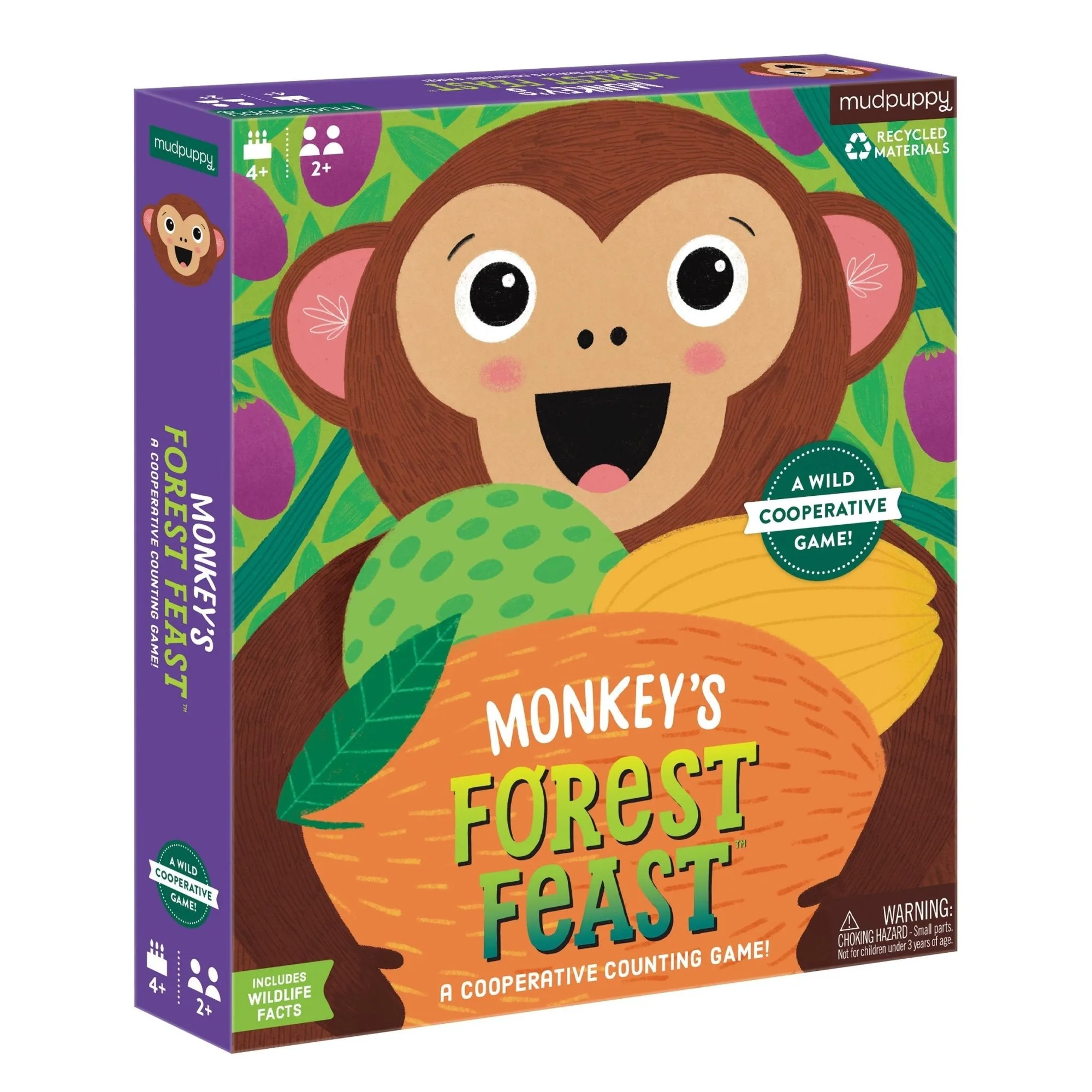
Monkey's Forest Feast Cooperative Game
-
Monkey's Forest Feast Cooperative Game: 2+ players, Ages 4+ This tells you the minimum number of players and the age range the game is designed for.
-
Monkey's Forest Feast Cooperative Game: Game pieces and packaging contains 90% recycled paper A useful detail if you're looking for environmentally conscious games.
Setting up the game
The exact setup steps aren't fully detailed in the supplied information, but based on the components, here's a reasonable way to get started.
- Place the board: Put the round game board in the center of the play area.
- Prepare the fruit tokens: Scatter the 24 fruit tokens near the board, or place them on the matching spaces if the board indicates.
- Set out the face tiles and mover: Have the monkey and fruit bat face tiles and the flying fruit bat mover within reach.
- Choose who starts: Since it's cooperative, any player can go first—maybe the youngest or the one who helped set up.
How a turn works
On your turn, you'll spin, match colors, and count fruit to help the monkey. The spinner likely determines an action, such as moving the fruit bat or collecting fruit. Here's a general flow based on the game's description.
- Spin the spinner: The spinner is part of the round game board. Whatever it lands on will guide your action.
- Match colors: Use the color result to find a matching fruit token or space on the board.
- Count fruit: Count how many fruits the monkey has eaten or how many are needed to reach 10.
- Move the fruit bat if needed: The flying fruit bat mover may advance toward the fruit, adding tension—but remember, you're all on the same team.
Teaching tips for preschoolers
Monkey's Forest Feast is designed for ages 4+, so it's perfect for introducing cooperative play. Here's how to make the learning stick.
- Model the first turn: Demonstrate spinning, matching, and counting aloud so kids see the process.
- Count together: Encourage everyone to count the fruit tokens in unison to reinforce number skills.
- Name the colors: Ask children to identify the colors as they match them, building color recognition.
- Emphasize teamwork: Remind players that helping the monkey is a shared goal—cheer for each other's successes.
- Use the wildlife facts: The included wildlife facts can spark conversations about rainforest animals, extending the learning beyond the game.
What the game teaches
According to the product description, Monkey's Forest Feast teaches counting, simple math, and color matching. It also builds community, encourages respect, and supports social emotional development. Because players work together, it's a safe space for young children to practice taking turns, sharing, and handling disappointment if the fruit bat wins—all without the pressure of individual competition.
Product details at a glance
- Monkey's Forest Feast Cooperative Game: Box: 8 x 9.25 x 1.5”, 20.25 x 23.5 x 4 cm Gives you a sense of the storage size for shelf or closet.
- Monkey's Forest Feast Cooperative Game: Printed with nontoxic, soy-based inks A reassuring detail for parents concerned about materials.
What to do if the fruit bat wins
Since the game is cooperative, losing together is part of the experience. If the fruit bat reaches the fruit first, use it as a chance to talk about emotions: "We all feel sad, but we can try again!" Remind kids that the fun is in playing together, not just winning. You can also replay immediately to reinforce persistence.
Making the game last
The game pieces and packaging contain 90% recycled paper, and the box is sturdy for storage. Keep the tokens and spinner in the box when not in use to avoid losing pieces. With 24 fruit tokens, you might want to count them after each play to ensure none go missing.