When setting up a Montessori-inspired reading nook for early readers, the bookshelf you choose plays a bigger role than you might think. A child who can see and reach books independently is far more likely to grab one and start exploring. The two most popular options are the book display shelf, which presents covers forward, and the cube shelf, which stores books spine-out or in bins. Both have strong advocates, but they serve different developmental stages and spaces.
In this Montessori bookshelf comparison, we’ll look at the practical trade-offs between a front-facing display and a cube-style unit. We’ll talk about visibility, capacity, toddler accessibility, and how each choice affects your child’s daily reading habits. Along the way, we’ll reference specific products like the Lexico Book Display Shelf and the Luce Shelf so you can see real-world examples of each style.
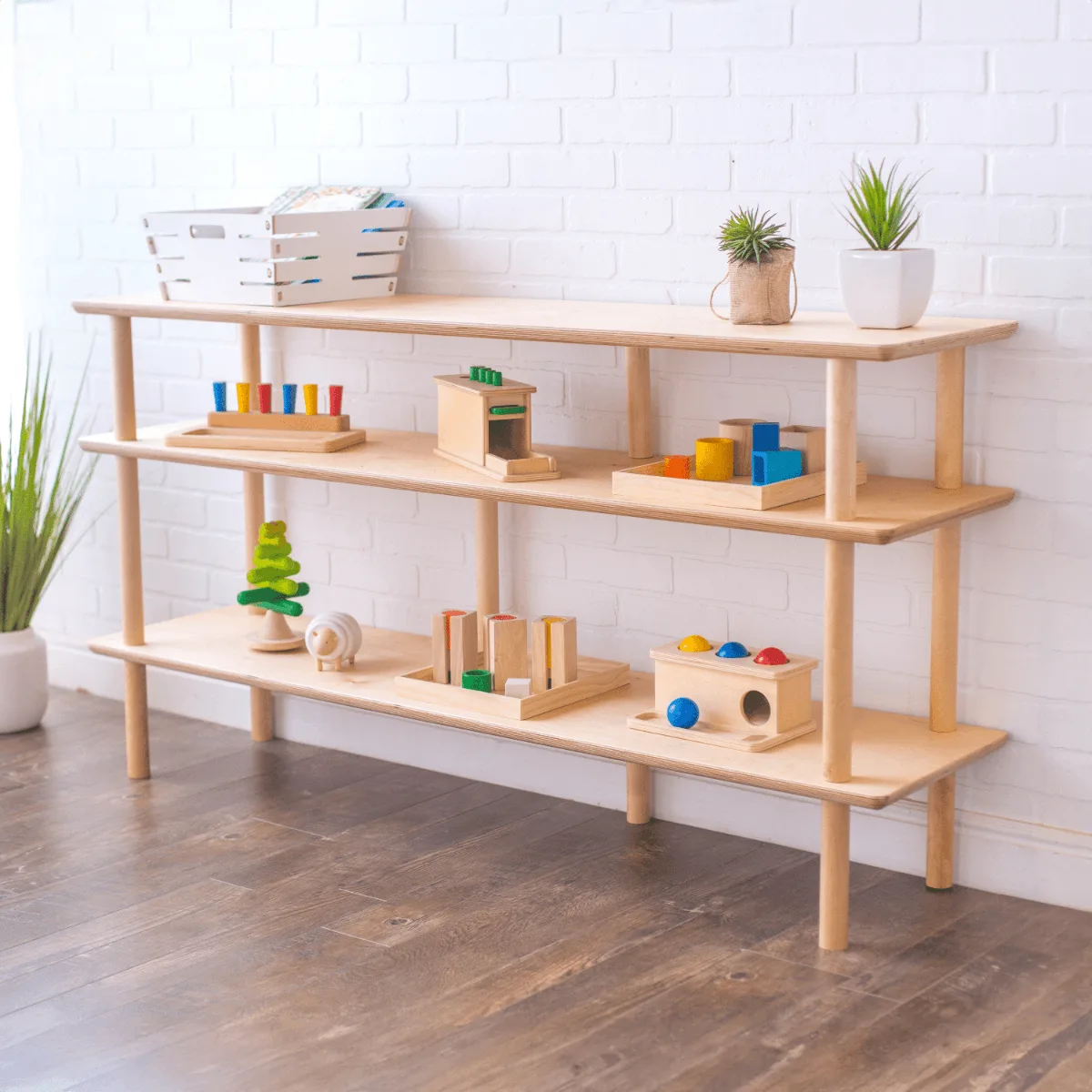
Luce Shelf
What Is a Book Display Shelf?
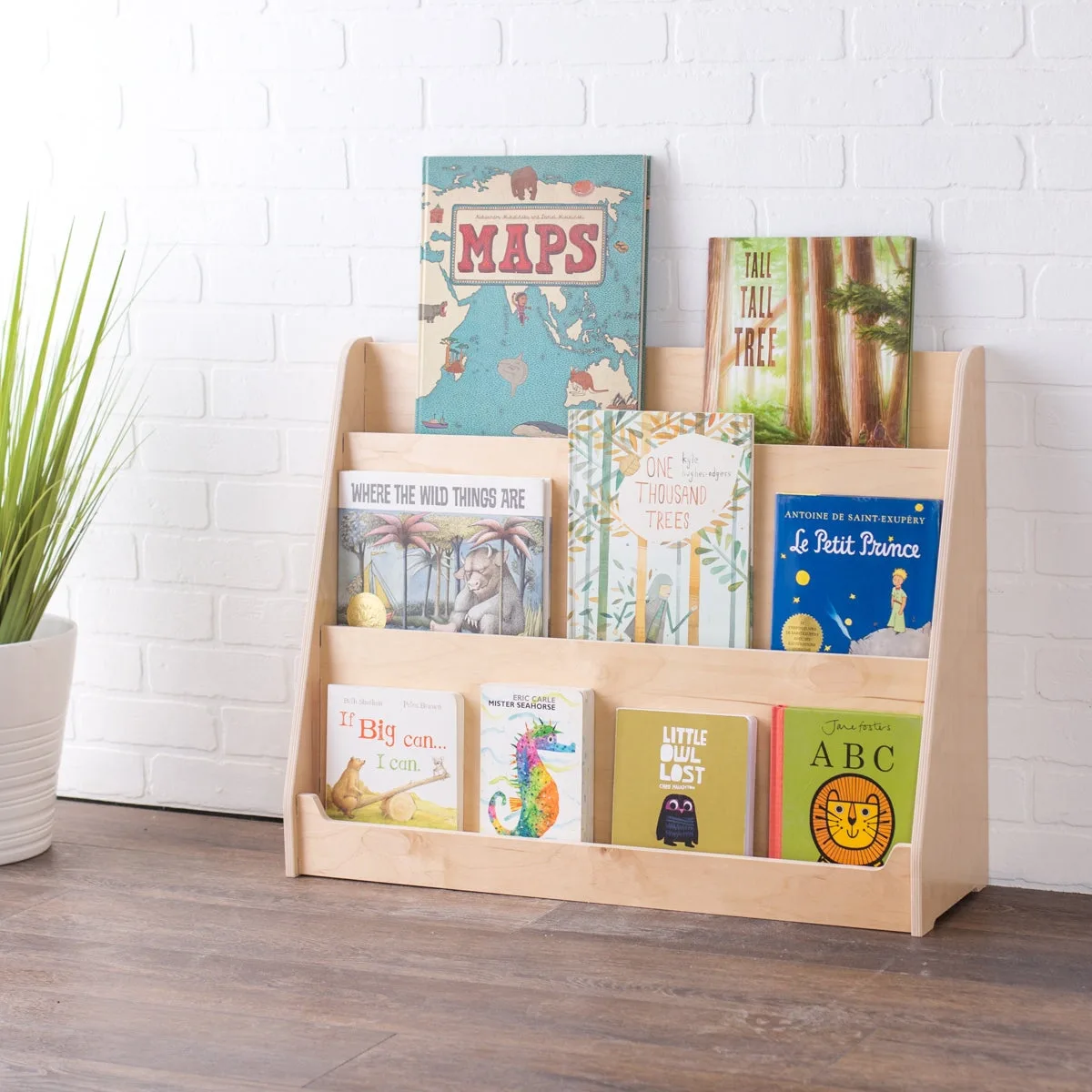
A book display shelf is designed to hold books with the front cover facing the child. Unlike traditional bookshelves where only the spine is visible, this style invites a young child to see the full illustration and title at a glance. In Montessori homes, this is often the preferred choice for toddlers and preschoolers because it makes book selection feel intuitive and exciting. The Lexico Book Display Shelf, for example, leans books back in a shallow ledge, keeping them accessible at a low height.
Because the books sit in a single row, a display shelf typically holds fewer volumes than a cube shelf of the same footprint. For parents who rotate books regularly to keep the selection fresh, that limitation becomes a feature—it prevents overwhelming the child. The trade-off is that you may need to swap books more often to maintain interest, which requires a bit of planning.
- Great for a curated selection: display 12–20 books facing forward at toddler eye level.
- Encourages independent choice by making covers fully visible.
- Lower storage capacity compared to cube shelving of similar size.
What Is a Cube Shelf?
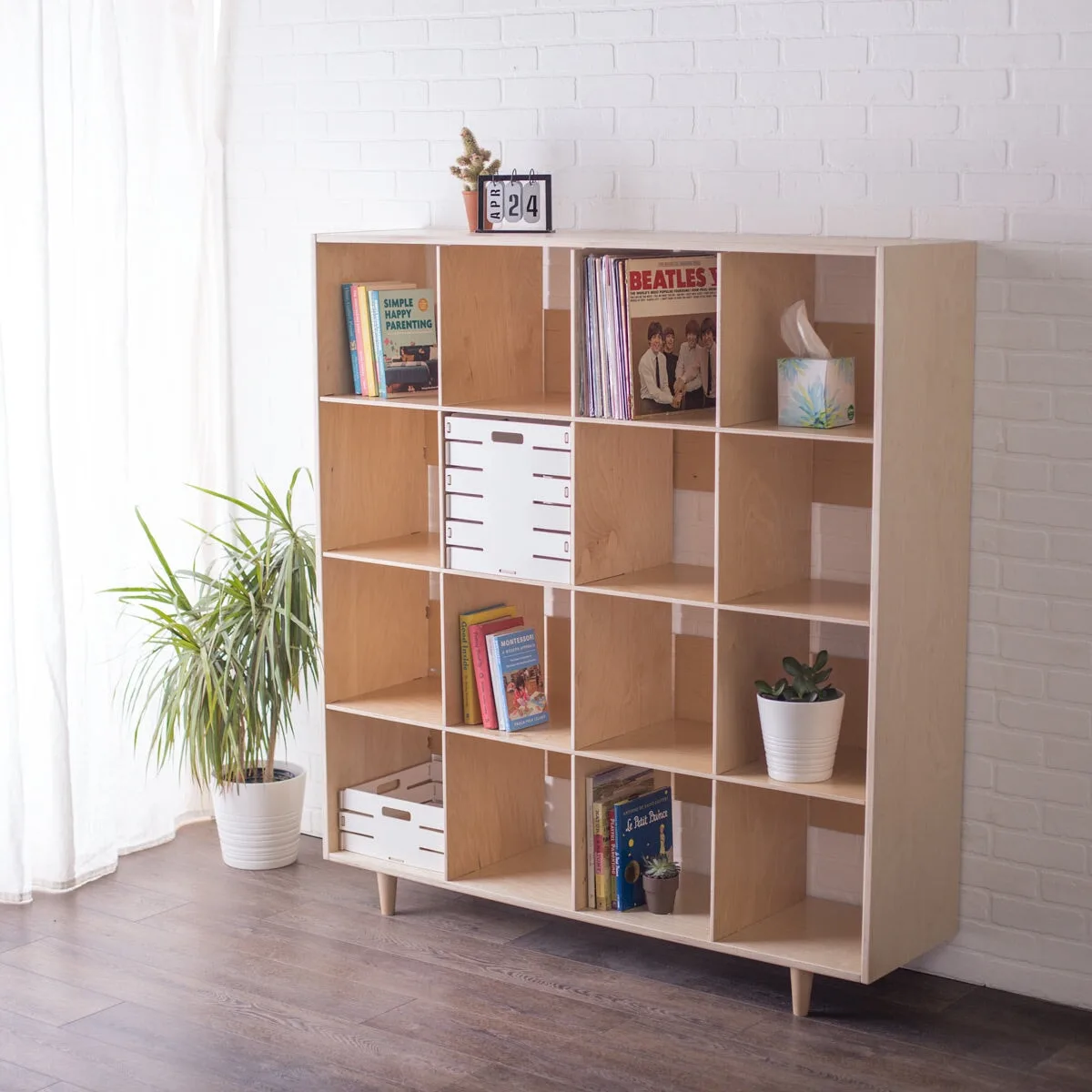
A cube shelf uses square cubbies to store books, toys, or baskets. Books can be stacked horizontally or placed vertically spine-out, and the compartments also work well for storing bins of small toys or art supplies. Cube shelves are versatile storage workhorses that grow with your child. The Luce Shelf, for instance, offers multiple open cubbies at a low height, making it a solid choice for a Montessori reading nook that also needs to hold puzzles or craft materials.
Because cube shelves pack books vertically and horizontally, they can hold significantly more volumes than a display shelf. That makes them appealing for families with large collections or multiple children. However, the visibility trade-off is real: spine-out storage hides the covers, so a toddler may not be as drawn to pick up a book. Many parents solve this by placing a few favorite books in a small forward-facing tray on top of the shelf.
- Higher storage volume: cubbies can hold 40+ books or a mix of books and bins.
- Multi-purpose: use the same shelf for books, toys, and storage baskets.
- Covers may not be fully visible, requiring extra effort to encourage book selection.
Key Differences for Early Readers
For a child who is just learning to read or who depends on visual cues to choose a book, the difference between these two shelf types is significant. A book display shelf puts the illustrations front and center, which supports the Montessori principle of the prepared environment: the child can see, reach, and return items without help. In a Montessori reading nook, a low bookshelf for toddlers like the Lexico Book Display Shelf keeps the focus on a small, beautiful collection that invites exploration.
A cube shelf, on the other hand, excels when you need kids book storage that can adapt as your child grows. Once a child is reading independently and choosing books by author or series, spine labels become more meaningful. The cube shelf also holds non-book items, which is helpful for a playroom that doubles as a library. The trade-off is that for very young children, the cube shelf may require adult assistance to keep books organized and visible.
- For babies and toddlers (0–3): book display shelf wins on visibility and ease of use.
- For preschoolers and early readers (3–6): cube shelf offers more capacity and versatility.
- Consider a hybrid setup: use a display shelf for current favorites and a cube shelf for rotation stock.
Which One Is Right for Your Montessori Reading Nook?
If you are creating a dedicated Montessori reading nook for a child under three, start with a book display shelf. Its low profile and forward-facing design support the child’s independence and make book time a natural part of the day. The Value-Grade Lexico Book Display Shelf is an excellent entry point because it offers the same functional design at a more accessible price point. Use it to display a carefully rotated selection of 10–15 books.
If your child is older or you need a single shelf that does more than hold books, a cube shelf like the Luce Shelf provides flexibility that a display shelf cannot match. You can dedicate a few cubbies to books and the rest to art supplies, puzzles, or sensory bins. Many families eventually own both: a display shelf for the reading corner and a cube shelf in the playroom for general storage.
- Choose a display shelf if your priority is independent book selection for a young toddler.
- Choose a cube shelf if you need multi-purpose storage and have an older early reader.
- Good news: both styles are available in low, child-height models on Sprout Kids.
There is no single "best" shelf for every family. The best low bookshelf for toddlers depends on your child’s age, your space, and how you like to rotate materials. A book display shelf (like the Lexico Book Display Shelf) fosters early independence and visual curiosity, while a cube shelf (like the Luce Shelf) offers greater capacity and long-term versatility. If your budget allows, consider buying one of each to give your early reader the best of both worlds.