Start with one page, not all fifteen
The Wildlife busy book works best when you treat it as a small rotation of activities rather than a workbook to finish. Open the book, choose a single activity page, and set out only the stickers that page calls for. That keeps the session short and makes the book easier to reuse.
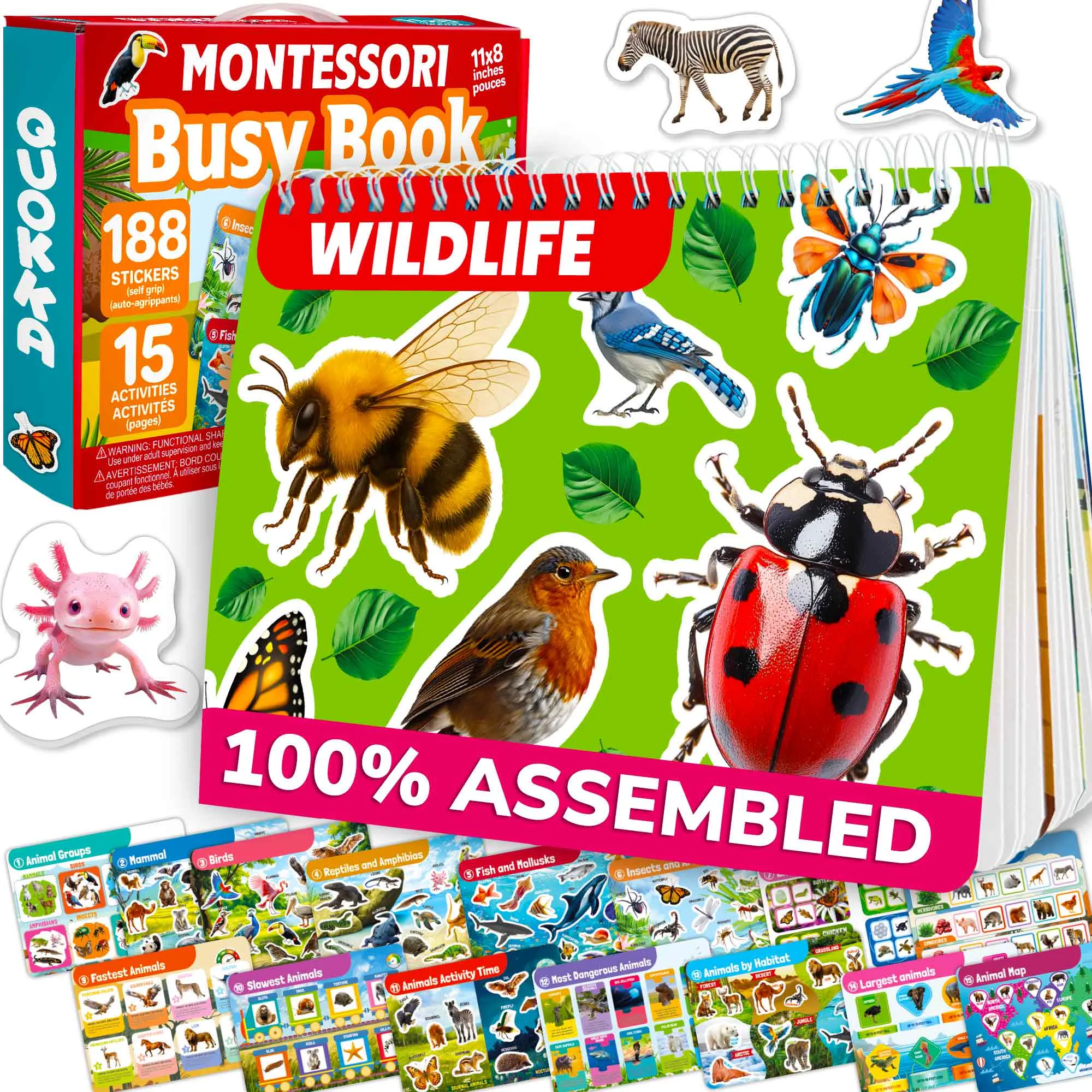
The book is 11 x 8 inches, so it sits comfortably on a toddler's lap or a low table. The supplied record lists 15 activity pages and 188 self-grip stickers. It does not include a page-by-page answer key or a recommended age range, so use your own judgment about which pages suit your child right now.
What the Wildlife book gives you
-
Montessori Busy Book for Kids | Learning Wildlife: 15 activity pages and 188 self-grip stickers Enough material for a rotating set of short sessions, with stickers that can be repositioned rather than glued down permanently.
Montessori Busy Book for Kids | Learning Wildlife
-
Montessori Busy Book for Kids | Learning Wildlife: Themed around amazing animals, their habitats, food, and behaviors Each page can become a small conversation about where an animal lives or what it eats, which stretches the book beyond sticker placement.
-
Montessori Busy Book for Kids | Learning Wildlife: Size 11 x 8 inches A portable size for table play, travel, or quiet time without needing a large workspace.
-
Montessori Busy Book for Kids | Learning Wildlife: Designed in the U.S.A. by Adducate Useful context if you are comparing this book with other preschool workbooks.
A simple three-step session
The book's own instructions are not included in the supplied information, so this routine is a practical way to use the materials rather than a manufacturer procedure.
- Pick one theme page: Choose a single activity page from the 15. Name the animals or habitat first, then let your child find the matching stickers.
- Set out a small sticker group: Pull only the stickers for that page. With 188 stickers in the book, keeping the rest stored away prevents mixing and makes cleanup faster.
- Talk through the page, then stop: Ask one or two questions about what the animal eats or where it lives. End while your child is still engaged, and return the stickers to their sheet.
Use the wildlife themes as conversation starters
The book groups activities around animals, habitats, food, and behaviors. That structure gives you a natural script: point to an animal, ask where it lives, then find the habitat sticker together. You do not need to know the answer key because the book is designed for exploration, not grading.
If a page feels too easy, ask a harder question about the same animal. If a page feels too busy, cover part of it with a blank sheet and work on one corner at a time. The goal is fine motor practice and sensory exploration, which the supplied description lists alongside spatial awareness.
Keep the book reusable between sessions
Self-grip stickers are the main reason this book can be used more than once. After a session, peel the stickers back onto their original sheet or a smooth surface and smooth the activity page flat. Store the book closed and flat so the pages do not crease.
The supplied record does not include cleaning instructions, so avoid soaking the pages or using harsh cleaners. A dry wipe or a lightly damp cloth on the cover is a reasonable default, but test a small corner first.
When this busy book fits your routine
This is a compact, theme-led activity book rather than a full preschool curriculum. The comparison below is based only on the supplied product facts.
- Good fit for quiet table play: The 11 x 8 inch size and self-grip stickers suit a short activity at home, in a waiting room, or on a trip.
- Good fit for animal-themed learning: The wildlife themes give you ready-made talking points about habitats, food, and behavior.
- Less certain for independent use: The supplied information does not state an age range or a difficulty progression, so a younger toddler may need you to set out stickers and name the animals first.