Why Problem Solving Matters in Toddler Play
Toddlers learn best through hands-on, repetitive activities that challenge them just enough. A fishing game naturally introduces cause and effect, hand-eye coordination, and patience—all key ingredients for problem solving. When your child tries to catch a fish and misses, they're not failing; they're testing strategies. The Montessori Fishing Game Bundle turns this trial-and-error process into a structured, screen-free experience that builds confidence alongside fine motor skills.
This bundle combines three classic Montessori activities: fishing, matching, and puzzling. Each one presents a small, solvable challenge that encourages your toddler to think, adjust, and try again. The result is a play session that feels like fun but secretly teaches persistence and logical thinking.
What the Bundle Offers
-
Montessori Fishing Game Bundle: Reel, match & puzzle! Get three Montessori classics in one bundle. The variety keeps your toddler engaged longer and lets you rotate activities to match their mood or skill level.
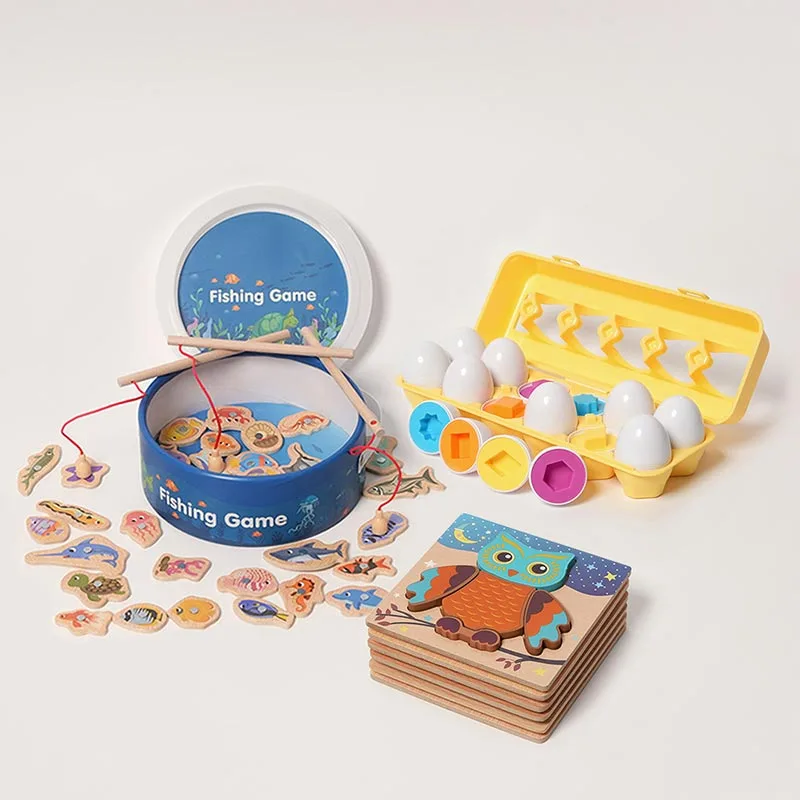
Montessori Fishing Game Bundle
-
Montessori Fishing Game Bundle: Build skills & save—order today for endless screen-free play. The bundle offers a cost-effective way to introduce multiple problem-solving challenges without buying separate toys.
Common Frustration Moments and How to Handle Them
It's normal for a toddler to get frustrated when the fish won't stay on the line or the puzzle piece doesn't fit. Instead of fixing it for them, try these supportive strategies:
First, model the action slowly. Show how to angle the rod or align the puzzle piece, then hand it back to your child. Second, break the task into smaller steps. For the fishing game, help them focus on just getting the hook near the fish before worrying about the catch. Third, celebrate effort over success. A simple 'You tried a different way this time!' reinforces problem-solving behavior.
Remember that frustration is part of learning. The Montessori approach values the process over the product, so a 'failed' attempt is still a valuable lesson in cause and effect.
Building Fine Motor Skills Through Play
The fishing game targets the small muscles in your toddler's hands and fingers. Gripping the rod, coordinating the line, and manipulating puzzle pieces all strengthen the fine motor control needed for writing, buttoning, and self-feeding. As your child repeats these actions, they build neural pathways that support future academic tasks.
For best results, keep sessions short and follow your child's lead. If they lose interest, switch to the matching or puzzle activity within the same bundle. This flexibility prevents burnout and keeps problem solving fresh.
Tips for Extending the Play Value
Once your toddler has mastered the basic fishing game, introduce new challenges. Ask them to catch only the red fish first, or to match the fish to a picture card before placing it in the puzzle. These variations require planning and memory, deepening the problem-solving experience.
You can also incorporate counting or color naming during play. For example, 'Can you catch two blue fish?' This adds a layer of cognitive demand without making it feel like a lesson. The open-ended nature of the Montessori Fishing Game Bundle means it grows with your child.
What the Supplied Information Doesn't Settle
The available product details do not specify the exact number of fish, puzzle pieces, or the rod's length. These dimensions could affect how easily a very young toddler can handle the rod. If you have a younger child, consider supervising closely and offering verbal guidance until they develop the necessary grip strength.
Similarly, there are no supplied care instructions for cleaning the wooden pieces. To keep the set in good condition, wipe with a damp cloth and avoid soaking. The absence of this detail doesn't mean the product lacks durability—just that the manufacturer hasn't provided specific cleaning guidance in the available information.