Quick answer
The Montessori Sorting Puzzle builds fine motor control, logical matching, and early vocabulary through hands-on play. It's a focused learning tool, not a general entertainment toy.
Why choose a sorting puzzle over other toys?
A sorting puzzle like this one deliberately targets cause-and-effect thinking and hand-eye coordination. Unlike open-ended blocks or pretend play sets, it guides the child toward a specific matching task, which builds concentration and problem-solving persistence.
Trade-off: Limited play patterns
Because the puzzle has a defined goal (matching cards to pieces), some children may lose interest after mastering it. If your child prefers free-form construction or sensory exploration, a stacking toy or a sensory bin might offer longer engagement.
Decision rules: Is this puzzle right for your child?
- Age 3+ readiness: The set is labeled for ages 3 and up. If your child still mouths objects or cannot sit for a short guided activity, wait a few months.
- Fine motor stage: Your child should be able to grasp small objects and rotate their wrist. If they still use a full-palm grasp, try larger knob puzzles first.
- Attention span: The puzzle works best for children who can focus on a single task for 5-10 minutes. For shorter attention spans, break the 25 cards into smaller sets. Start with 5-7 cards per session to avoid overwhelm.
- Language development goal: Each card depicts a specific object or concept. Use the puzzle to name items, describe colors, and ask simple questions like 'Where is the apple?'
Product details
-
Montessori Sorting Puzzle: Includes 7 puzzle pieces, 25 double-sided cards, and a storage box. Made from eco-friendly wood and non-toxic card paper. The variety of cards keeps the activity fresh, while the sturdy materials withstand daily toddler use.
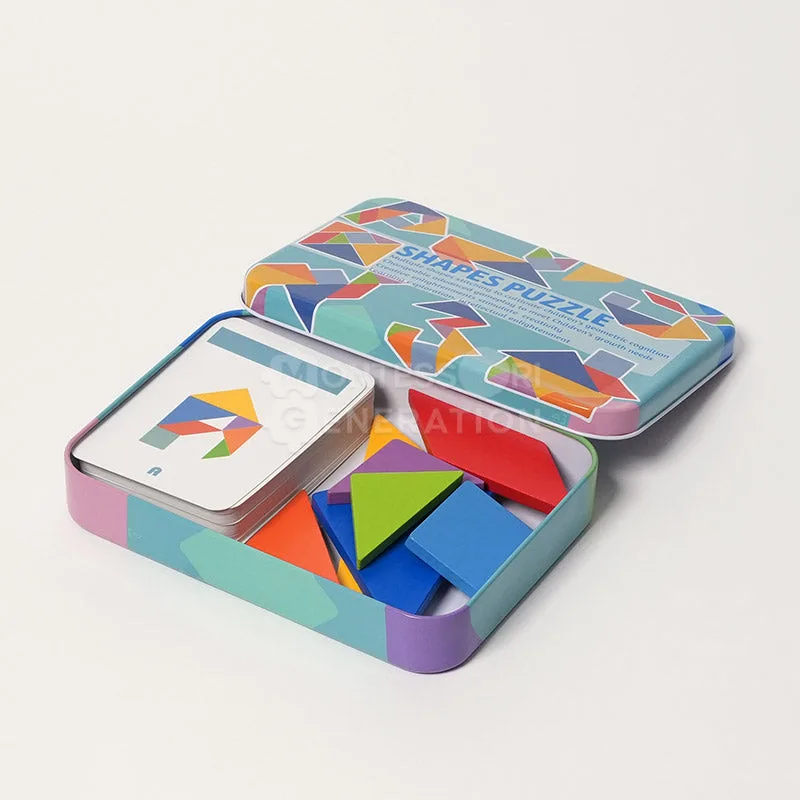
Montessori Sorting Puzzle
Who should buy this puzzle?
Best for
- Parents wanting a structured activity that teaches matching and vocabulary
- Children aged 3-4 who enjoy guided tabletop play
Not ideal for
- Children who still put small objects in their mouth (choking hazard)
- Families seeking an open-ended, free-play toy