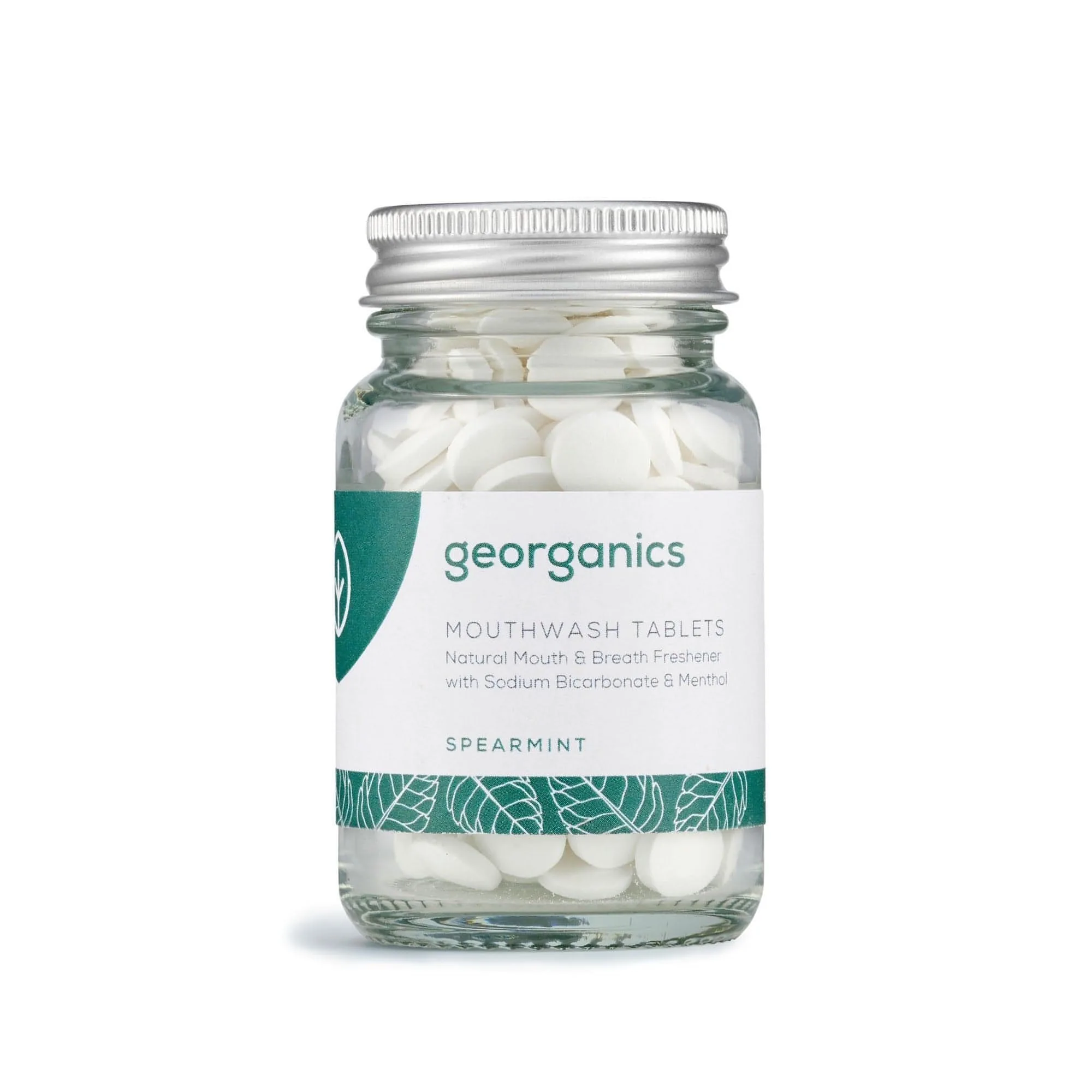
What the comparison really boils down to
If you are choosing between mouthwash bits and liquid mouthwash, you are really deciding between convenience and habit. Mouthwash bits are a solid tablet you chew then swish, while liquid mouthwash is the familiar rinse you pour from a bottle. Both can freshen breath and support oral health, but they differ in format, ingredients, and waste. This comparison uses two Mint Mouthwash Bits products from Bite to show what each option actually delivers — and where the evidence stops.
Two mouthwash bits, one familiar category
-
Mint Mouthwash Bits – Refreshing, Zero-Waste Mouthwash Tablets with Nano-Hydroxyapatite and Xylitol: 124 Mint Mouthwash Bits (2oz) – A 4-month supply of minty freshness! This product gives you a clear supply duration, so you know how often to reorder without guessing.
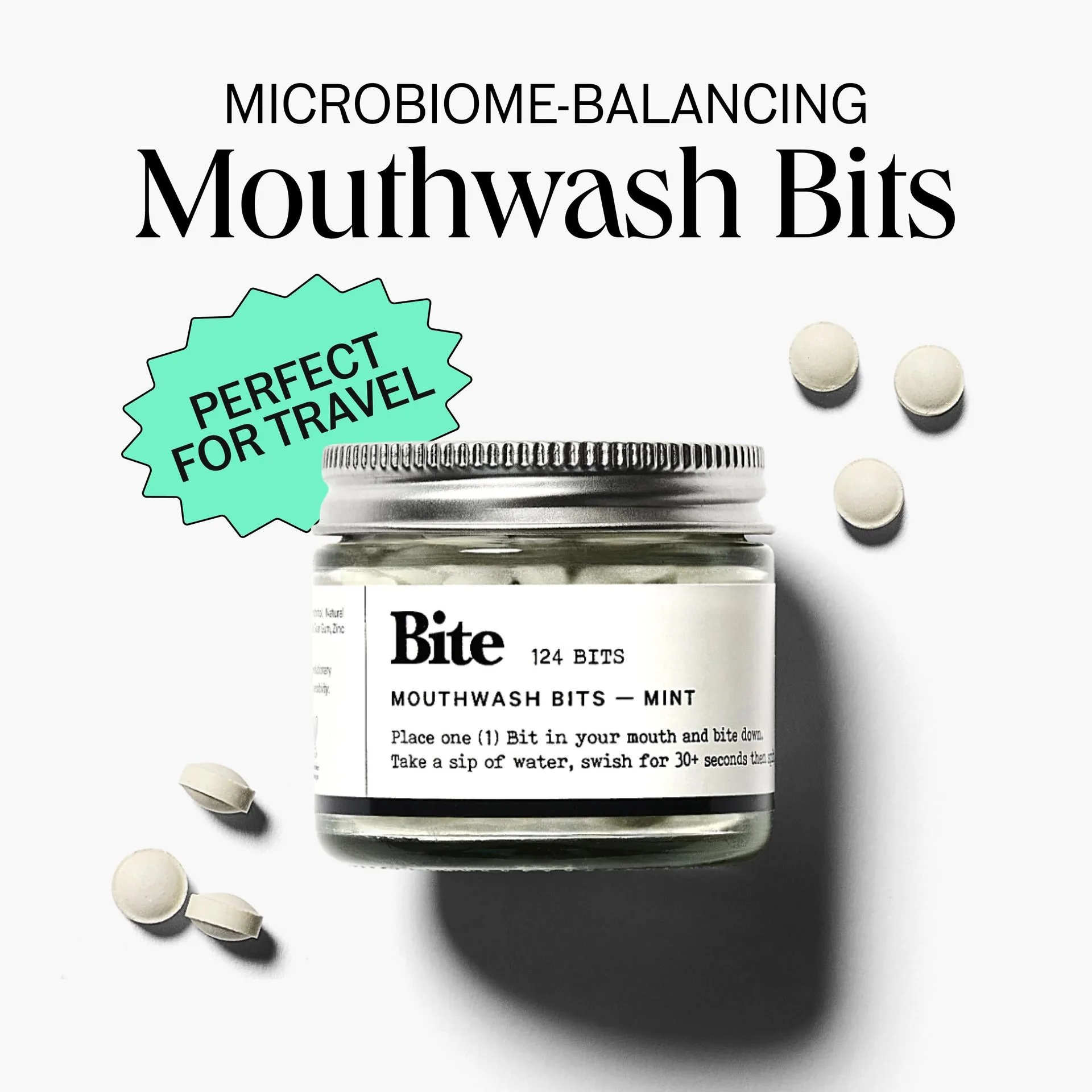
Mint Mouthwash Bits – Refreshing, Zero-Waste Mouthwash Tablets with Nano-Hydroxyapatite and Xylitol
-
Mouthwash: Experience a refreshing minty mouthwash alternative that comes in a refillable glass jar. The refillable glass jar reduces plastic waste compared to single-use liquid mouthwash bottles.
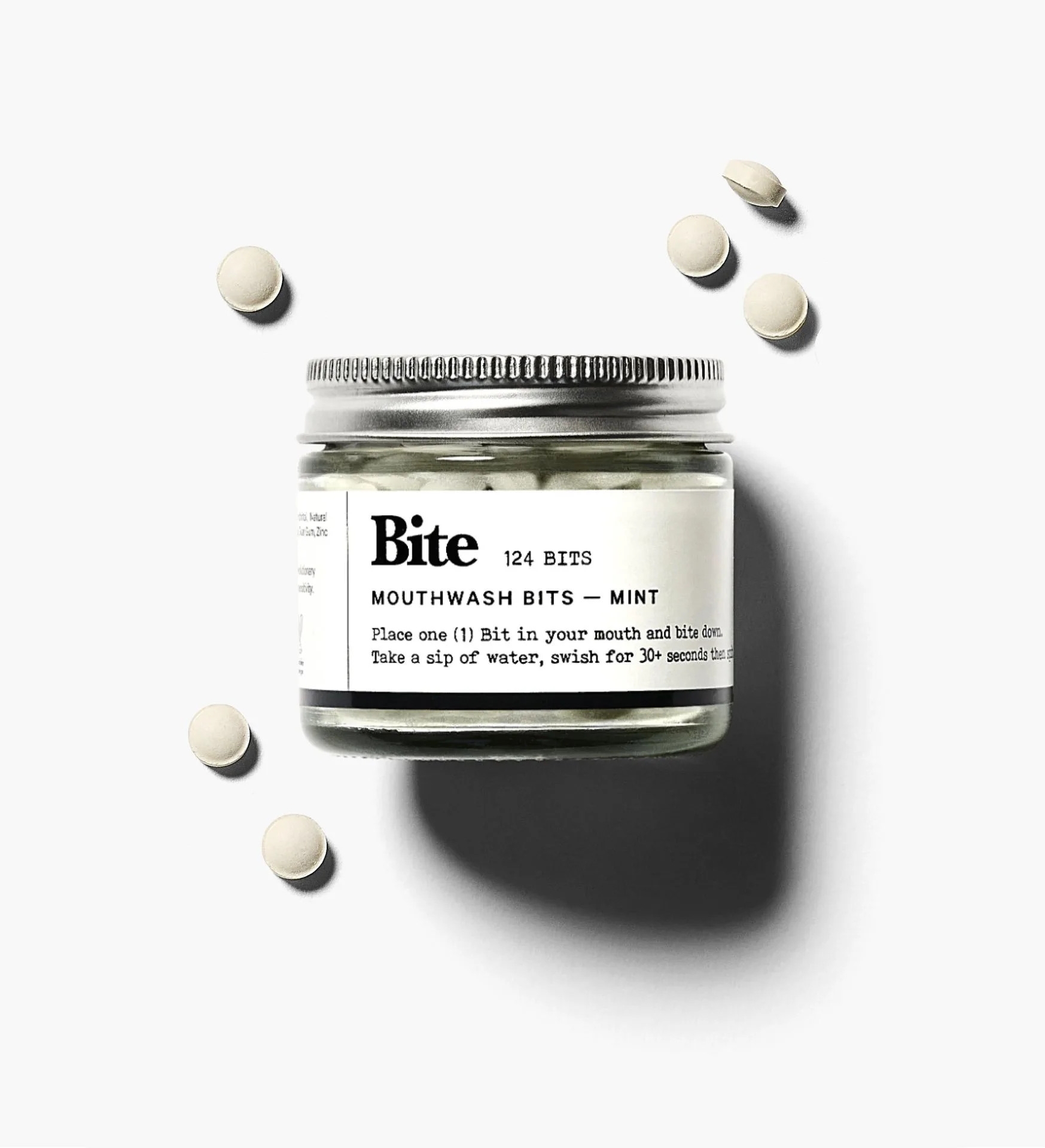
Mouthwash
Format and portability
Mouthwash bits are solid tablets that you chew, add water, swish for 30 seconds, and spit. They come in a glass jar and take up less space than a typical liquid bottle. The Mint Mouthwash Bits (product ID 54625) ship in a 2 oz jar with 124 bits — a 4-month supply. That compact size makes them travel-friendly and spill-proof. Liquid mouthwash usually comes in a plastic bottle that is bulkier and can leak. If you travel often or want to cut down on bathroom clutter, the bits format is a clear practical advantage.
Ingredients and oral care benefits
Both Mint Mouthwash Bits products (IDs 54625 and 54684) are formulated with nano-hydroxyapatite (nHap), a mineral that helps remineralize and strengthen enamel. The ingredient list for product 54625 includes xylitol, calcium carbonate, and zinc citrate — all common in oral care for their roles in reducing decay and freshening breath. The product is also alcohol-free, which is gentler on the oral microbiome. Liquid mouthwashes often contain alcohol, artificial flavors, and preservatives. If you prefer a cleaner ingredient profile, the bits give you more control over what goes into your mouth.
Mouthwash bits vs liquid mouthwash: key differences at a glance
- Format: Bits: solid tablet you chew and swish. Liquid: pre-mixed rinse you pour.
- Packaging waste:
- Travel suitability: Bits: compact, spill-proof, TSA-friendly. Liquid: bulky, leak risk, may exceed carry-on limits.
- Ingredients: Bits: nano-hydroxyapatite, xylitol, no alcohol. Liquid: varies widely, often contains alcohol and artificial additives.
- Usage time: Bits: chew, add water, swish 30 seconds, spit. Liquid: pour capful, swish 30 seconds, spit.
What the evidence does not settle
The supplied product records do not include a direct comparison with any specific liquid mouthwash brand. They also do not confirm clinical efficacy for plaque reduction, gingivitis prevention, or whitening. The nano-hydroxyapatite in both products is a well-known remineralizing agent, but the records do not state a concentration or independent test results. If you need a medicated mouthwash for a specific dental condition, consult your dentist. For everyday fresh breath and a lower-waste routine, the bits are a solid choice based on the available facts.
How to choose
Pick mouthwash bits if you want a travel-friendly, spill-proof option with a cleaner ingredient list and less plastic waste. The Mint Mouthwash Bits (ID 54625) give you a 4-month supply in one jar, and the refillable glass jar (ID 54684) makes it easy to keep using the same container. Stick with liquid mouthwash if you prefer a familiar rinse, need a specific therapeutic formula, or are not ready to switch formats. Both can work — the difference is in the daily habit and the environmental footprint.