Quick answer
For most Tesla owners, combining mud flaps with paint protection film (PPF) on high-impact areas gives the best defense. If you must choose one, mud flaps are the more affordable first step for rock chip protection, while PPF offers broader coverage.
How they protect differently
Mud flaps act as a physical barrier, blocking debris thrown up by your tires before it reaches the paint. They're especially effective on the lower body panels, rocker panels, and rear doors. PPF, on the other hand, is a transparent urethane film applied directly to the paint. It absorbs impacts and prevents scratches, but it only protects the exact areas it covers.
The key difference is coverage. Mud flaps protect a specific zone behind the wheels, while PPF can be applied to the entire front bumper, hood, fenders, mirrors, and more. This makes PPF more versatile but also more expensive, especially if you cover large panels.
Installation and maintenance trade-offs
Mud flaps are typically easier to install—many designs are screwless and require no drilling. PPF installation is more involved, often needing professional help to avoid bubbles and misalignment. However, once applied, PPF is nearly invisible and requires no ongoing maintenance, whereas mud flaps can accumulate dirt and need occasional cleaning.
Consider your driving habits. If you frequently drive on gravel roads or in rainy climates, mud flaps provide constant, low-maintenance protection. If you're more concerned about highway debris or parking lot dings, PPF on the front end might be worth the investment.
Trade-offs at a glance
- Mud flaps: cost-effective and targeted: Choose mud flaps if you want affordable, easy-to-install protection for the lower body panels and rear doors. They're especially effective for rock chip protection on the sides of your car. If your budget is limited, start with mud flaps and add PPF later to high-impact areas.
- PPF: broad coverage and invisible defense: Choose PPF if you want protection for the front bumper, hood, and mirrors, or if you're concerned about scratches from car washes and road debris. It offers more comprehensive coverage but at a higher cost. For maximum coverage, apply PPF to the front end and combine it with mud flaps for the sides.
- Combine both for comprehensive protection: For the best of both worlds, install mud flaps on all four wheels and add PPF to the front bumper and hood. This approach covers the most vulnerable areas without breaking the bank. Prioritize the front end and lower sides—these are the most prone to rock chips.
Product spotlight
-
Premium Model 3 & Y Mud Flaps: The Premium Model 3 & Y Mud Flaps use a tough hybrid construction—rigid on top and flexible below—and feature a screwless design for easy installation. This design offers durable protection against road debris while being simple to install without tools, making it a practical first line of defense.
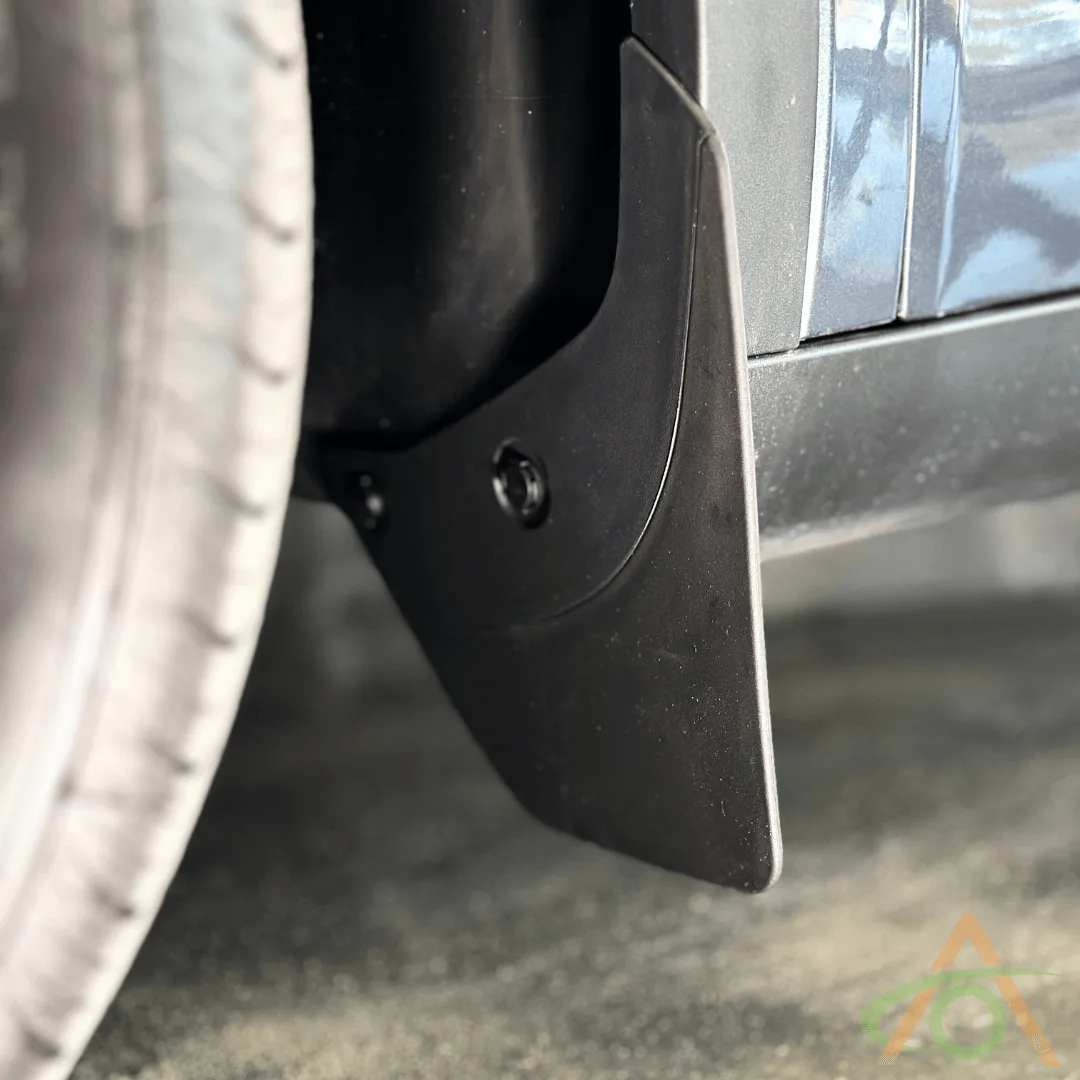
Premium Model 3 & Y Mud Flaps
Which is right for you?
Best for
- Drivers who want quick, budget-friendly protection against rock chips and road debris
- Model 3 or Model Y owners who frequently drive on gravel or unpaved roads
Not for
- Owners who want protection for the entire front end, including the hood and mirrors—consider PPF instead
- Those who prefer a completely invisible solution—mud flaps are visible and may not match your aesthetic