Quick answer
To make mugwort tea, pour just-boiled water (about 200-212°F) over one tea bag or one teaspoon of dried mugwort leaf, cover, and steep 5-7 minutes. Start with a shorter steep if you are new to mugwort, because its earthy, gently bitter flavor gets stronger the longer it sits. Drink it warm, and keep the ritual simple so the botanical character comes through.
Why mugwort has stayed in the herbal cupboard
Mugwort (Artemisia vulgaris) is a woody, aromatic herb that has been used in European and Asian folk traditions for centuries, often tied to dream work, digestive bitters, and seasonal rituals. It is not a tea in the Camellia sinensis sense; it is a single-ingredient herbal infusion, which is why its flavor reads as earthy, slightly sage-like, and faintly bitter rather than brisk or grassy.
Traditional mugwort tea preparation is deliberately plain: dried leaf, hot water, a covered cup, and time. That simplicity is the point. Because mugwort is potent in aroma, most of the technique is about controlling temperature and steeping time rather than adding anything else.
What you need before you start
You do not need special equipment for mugwort herbal tea. A mug, a kettle, and a way to strain or remove the leaf is enough. If you are using loose mugwort loose leaf tea, a fine-mesh strainer or a basket infuser works better than a wide-holed strainer, since dried mugwort leaf is light and tends to float.
A small lid or saucer matters more than it sounds. Covering the cup traps the volatile aromatic oils that give mugwort its distinctive scent, so the finished cup tastes fuller instead of flat.
- Dried mugwort leaf or a mugwort tea bag
- Fresh water, ideally filtered if your tap water is heavily mineralized
- A mug or heatproof glass
- A fine strainer, infuser, or teapot with a built-in filter
- A lid or small saucer to cover the cup
How much mugwort to use
For a standard 8-ounce cup, use one tea bag or about one teaspoon of dried mugwort leaf. If you prefer a stronger, more bitter infusion, add a little more leaf rather than steeping far longer; extended steeping pulls out harsher bitter compounds and can make the cup taste muddy.
If you are making a larger pot, scale the leaf with the water but keep the steeping time roughly the same. Mugwort is aromatic enough that doubling the leaf is usually a better move than doubling the time.
Water temperature and steeping time
Mugwort tea steeping time is the single biggest variable in the cup. A 5-minute steep gives a rounded, earthy infusion with a mild bitter edge. Pushing to 7 minutes deepens the color and the herbal intensity. Beyond about 10 minutes, the bitterness starts to dominate and the aroma fades.
Use water just off a full boil, around 200-212°F. Mugwort is a sturdy dried herb, so cooler water under-extracts it and leaves the cup tasting thin. Pour, cover, and set a timer rather than guessing.
Step-by-step mugwort tea preparation
- 1. Measure the leaf: Add one tea bag or about one teaspoon of dried mugwort leaf to your cup or infuser. If you are using loose leaf, give it room to expand rather than packing it tightly. Checkpoint: too much leaf is the most common reason a first cup tastes overwhelmingly bitter.
- 2. Heat fresh water to just off a boil: Bring water to a boil, then let it settle for a few seconds before pouring. Aim for roughly 200-212°F so the dried herb fully opens up. Checkpoint: water that has been boiled repeatedly tastes flat and will dull the mugwort aroma.
- 3. Pour and cover: Pour the hot water directly over the leaf, then place a lid or saucer over the cup. The cover holds in the aromatic oils that make mugwort smell the way it does. Checkpoint: skipping the cover is the most common reason the tea smells better than it tastes.
- 4. Steep 5-7 minutes: Set a timer. Five minutes gives a gentler, earthier cup; seven minutes gives a deeper, more bitter one. Do not walk away and let it sit indefinitely. Checkpoint: past 10 minutes, bitterness takes over and the aroma fades.
- 5. Remove the leaf and taste: Take out the tea bag or strain the loose leaf, then sip before adding anything. If it is sharper than you like, shorten the steep next time rather than adding sweetener first. Next step: note your preferred time so you can repeat the same cup.
- 6. Adjust only if needed: If the cup still reads too bitter, a small amount of honey or a slice of lemon can round it out. If it tastes weak, add more leaf next time instead of steeping longer. Checkpoint: fix strength with quantity, not time.
A mugwort tea worth brewing
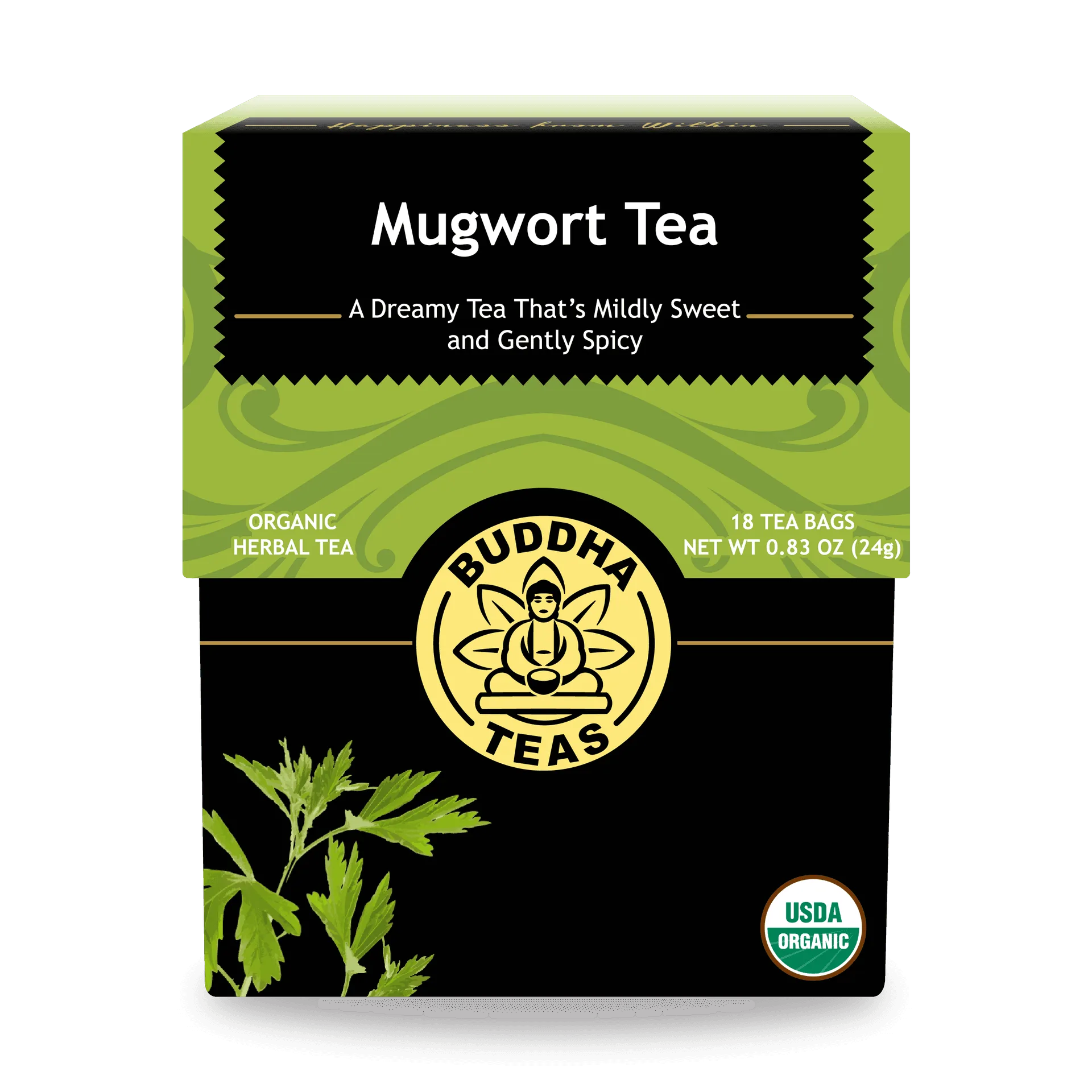
- Mugwort Tea: Buddha Teas Organic Mugwort Tea is a single-ingredient infusion made with pure wild-harvested botanicals and no hidden additives or perfumes, delivered in clean, plastic-free packaging. Because nothing is added to mask the herb, the steeping time you choose directly shapes the flavor, so a 5-7 minute steep gives you the most control over the final cup.