Two Dried Superfruits, Different Personalities
Dried mulberries and dried goji berries both come from nutrient-dense plants, but they behave differently in the kitchen. Mulberries are sweet, chewy, and soft — closer to a dried fig in texture. Goji berries are tart, slightly chewy, and more firm, with a flavor that some describe as a cross between cranberry and cherry.
Your choice depends on how you plan to use them: as a snack, a baking ingredient, or a mix-in for oatmeal and smoothies. Let's look at what each brings to the table.
Mulberries vs Goji Berries at a Glance
This table summarizes the key differences based on the supplied product information.
- Taste: Mulberries are sweet with no tartness, like a mild dried berry. Goji berries are tart with a hint of sweetness, often compared to cranberries.
- Texture: Mulberries are soft and chewy, easy to bite. Goji berries are firmer and slightly leathery, requiring a bit more chew.
- Best uses: Mulberries work well as a snack, in baking, or stirred into yogurt. Goji berries are great in trail mix, granola, or as a tart accent in savory dishes.
- Form: Both are dried whole berries. Mulberries are typically larger and softer; goji berries are smaller and more uniform.
What the Mulberries Product Record Confirms
-
Mulberries: Navitas Organics Mulberries are an everyday superfood staple. These dried berries are sweet, chewy and nutrient-dense. Snack on them, bake with them, mix them in everywhere! This confirms that mulberries are versatile, ready to eat straight from the bag, and can replace raisins or dried figs in recipes.
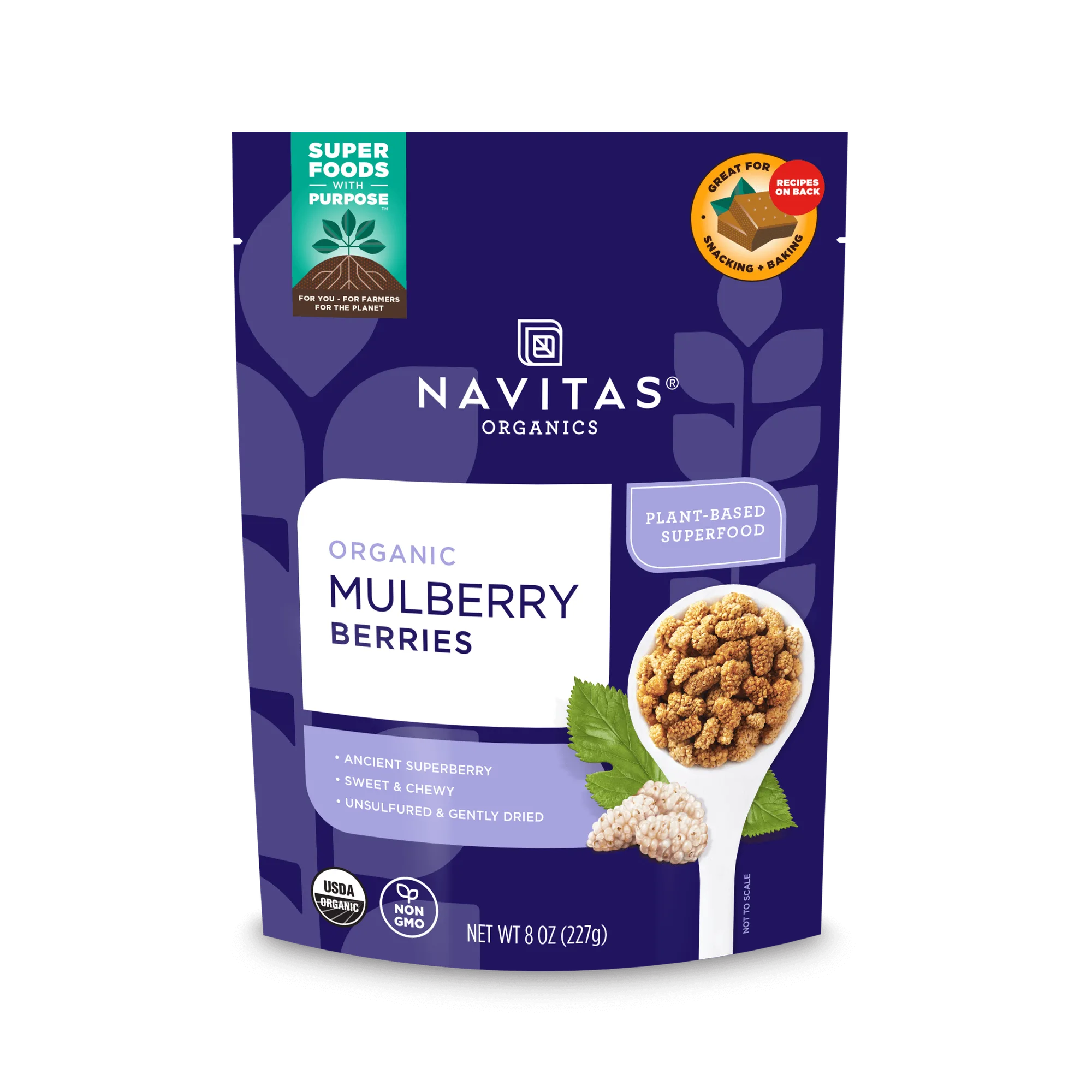
Mulberries
Choosing Based on Your Routine
If you want a naturally sweet snack that needs no preparation, mulberries are the simpler pick. Their soft, chewy texture makes them easy to eat by the handful or mix into oatmeal and yogurt without soaking.
If you prefer a tart flavor that stands up to nuts and seeds in trail mix, goji berries are the better match. Their firmer texture holds up in granola and baked goods without turning mushy.
Both can be used in baking, but mulberries contribute more sweetness and moisture, while goji berries add a tangy pop. For a balanced superfruit blend, you can combine both in the same recipe.
What the Label Still Doesn't Tell You
The supplied product records do not include specific health benefit claims, allergen statements, or shelf-life data for either fruit. If you have dietary restrictions or are comparing nutritional profiles, check the package label directly or contact the manufacturer. This comparison focuses on taste, texture, and everyday use — not on unverified health properties.