Quick answer
In most stores, multipurpose cleaner and surface cleaner are the same category. Both are spray-and-wipe formulas for sealed, non-porous surfaces like countertops, tile, glass and painted woodwork. The real difference is format: a full-size spray bottle, a compact refill concentrate, or a travel mini. For a single kitchen-and-bath routine, one multipurpose formula plus a refill is enough.
Why the two terms overlap
Retailers use 'multipurpose' and 'surface' interchangeably because both describe the same job: a liquid cleaner you spray on a hard, sealed surface and wipe off. Neither term tells you anything about ingredients, dilution, or whether the formula is safe on stone, so read the label rather than the category name. If a product is labeled for sealed surfaces, it is not intended for unsealed grout, raw wood, or porous stone. That is a limitation of the label, not a hidden feature.
Format is the real decision
Once you accept that the chemistry is broadly similar, the choice becomes about packaging and how you clean. A ready-to-use spray bottle is convenient but you replace the whole bottle when it empties. A concentrate refill keeps your existing spray bottle and only replaces the small glass vial of cleaner. A travel mini covers spot cleaning away from home. These are not competing formulas; they are three formats of the same routine.
Which cleaner for kitchen counters
For everyday kitchen counters, use one multipurpose surface cleaner on sealed stone, laminate, tile, and stainless steel, then wipe with a clean cloth. Keep a separate product only if your countertop manufacturer explicitly requires a specialty stone cleaner. For greasy stovetop residue, spray, let it sit briefly, and wipe; for sticky spots, a second pass usually beats a stronger chemical. A travel-size bottle also works as a spot stain remover on clothing, which is a useful backup for kitchen spills.
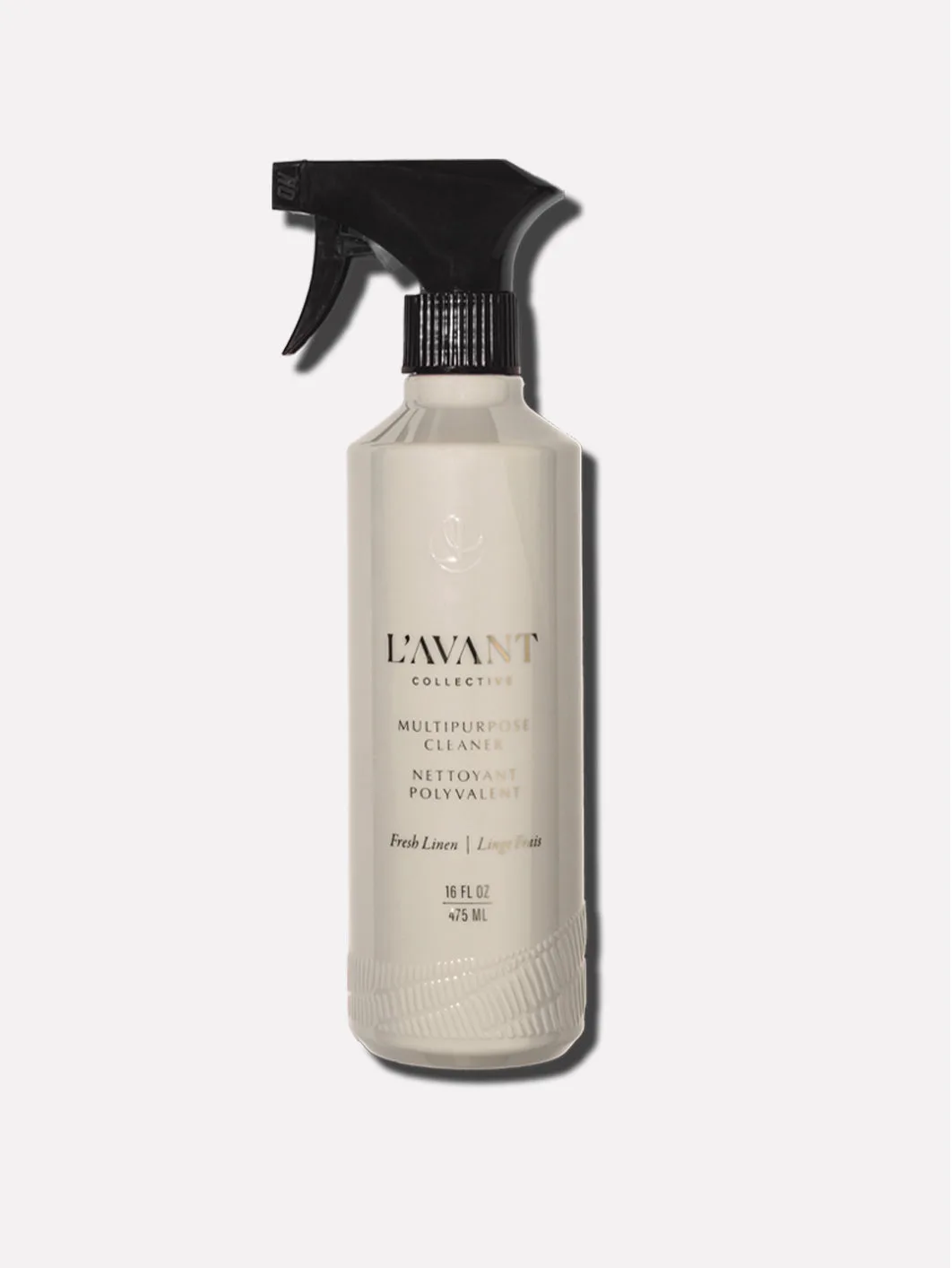
multipurpose surface cleaner
What to check before you buy
Look for three things: whether the label says sealed surfaces, whether a refill option exists, and whether the scent is available in both the full-size and refill formats so you can stay consistent. If you already own a spray bottle you like, buying a concentrate refill is the lower-waste path. If you are starting from zero, buy the bottle once and plan to refill it.
Trade-offs at a glance
- Full-size spray bottle: Ready to use immediately, but you replace the entire bottle each time it empties. Best if you have never owned a refillable bottle.
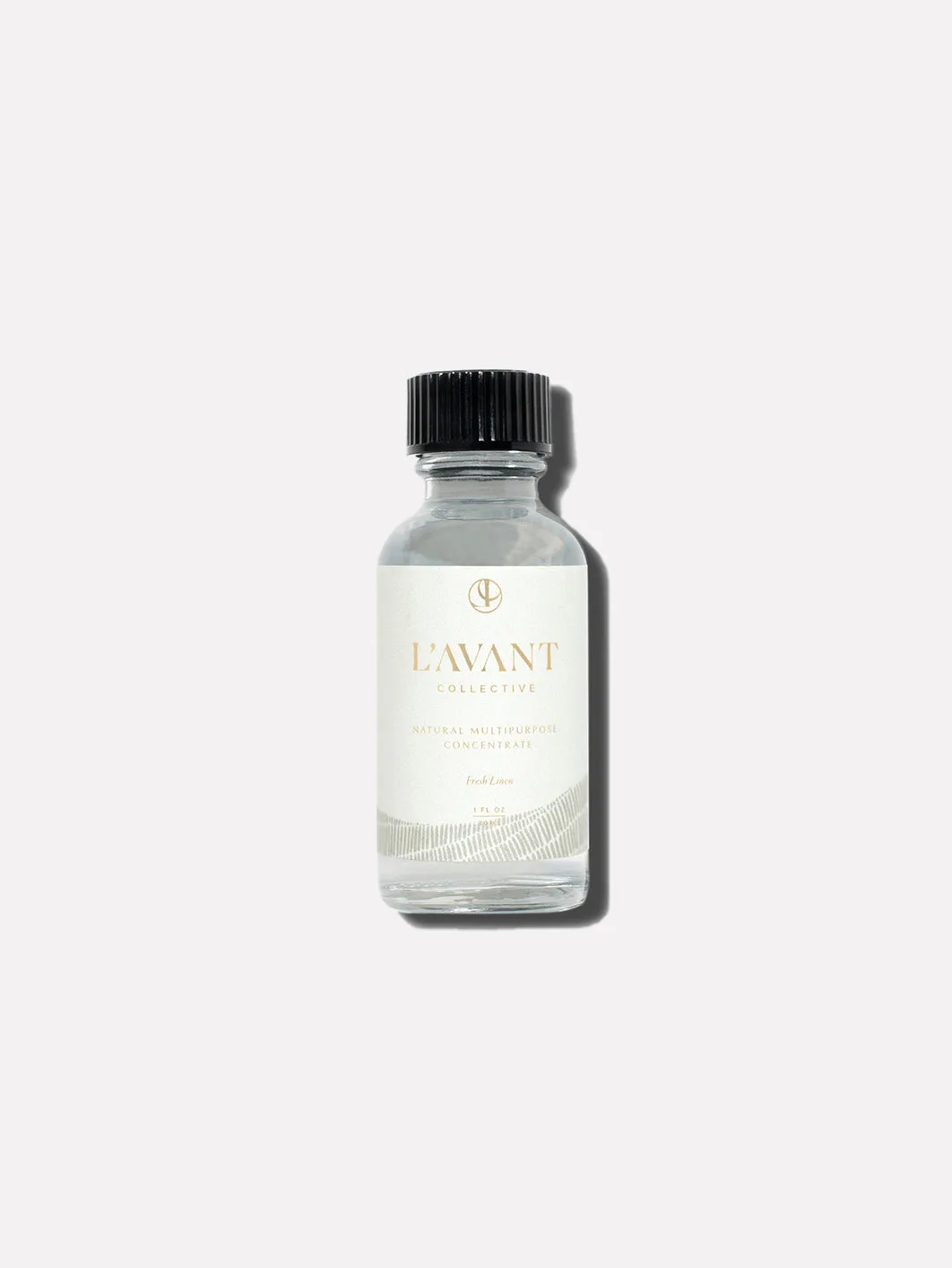
- Concentrate refill: Uses a small 1 oz. glass bottle and your existing spray bottle, so less plastic is discarded. Best if you already own a spray bottle and clean regularly.
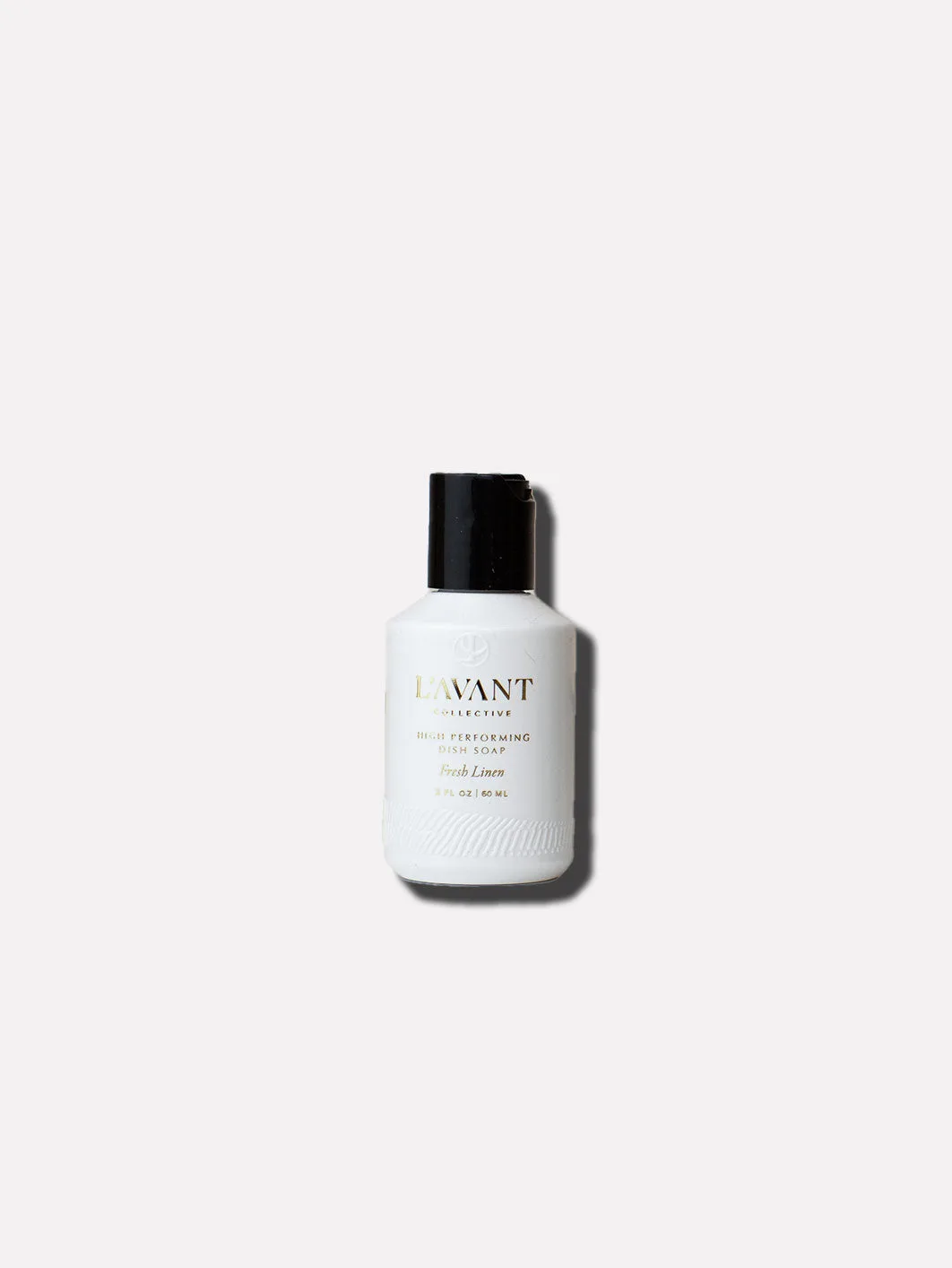
- Travel mini: A 2 oz. bottle for bags and on-the-go surfaces, and it doubles as a clothing spot remover. Best as a supplement, not your only bottle.
Products in this comparison
- Multipurpose Surface Cleaner Refill: The Multipurpose Surface Cleaner Refill is a 1 oz. eco-luxe glass bottle of concentrate designed to refill your existing L'AVANT spray bottle. It keeps your original bottle in use and cuts plastic waste, which is the main reason to choose a refill over a new full-size spray.
- Mini Travel Multipurpose Cleaner: The Mini Travel Multipurpose Cleaner is a 2 oz. bottle of multipurpose surface cleaner that fits in a bag, and it also works as a spot stain remover on clothes. It covers on-the-go surfaces and doubles as a stain treatment, so you do not need a separate travel cleaner.
- Eco-Friendly Dish Sponges - Set of 2: The Eco-Friendly Dish Sponges come as a set of two, are plastic free, and are made of loofa fiber and wood pulp cellulose held together without glue, making them dishwasher safe. They pair with a surface cleaner for kitchen wipe-downs and can be sanitized in the dishwasher instead of thrown away.
Which should you choose?
Choose a multipurpose surface cleaner if
- You clean sealed countertops, tile, glass, and painted woodwork with one routine.
- You want a refillable system that reduces plastic waste over time.
- You need a travel-size option for bags, desks, or car interiors.
Do not choose it if
- Your countertop or stone manufacturer requires a specialty cleaner for that material.
- You need a disinfectant with a specific kill claim; check the label instead of assuming.
- You are cleaning unsealed grout, raw wood, or other porous surfaces.