Quick answer
Murder mystery games are role-playing social events where guests act as suspects and solve a crime through conversation and deduction. Home escape room games are cooperative puzzle challenges where players work together to escape a scenario by finding clues and solving puzzles. Your choice depends on whether you prefer structured character interaction or hands-on problem-solving.
How the social dynamic differs
Murder mystery games thrive on character interaction and improvisation. Each player typically receives a character profile and secret objectives, making the experience feel like a live theatre dinner party. Conversation, bluffing, and negotiation are central to the fun.
Escape room games, on the other hand, are purely cooperative. All players share the same goal — escape the room — and must combine their logic, observation, and communication skills to solve puzzles together. There are no secret roles or hidden agendas, which can make the experience more straightforward and less intimidating for shy guests.
Setup and preparation
Murder mystery kits often require more upfront preparation from the host, such as distributing character sheets, assigning costumes, and setting the scene. The game unfolds over a meal or evening, with timed reveals and discussion rounds. It works best when guests are willing to stay in character for a few hours.
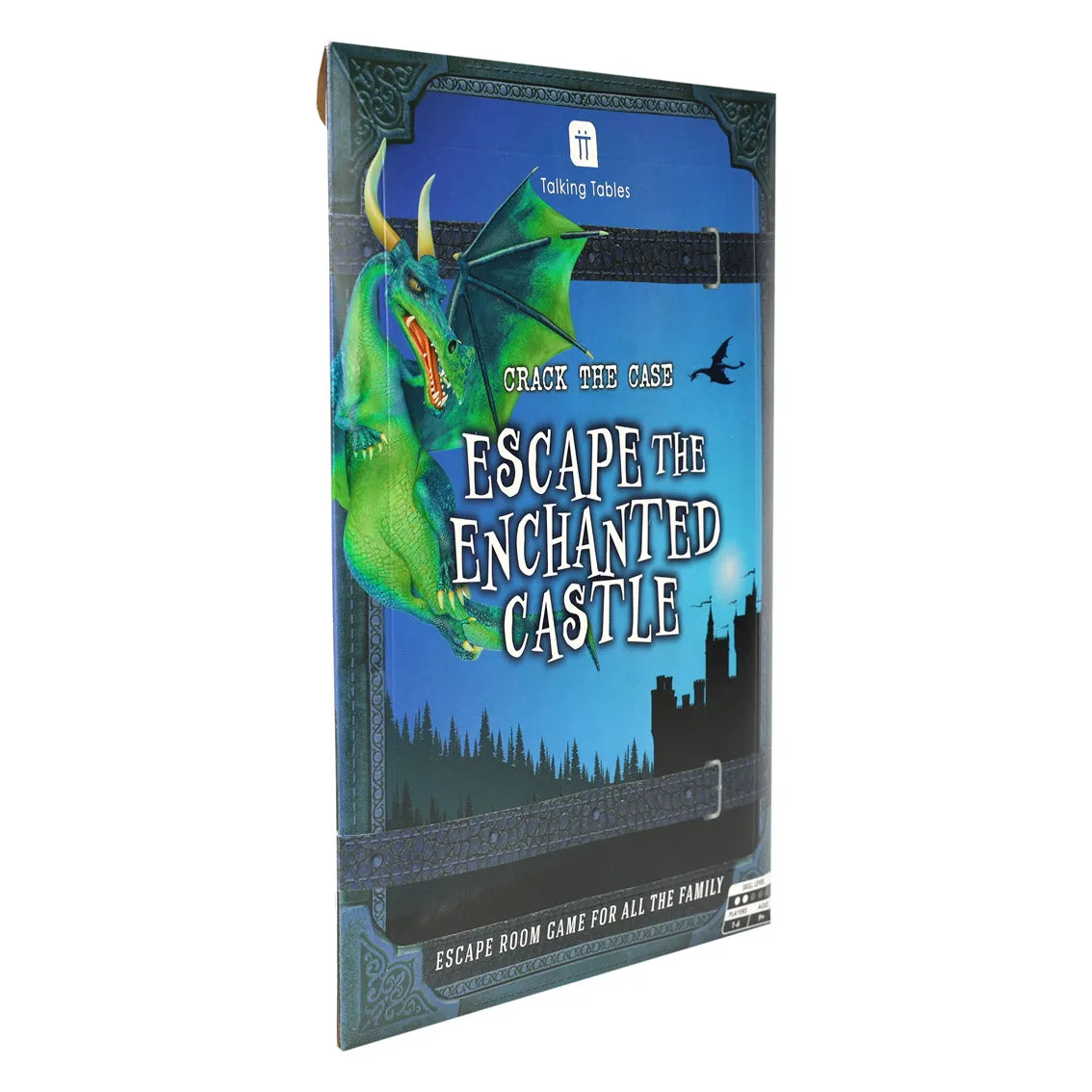
Home escape room games like the 'Escape The Enchanted Castle - Envelope Escape Room Game' are designed for quick setup — just open the envelope and start. There are no costumes or character briefings needed. The game is self-contained and can be completed in a single session, making it ideal for a casual games night.
Group size and player roles
Murder mystery parties usually need a minimum of 6–8 players to fill all character roles, and the experience scales with more participants. Each person has a distinct part to play, so no one is left out.
Escape room games are flexible with group size. The 'Escape The Enchanted Castle' game can be played with 2–6 players, and everyone works together on the same puzzles. This makes it easier to organise for smaller gatherings or couples' nights.
Trade-offs to consider
- Social vs. intellectual focus: Murder mysteries prioritise character-driven conversation and acting. Escape rooms prioritise collaborative puzzle-solving and logic. Choose murder mystery for guests who love improv and storytelling; choose escape room for guests who enjoy brain teasers and teamwork.
- Preparation time: Murder mystery kits often require host preparation like assigning roles and setting a scene. Escape room games like the Enchanted Castle envelope are ready to play in seconds. If you want a low-effort host experience, an escape room game is the simpler option.
- Player count flexibility: Murder mysteries need a larger cast (often 6+) to work well. Escape room games can accommodate smaller groups of 2–4 players. For a small or last-minute gathering, an escape room game is more practical.
Product facts at a glance
- Escape The Enchanted Castle - Envelope Escape Room Game: Escape The Enchanted Castle - Envelope Escape Room Game: embark on a quest to rescue a dragon from an evil wizard, finding yourselves imprisoned in an enchanted castle. Uncover hidden clues scattered throughout tapestries, spell books, and more. This is a self-contained escape room game that requires no extra props or preparation. It's ideal for players who want a structured puzzle challenge without role-playing or costumes.
- Saucy Food Jokes - 60 Cards: Saucy Food Jokes - 60 Cards: a bottle-shaped box of 60 cheeky puns and family-friendly food jokes, perfect for dinner parties, games nights, or barbecues. While not a full game, this can serve as a light-hearted icebreaker or filler activity between rounds of a murder mystery or escape room game, adding laughter without derailing the main event.
Which one fits your party?
Best for
- Groups that enjoy role-playing, costumes, and character-driven storytelling
- Large gatherings (6+ guests) where everyone can take on a distinct role
Not ideal for
- Small groups (2–4 people) who want a quick, cooperative puzzle challenge
- Hosts who prefer minimal setup and no character preparation