Start with what the Musha 1Pole Tent actually includes
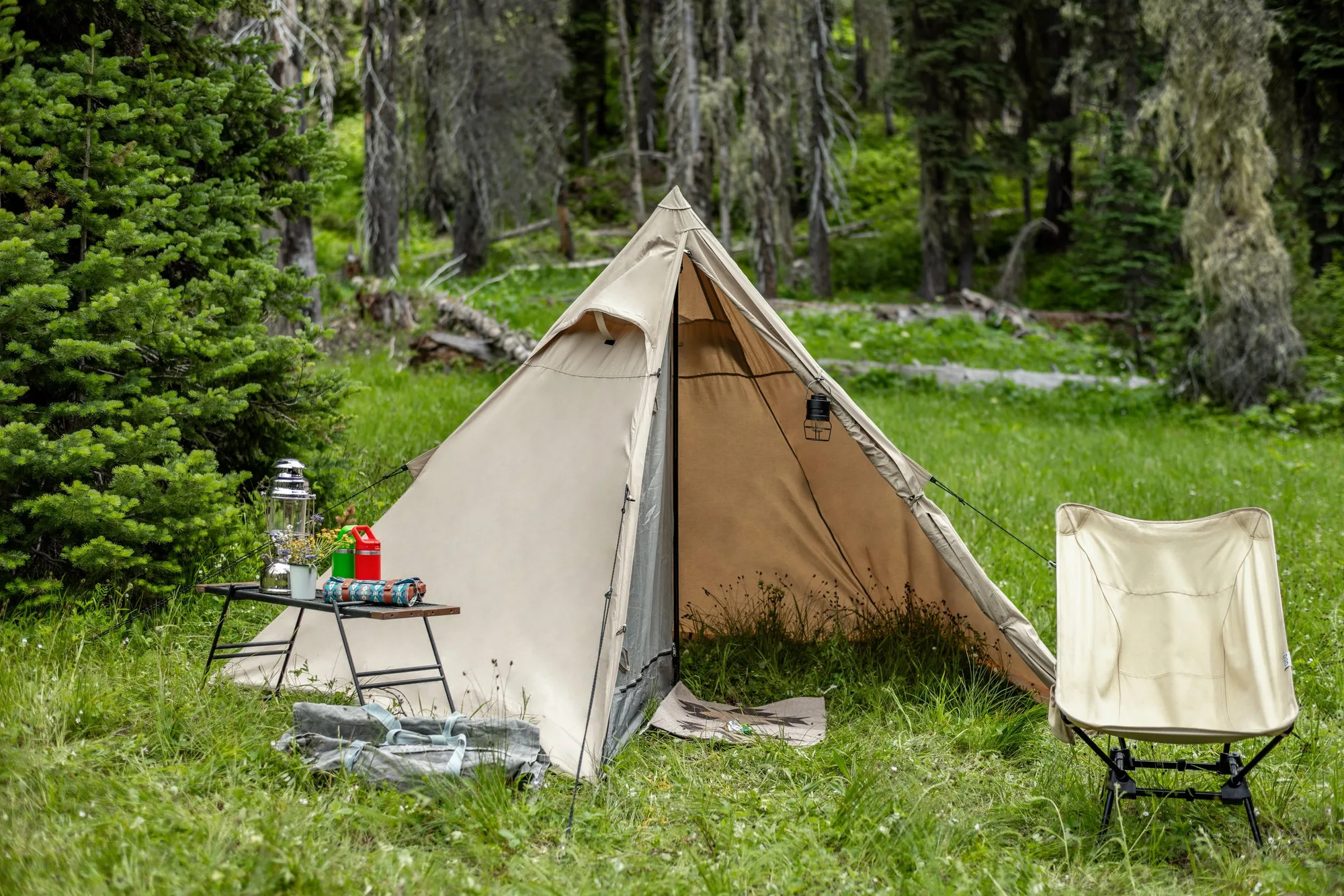
The Musha 1Pole Tent is a two-room, one-pole solo shelter with a sleeping chamber and vestibule. The catalog lists an aluminum alloy pole and steel pegs, plus a rollable skirt on the flysheet. It does not include a canopy door pole, rope, or skirt in the assembled size listing, so some setup problems come down to missing accessories rather than a faulty tent.
Before you diagnose a lean or a loose canopy, check that you have the pole, the pegs, and a separate support for the canopy door. The catalog says the canopy door can be used as a windbreak, sunshade, or blind, but the canopy door pole is not included. DOD suggests using a trekking pole or purchasing Kiso Tarp Poles.
Musha 1Pole Tent facts that affect setup
-
Musha 1Pole Tent: Assembled size is 9.6 ft x 9.6 ft x 6.1 ft (290 cm x 290 cm x 183 cm), not including rope or skirt. If your pitch looks smaller or lower than expected, compare it to this footprint before assuming the tent is defective.
Musha 1Pole Tent
-
Musha 1Pole Tent: The canopy door pole is not included; use a trekking pole or purchase Kiso Tarp Poles. A drooping or flapping canopy is often an accessory issue, not a tent problem.
-
Musha 1Pole Tent: The flysheet is CanvoTM (65% polyester, 35% cotton) and the inner tent is 68D polyester. CanvoTM breathes and is quiet in the wind, but it is not a rigid frame; the pole and pegs do the structural work.
Common 1Pole tent setup issues and what to check
- The single pole leans or the tent looks lopsided: The catalog does not supply a step-by-step pitching sequence or guyline tension specifications. Check that the pole is fully extended and seated, that the pegs are driven at the points the tent provides, and that the skirt is rolled down as intended. If it still leans, the supplied information does not confirm a cause or a fix beyond verifying the pole and peg placement.
- The canopy door sags or will not stay up: The canopy door needs a separate pole that is not included. Use a trekking pole or Kiso Tarp Poles. Without that support, the door will not function as a vertical awning, sunshade, blind, or windbreak.
- Guyline tension is unclear: The Musha tent guylines are not described in the supplied record, and the assembled size note says rope is not included. The catalog does not provide guyline lengths, attachment points, or tension guidance. Do not invent a tension rule; use the tent’s provided attachment points and check that lines are visible and free of tangles.
- The tent feels small or cramped: The inner size is 8.4 ft x 4.4 ft x 5.8 ft (255 cm x 133 cm x 173 cm), sized for one adult. The two-room layout separates sleeping from gear storage, so a cramped feeling may come from using the vestibule as sleeping space rather than from a setup error.
- Condensation or humidity inside: CanvoTM is designed to breathe and the catalog says it does not become humid. If you notice moisture, check that ventilation openings are not blocked by gear or the rolled skirt. The supplied information does not include a condensation troubleshooting procedure.
A catalog-backed check order for a stubborn pitch
- Confirm every listed component is present: You need the aluminum alloy pole, steel pegs, and a separate canopy pole (trekking pole or Kiso Tarp Poles). Rope and skirt are not included in the assembled size listing, so do not expect them in the bag.
- Set the footprint before tensioning: The assembled size is 9.6 ft x 9.6 ft x 6.1 ft (290 cm x 290 cm x 183 cm). Lay out the tent to that footprint first, then peg. A pitch that is too tight or too loose at the corners can make the single pole look off.
- Seat the pole and check the skirt: The catalog lists an easy setup with a simple peg and pole design and a rollable skirt. Make sure the pole is fully seated and the skirt is rolled as you want it for wind or insect reduction.
- Add canopy support last: Once the main shelter is standing, support the canopy door with a trekking pole or Kiso Tarp Poles. This is the step that turns the door into a usable awning.
What the supplied information does not cover
The catalog does not include a full pitching manual, guyline tension values, wind-speed limits, or a repair procedure for a bent pole. If your Musha 1Pole Tent has a damaged pole or a torn panel, the supplied record does not confirm a fix. Contact DOD Outdoors for guidance rather than forcing a repair that could affect the tent’s structure.
For care and maintenance, the catalog points to a separate CanvoTM care page, but the steps are not included here. Do not assume washing or reproofing instructions from this article.