Why Introduce Rhythm Early?
Rhythm and sound are natural magnets for little ones. A simple shake, tap, or clap can capture a baby's attention and spark curiosity. The Music Instrument Set offers a safe, wooden collection of child-friendly instruments that let infants and toddlers explore sound through play. Whether you're looking for a baby rhythm toy or a way to encourage toddler music play, this set supports early auditory and sensory development in a hands-on way.
What the Music Instrument Set Offers
-
Music Instrument Set: This wooden Music Instrument Set lets little ones explore sound and rhythm through play. It features child-safe instruments that encourage creativity, coordination, and early music appreciation. Knowing the set is wooden and child-safe gives you confidence to let your baby or toddler handle the instruments freely during supervised play.
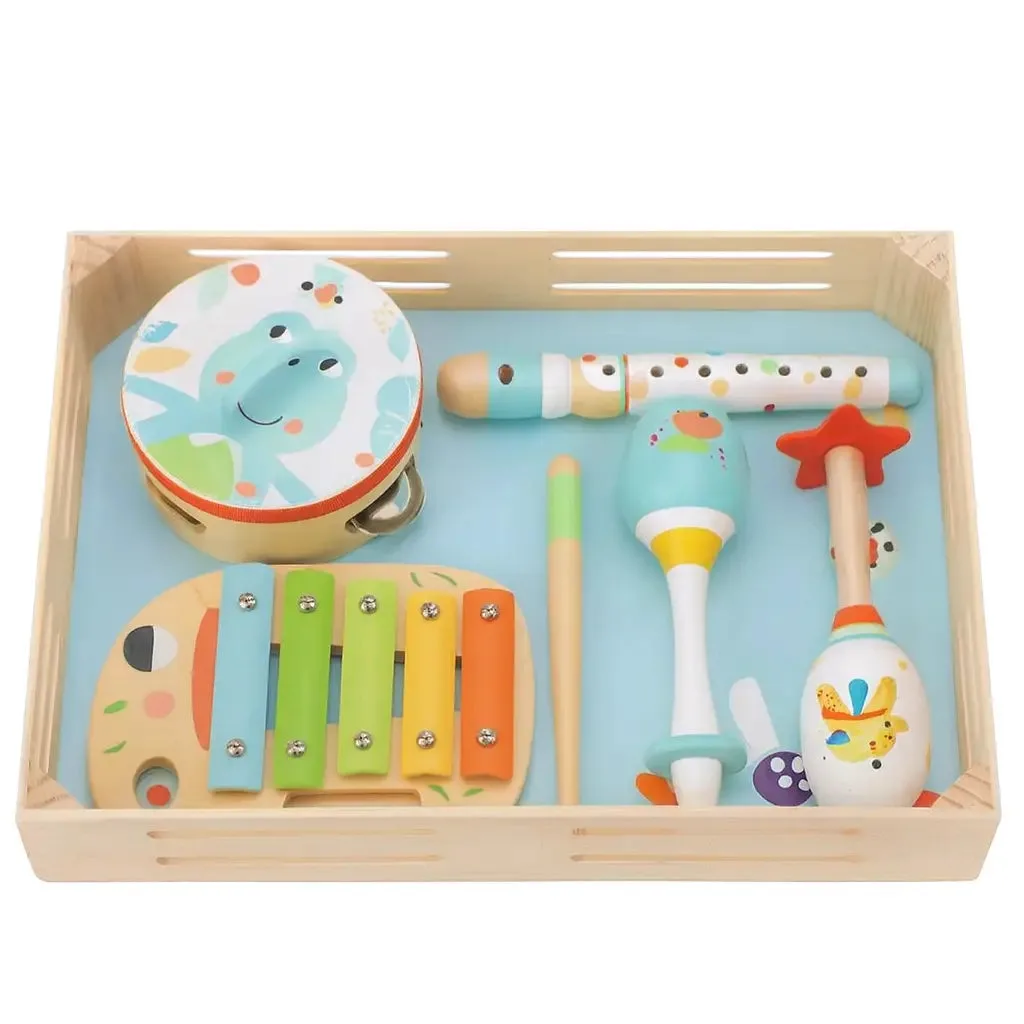
Music Instrument Set
-
Music Instrument Set: Size (cm): 37 × 29 × 5.4 / Size (inch): 14.57 × 11.42 × 2.13 The compact size makes it easy to store on a shelf or in a toy bin, and the instruments are sized for small hands to grip and shake.
Simple Play Ideas to Introduce Rhythm
Start with one or two instruments at a time so your child can focus on the sound and feel without being overwhelmed. Here are a few easy ways to begin.
- Shake Along to a Song: Hold an instrument and shake it gently to the beat of a simple nursery rhyme. Let your baby watch and then try shaking it themselves. This builds early cause-and-effect understanding.
- Copycat Shaking: Shake your instrument, then pause and wait for your child to copy you. Then let them lead and you copy back. This back-and-forth play supports social interaction and listening skills.
- Explore Different Speeds: Shake fast, then shake slow. Use words like "fast" and "slow" to describe what you're doing. Your toddler may start to match their shaking to your words, building early rhythm awareness.
- Hide and Seek Sounds: Hide one instrument behind your back or under a cloth and shake it. Ask "What's that sound?" and then reveal the instrument. This game adds an element of surprise and focus.
Tips for Getting the Most Out of the Set
Keep play sessions short—five to ten minutes is plenty for young attention spans. Let your child explore the instruments in their own way, even if that means banging or tapping rather than shaking. The goal is joyful discovery, not perfect rhythm. Always supervise play, especially with wooden instruments, and check for any wear or splinters over time.