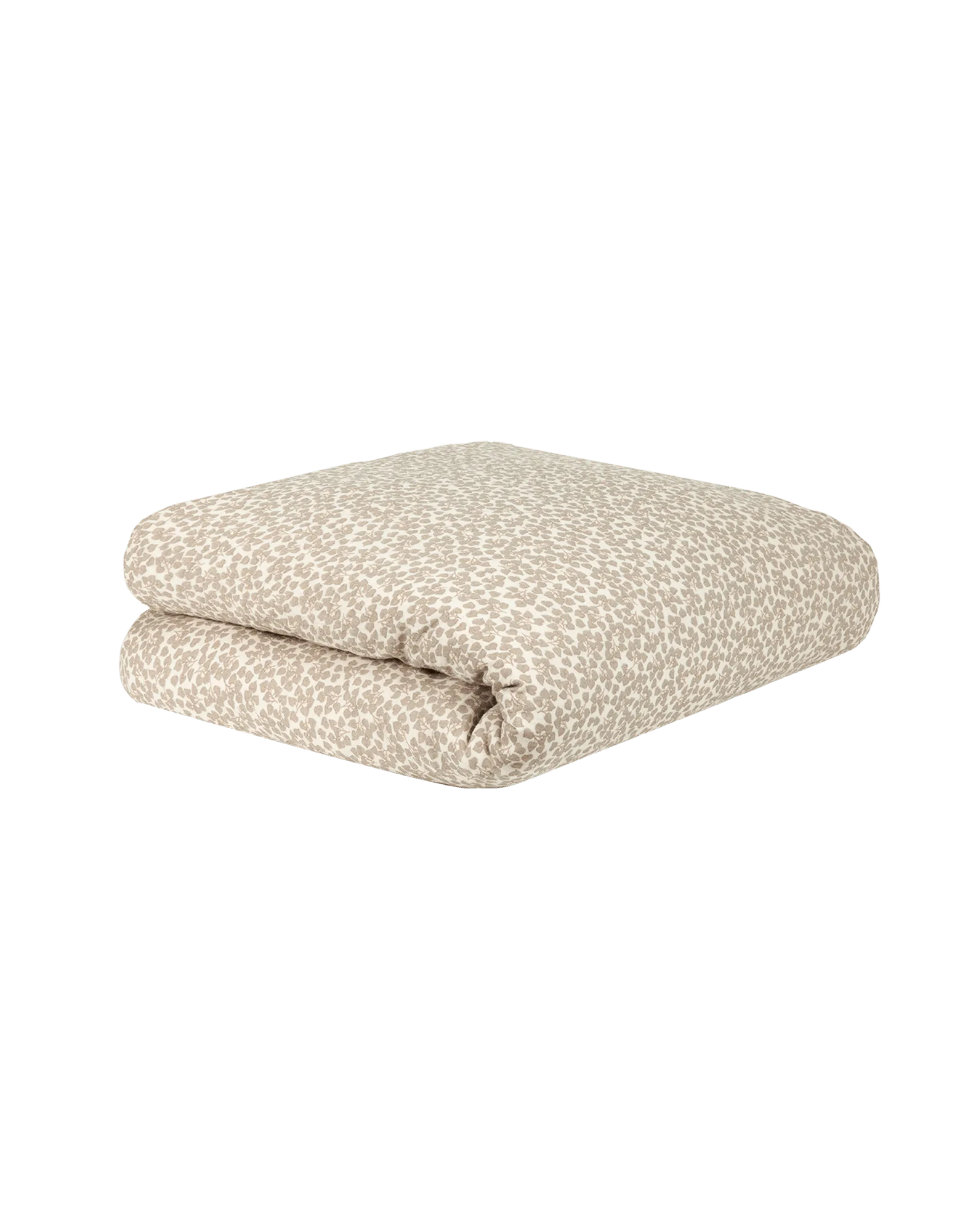
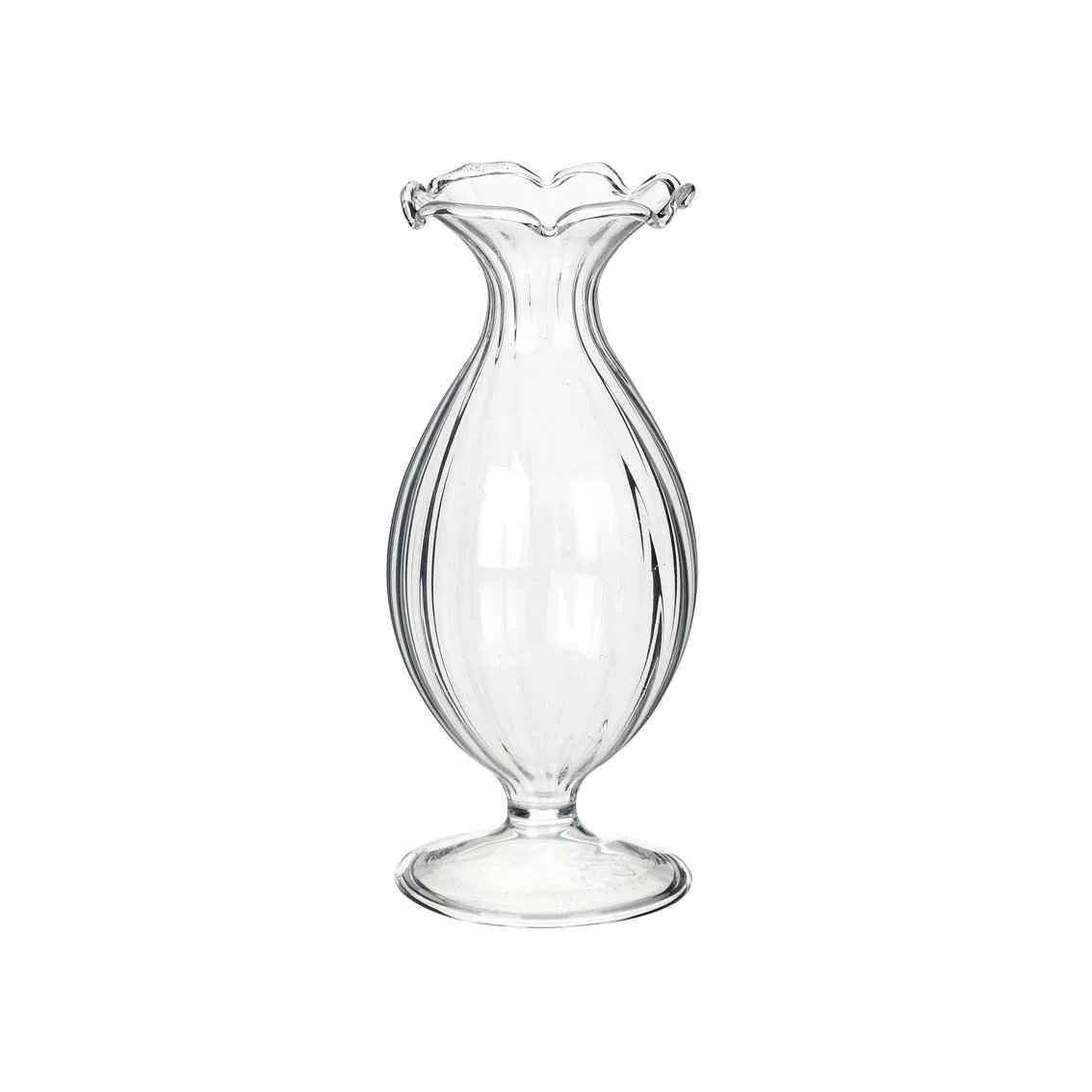
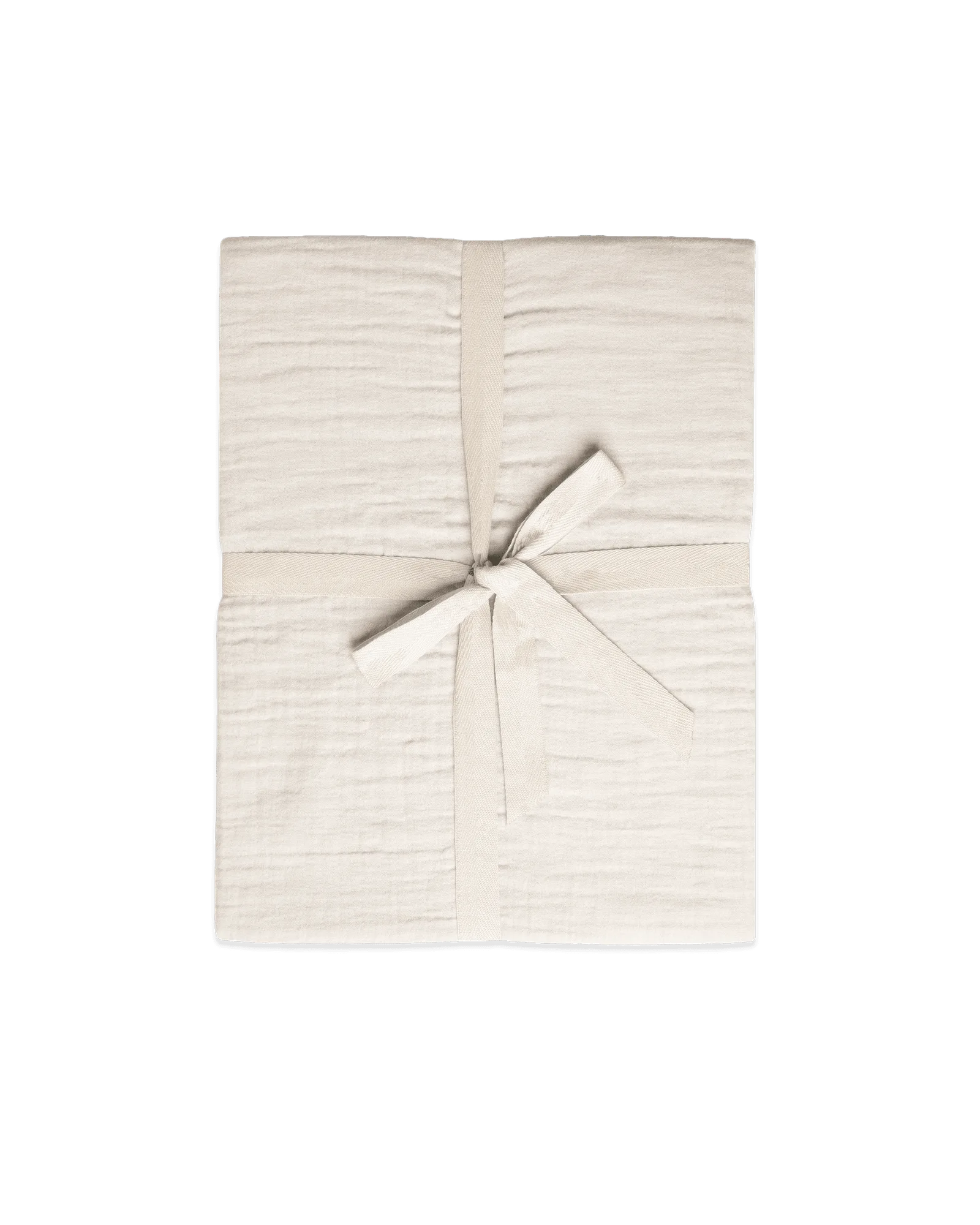
Quick answer
Start with a smooth, well-fitted base sheet, add the muslin duvet cover as the main top layer, then build texture with one or two folded blankets and pillows. Keep the palette to three tones and let the muslin's natural texture do the visual work.
Why muslin changes the layering order
Muslin is loosely woven and airy, so it behaves differently from a crisp percale or a heavy sateen. It drapes rather than holds a sharp crease, which means it looks best when it is the softest layer on top and is not compressed under tight, heavy covers.
That also makes it a poor base layer. If you put a tightly woven sheet over muslin, the texture disappears and the bed can feel bulky. Let muslin sit where its texture can be seen and touched.
Where a layered bed usually goes wrong
The most common mistake is treating a double bed like a display bed: too many throws, too many pillow sizes, and a duvet that is tucked so tightly it loses its drape. A double bed is narrow enough that each extra layer eats visible surface area.
The second mistake is ignoring breathability. Piling a heavy quilt over a muslin duvet traps warmth and cancels the point of the airy weave. If you sleep warm, choose lighter layers and fold rather than tuck.
Six steps to dress a double bed with a muslin duvet cover
- Fit the base sheet first: Put on a smooth, well-fitted sheet and smooth out every wrinkle before adding anything else. Checkpoint: if the sheet is loose or bunched, fix it now, because muslin on top will not hide lumps underneath.
- Choose the duvet size deliberately: Use a double duvet cover sized for your double bed, and check the color option against your room before you commit. Common mistake: buying an oversized cover to get more drape, which leaves excess fabric pooling on the floor.
- Let the duvet fall, don't tuck it tight: Spread the muslin duvet cover over the bed and let the sides hang loosely. Fold the top edge back about a third of the way down so the sheet shows as a contrasting band. Checkpoint: the fold should look relaxed, not pressed.
- Add one textured mid-layer: Fold a single blanket or quilt across the lower third of the bed. Keep it lighter in weight than the duvet so the muslin stays the main texture. Common mistake: stacking two heavy blankets, which flattens the muslin and makes the bed look smaller.
- Build pillows from back to front: Place two large sleeping pillows at the back, then two smaller accent pillows in front, mixing a separate pillowcase print against the duvet. Checkpoint: if the pillows hide more than half the duvet, remove one layer.
- Limit the palette and finish: Keep the whole bed to three tones at most, using the duvet as the anchor. Smooth the duvet once more and step back to check the balance. Common mistake: adding a fourth color at the last minute, which breaks the calm, layered look.
Product facts that shape the styling
-
Muslin Duvet Cover Double: Made in tightly woven cotton muslin that is described as textured, soft, lightweight and durable. It works as a visible top layer that adds texture without weight, so you can keep the rest of the bed simple.
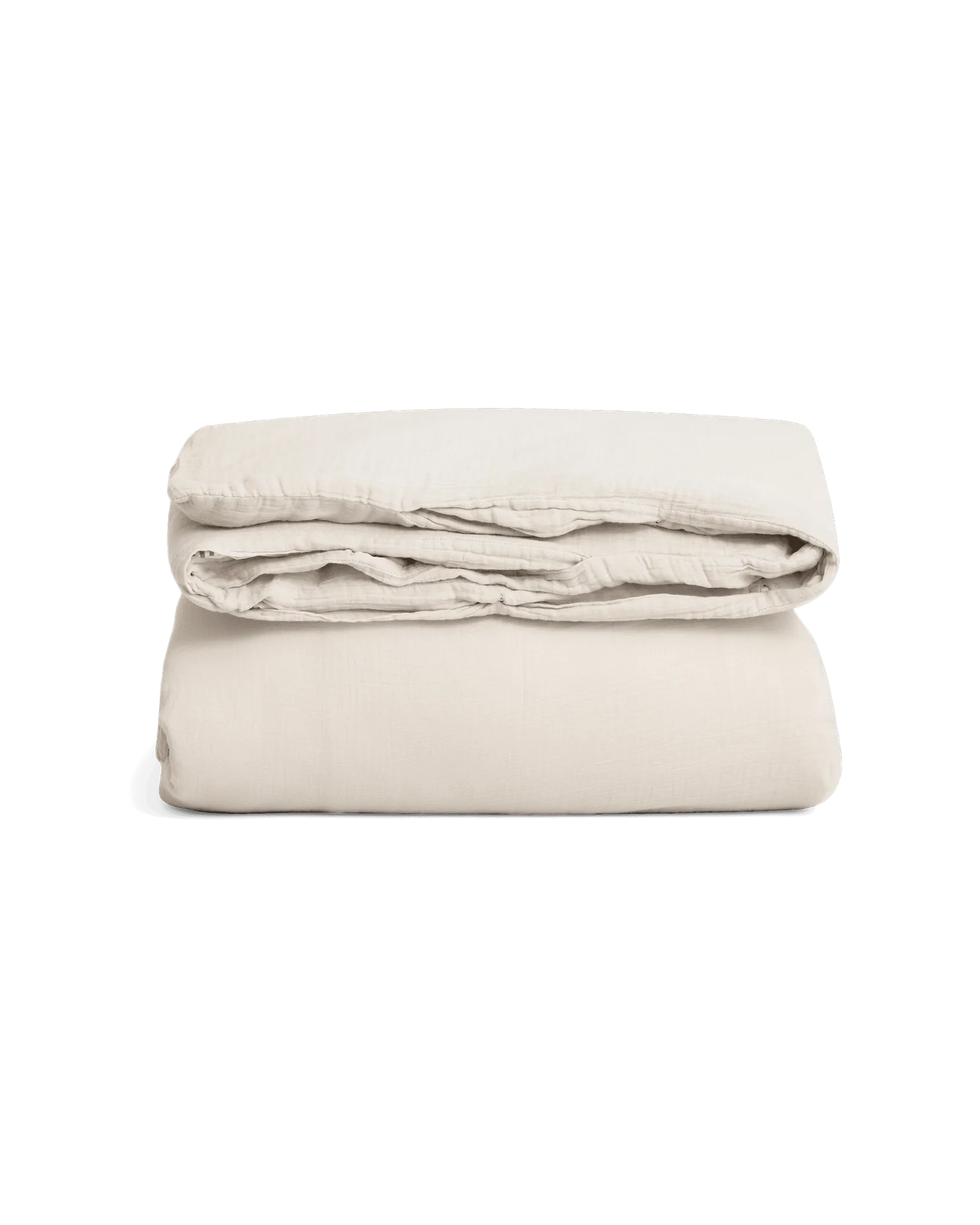
Muslin Duvet Cover Double
-
Muslin Duvet Cover Double: The duvet cover is designed to be combined with separate pillowcases. You can mix prints or colors between the duvet and pillows instead of buying a matched set, which makes layering easier to adjust over time.