The real difference: what each method actually does
Air drying means you apply polish and leave it alone while the solvents evaporate. You control the wait, but you also risk bumping a nail while it is still soft. A quick-dry product such as the ONYX Professional Nail Dryer is a separate step applied to speed up drying so you can go from fresh polish to smudge-proof nails in no time, according to the supplied product information.
That is the honest comparison: air drying is free and always available, while a dryer adds a product and a step in exchange for faster setting. Neither method replaces careful application, and the supplied information does not include drying times, so treat any speed claim as relative rather than a stopwatch guarantee.
Side by side: air drying vs. a quick-dry nail dryer
- What you need: Air drying needs only your polish. The ONYX Professional Nail Dryer adds one product to your manicure kit.
- How it works: Air drying relies on time and evaporation. The supplied product information says the dryer speeds up drying for faster, smudge-free nails.
- Finish: The supplied information says the dryer leaves a smooth, professional-looking finish. Air drying depends entirely on your polish and application.
- Extra care for nails and cuticles: The dryer is enriched with Vitamin E, Pro-Vitamin B5, and Kuki Nut Oil to moisturize nails and cuticles. Plain air drying supplies no additional conditioning step.
- Best fit: Air drying suits unhurried sessions and anyone who prefers a minimal kit. A quick-dry dryer suits at-home manicures and pedicures where you want to move on sooner.
What the ONYX Professional Nail Dryer brings to the comparison
-
Nail Dryer: Speeds up drying time for faster, smudge-free nails. This is the core reason to choose a dryer over waiting: it targets the smudge window directly.
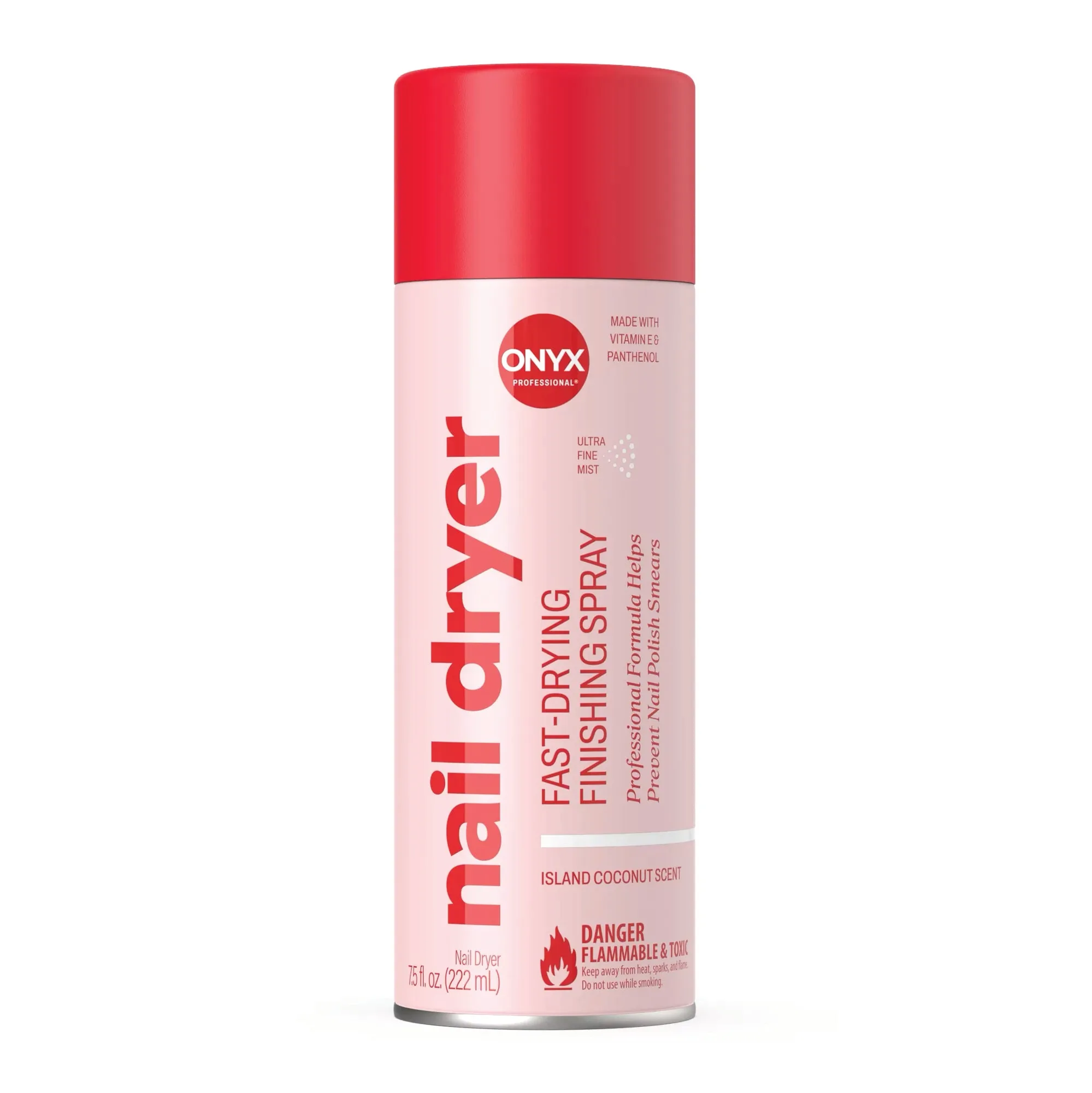
Nail Dryer
-
Nail Dryer: Enriched with Vitamin E, Pro-Vitamin B5, and Kuki Nut Oil to moisturize nails and cuticles. It adds a conditioning step that plain air drying does not provide.
-
Nail Dryer: Leaves a smooth, professional-looking finish. This is the finish claim supplied for the product, so judge it against your own results rather than expecting a salon guarantee.
-
Nail Dryer: Described as a quick dry nail polish solution for perfect at-home manicures and pedicures. It is positioned for home use, which matches the comparison here.
How to dry nail polish fast without smudging
The supplied information describes the dryer as a quick-dry solution but does not include application steps, drying times, or a recommended amount. Follow the product label for how to apply it, and use the sequence below as a practical framework rather than a manufacturer instruction.
- Apply polish in thin, even layers: Thick layers stay soft longer under any drying method. Thin coats give the dryer and air drying a better chance to work.
- Use the quick-dry step as directed on the label: The supplied information does not specify timing or quantity, so the label is your authority for how much to use and when.
- Give nails a short settling period before you use your hands: Even fast drying benefits from a pause. Avoid keys, zippers, and tight lids right after finishing.
- Check the surface before you judge the result: Lightly touch a nail edge rather than pressing the center. If it still feels tacky, wait longer rather than adding more product.
Nail dryer tips that actually prevent smudges
- Prep the nail surface first: Oil or residue on the nail can interfere with polish adhesion. Clean and dry nails before you start, whatever drying method you use.
- Keep the dryer step consistent: Apply it the same way each time so you can tell whether a smudge came from the product or from handling your nails too soon.
- Do one hand at a time if you are prone to smudges: Finishing one hand before starting the other reduces the chance of bumping wet polish.
- Treat the finish claim as a starting point: The supplied information says the dryer leaves a smooth, professional-looking finish. Your polish, coats, and technique still shape the final look.
When air drying is still the better choice
Air drying wins when you want the simplest possible routine, when you are testing a new polish, or when you are doing your nails while watching something and do not mind waiting. It also avoids adding another product to your shelf.
A quick-dry dryer earns its place when smudges are your main frustration, when you do at-home manicures and pedicures regularly, or when you want the conditioning ingredients listed in the supplied information. The trade-off is honest: you are adding a step and a product, and the supplied information does not promise a specific drying time.
What the supplied information does not settle
The supplied product information does not include drying times, application amounts, or compatibility with specific polish types such as gel. It also does not confirm results for every polish formula. If those details matter to you, check the product label before relying on the dryer for a time-sensitive manicure.
That limitation does not make the dryer a poor choice. It simply means the comparison should be judged on what is confirmed: faster drying, a smooth finish claim, and the listed moisturizing ingredients, weighed against the simplicity of air drying.