Quick answer
The #17A narrow chisel blade is ideal for straight, controlled cuts and scraping in detailed craft work, fitting Excel handles K1, K3, K17, K18, K26, K30, and K71.
Why choose a narrow chisel blade
Unlike pointed blades that pivot easily, the #17A's flat chisel tip resists wandering, making it excellent for cutting straight lines, trimming flush edges, and scraping adhesive residue without gouging the surface.
Trade-off: limited for curves
The narrow chisel design gives you control on straight cuts but struggles with tight curves or intricate interior cuts. For those tasks, a pointed #11 or curved #12 blade is more maneuverable.
Decision rules for the #17A narrow chisel blade
- Use when: You need straight, flush cuts or scraping on paper, cardstock, vinyl, or thin plastic. The chisel tip lets you cut right up to a line without overshooting.
- Choose a different blade when: Your project requires intricate curves, circles, or piercing start cuts. The #17A's flat tip won't pivot easily, so a pointed #11 or curved #12 blade is better.
- Handle compatibility check: The #17A fits K1, K3, K17, K18, K26, K30, and K71 handles. If you own a different handle, verify the blade size before purchasing. Check your handle model before buying to ensure a proper fit.
Product details
-
#17A Narrow Chisel Blades, USA Made: Made from premium carbon steel in the USA, the #17A blade fits multiple Excel handles including K1, K3, K17, K18, K26, K30, and K71. You can use the same blade across different handle sizes for comfort and control, and the carbon steel holds a sharp edge for repeated precision cuts.
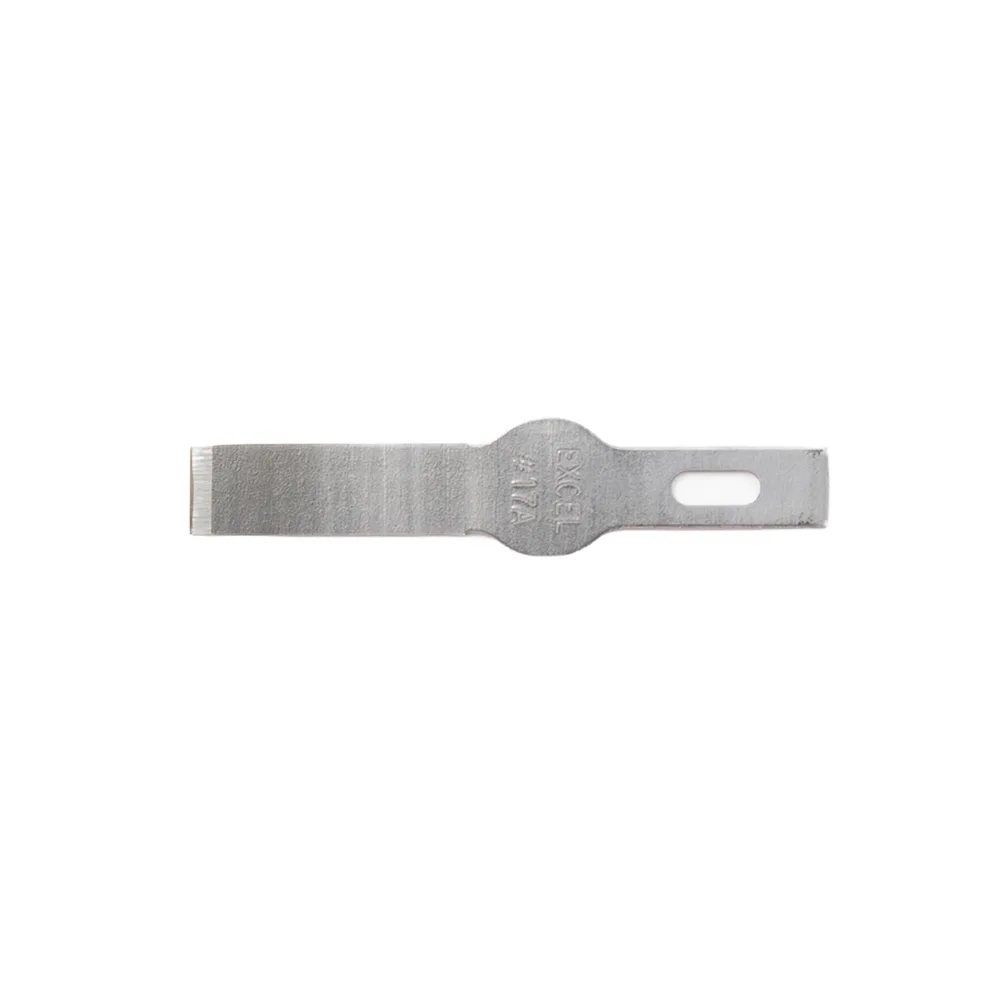
#17A Narrow Chisel Blades, USA Made
Who should buy the #17A narrow chisel blade
Best for
- Crafters making straight cuts in paper, cardstock, or vinyl
- Hobbyists who need a scraping blade for adhesive or paint removal
Not ideal for
- Detailed curves or intricate interior cuts where a pointed blade excels
- Heavy-duty cutting of thick materials like leather or multiple layers of chipboard