Quick answer
For most landscape and long-exposure work, a 100x100mm square ND filter (like the NiSi Nano IRND) offers the best balance of portability and coverage, while a 100x150mm filter is needed when you want to use a graduated ND with the ability to shift the transition line.
Understanding ND filter stops
Neutral density filters reduce the amount of light entering your lens without changing color. Each stop halves the light. A 3-stop ND filter (0.9 density) lets you use a shutter speed 8 times slower, while a 10-stop filter (3.0 density) extends exposure by 1000 times, turning daytime scenes into silky long exposures. The right stop value depends on your subject: waterfalls and clouds benefit from 6-10 stops, while controlling depth of field in bright light may only need 2-3 stops.
Square vs rectangular: size matters
Square filters (100x100mm) are symmetrical and work with most lenses up to about 24mm on full frame. They are easier to pack and handle. Rectangular filters (100x150mm) are taller, allowing you to slide the filter up or down to position the transition line of a graduated ND. If you only shoot flat horizons or use standard ND (non-graduated), the extra height is unnecessary. If you compose with the horizon off-center, the taller filter gives you more flexibility.
Decision rules for choosing your ND filter
- Count your stops first: Decide the slowest shutter speed you want. Count the stops from your metered shutter speed to that target. That is the minimum ND density you need. For example, if your metered speed is 1/125 sec and you want 1/2 sec, you need 6 stops. A 6-stop (1.8 density) filter covers most creative long exposures.
- Choose square (100x100mm) for standard ND: If you only need a plain ND (no graduation), a 100x100mm filter is lighter, cheaper, and simpler. It fits most 100mm filter holders and works with lenses as wide as 24mm.
- Choose rectangular (100x150mm) for graduated ND: If you need a graduated ND to balance a bright sky with a darker foreground, get the 100x150mm size. The extra 50mm lets you slide the transition line up or down to match your composition. If you never compose with the horizon off-center, the shorter filter is sufficient.
Product highlights
-
NiSi 100 x 100mm Nano IRND: The NiSi 100 x 100mm Nano IRND Filter creates a darkening of the entire image, allowing you to photograph with a wider aperture or slower shutter speed than normally required. It is a standard square ND ideal for most long-exposure work without needing to shift the filter position.
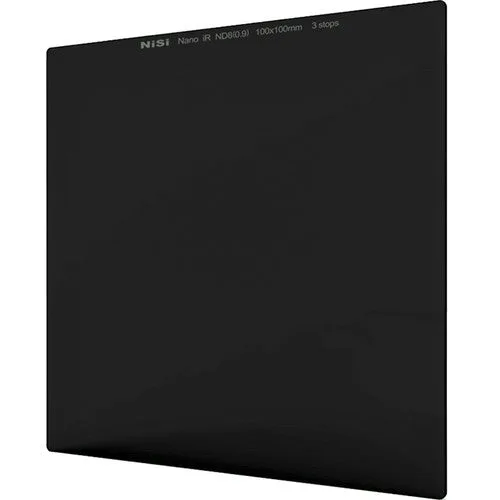
NiSi 100 x 100mm Nano IRND
-
NiSi 100 x 150mm Nano: The NiSi 100 x 150mm Nano is available in Graduation Type options, meaning it can be a graduated neutral density filter with a transition zone. The extra height lets you position the transition line precisely when the horizon is not centered in the frame.
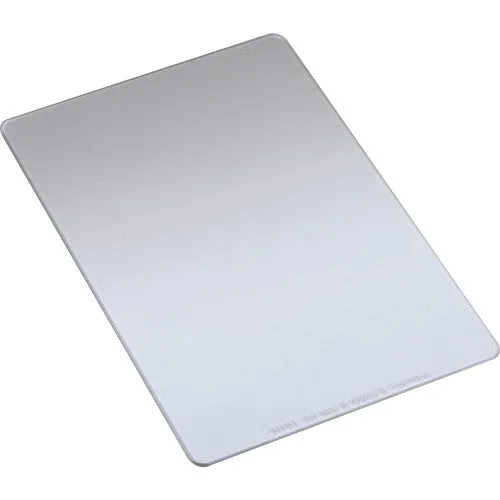
NiSi 100 x 150mm Nano
Which filter fits your style?
Best for
- Landscape photographers who shoot standard long exposures (waterfalls, clouds, seascapes) and want a compact kit
- Hikers and travelers who prioritize weight and pack size
Not ideal for
- Photographers who frequently compose with the horizon in the upper or lower third of the frame and need a graduated ND