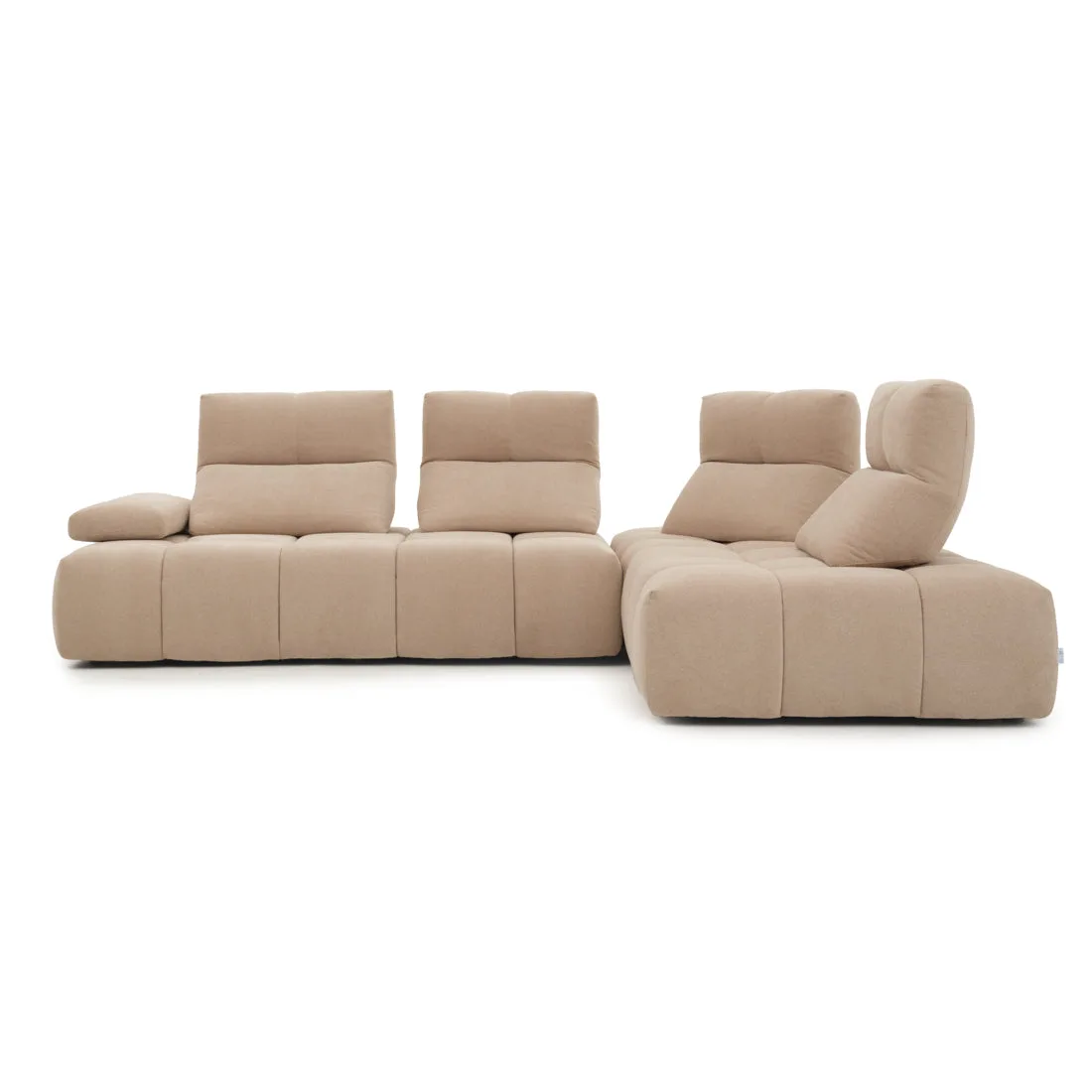
Start With the Footprint, Not the Furniture
A sectional fails in a room for one of two reasons: it is too big for the floor space, or it is the wrong shape for the way people walk through the room. Before you move anything, mark the sofa footprint on the floor with painter's tape and walk the route you use every day. The Neal Leather Sectional Sofa comes in two sizes — 109W x 86D x 31H and 82W x 57D x 31H — so the first decision is which footprint your room can actually absorb.
Measure the longest uninterrupted wall and the distance to the nearest doorway, then compare that to the sofa's width and depth. Leave the walkway between the tape outline and the doorway clear enough to pass through comfortably. If the tape outline crowds a door swing or a main path, the smaller 82W x 57D x 31H version is the more sensible starting point.
The Two Neal Footprints
-
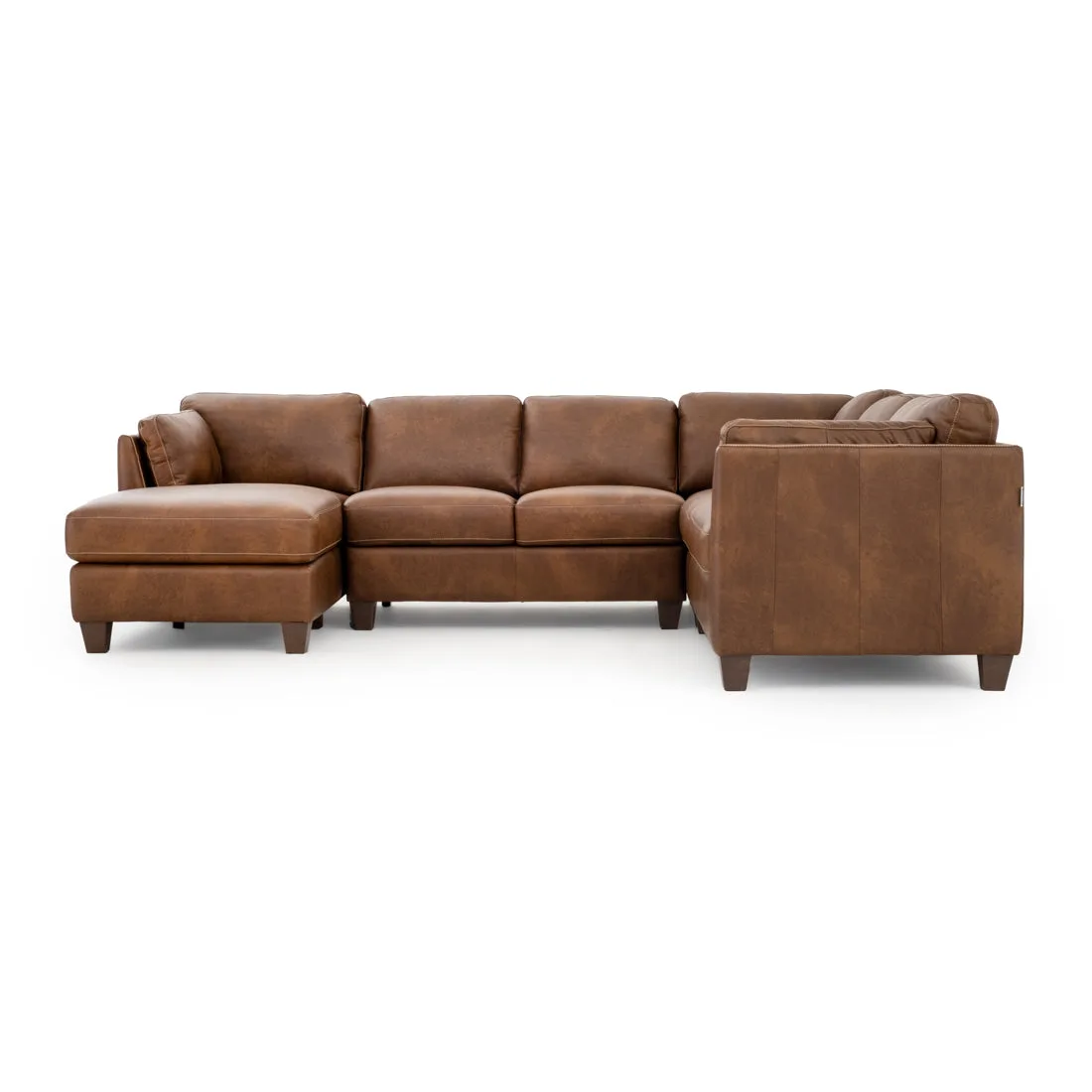
Neal Leather Sectional Sofa: Available in 109W x 86D x 31H and 82W x 57D x 31H, both in Light Grey and left-facing configuration. The depth difference is the main layout constraint: the larger version needs more floor depth, while the smaller version suits tighter rooms.
Neal Leather Sectional Sofa
-
Neal Leather Sectional Sofa: Described as generously padded and suited to small spaces. Supports choosing the compact 82W x 57D x 31H version when floor area is limited.
How to Place a Leather Sectional in Five Steps
Work through these in order. Each step narrows the decision before you commit to a position.
- 1. Choose the wall the sofa will anchor: Pick the longest solid wall that is not broken by a doorway, radiator or built-in storage. The Neal's back cushions and armrests are held in place with zippers, so the back needs to sit against or near a wall for a tidy look.
- 2. Confirm the facing direction: The Neal is supplied in a left-facing configuration. Stand at the front of the sofa: the chaise or return section extends to your left. Check that this matches the open side of your room before ordering.
- 3. Tape the footprint and test traffic flow: Lay tape for the full 109W x 86D or 82W x 57D outline, then walk from each doorway to the seating area. If you have to step over the tape, the sofa is too far into the path.
- 4. Position the rug under the front feet: A rug helps define the seating zone. Place it so the front feet of the sofa sit on the rug and the back feet stay on the floor, or centre the rug under the whole footprint if the room allows. This keeps the visual weight of the sofa grounded without hiding the wooden legs.
- 5. Add the finishing layer last: Once the sofa is in place, add cushions and a knitted throw — the catalog suggests these to create a warm atmosphere. Keep them clear of the zippered armrests so the seams stay visible.
Clearance Checks That Matter in Real Rooms
These are practical checks based on the sofa's dimensions and construction, not manufacturer instructions. Use them as a planning guide.
- Door swings: Tape the sofa outline, then open every nearby door fully. The door should clear the outline without touching it.
- Walkways: Keep the main route between doorways clear. If the 109W x 86D outline blocks the route, switch to the 82W x 57D version.
- Coffee table gap: Leave enough space between the sofa front and the coffee table to sit down and stand up comfortably. Test this with the tape outline before the table arrives.
- Radiators and heat sources: Semi-aniline Italian leather benefits from being kept away from direct heat. Position the sofa so it is not pressed against a radiator or fireplace.
- Window glare: Leather can fade with prolonged direct sun. If the only wall available faces a bright window, consider a blind or shift the sofa slightly out of the direct line.
L-Shaped Layout Tips for the Neal
Because the Neal is left-facing, the return section runs along the left side as you face the sofa. In an open-plan room, that return can act as a natural divider between the living and dining zones — place it so the back of the return faces the dining area. In a narrow room, the return can sit against a side wall, leaving the long section free.
Avoid pushing the sofa tight into a corner on the return side; the zippered armrests need a little breathing room so the leather does not crease against a wall. A gap of a few centimetres is enough to let the sofa sit cleanly.
What the Neal's Materials Mean for Placement
The Neal is made from semi-aniline Italian leather, which has a light protective finish and shows natural grain. It is more forgiving than pure aniline but still benefits from being kept out of direct sun and away from sharp edges. The sturdy wooden frame and legs mean the sofa is heavy enough to stay put once positioned, so plan the final spot before you slide it into place rather than dragging it repeatedly.
High-density foam keeps the seat shape, but the leather will soften with use. That is normal, not a fault. If you place the sofa in a very warm spot, expect the leather to feel softer sooner.
Small-Room vs Open-Room Placement
- Small room: Choose the 82W x 57D x 31H version. Place the long side against the longest wall and let the return define the seating zone. Keep the coffee table small and avoid blocking the walkway.
- Open-plan room: The 109W x 86D x 31H version gives more seating. Use the return as a room divider and float the sofa slightly away from the wall if the floor plan allows, so the back does not look stranded.
- Narrow room: Check the depth carefully. The 86D version needs more floor depth; in a narrow room the 57D version leaves more walking space in front.
Product Details That Affect Layout
- Neal Leather Sectional Sofa: Made from semi-aniline Italian leather with contrasting seams. The seams are a visual feature, so avoid covering them with tight slipcovers or heavy throws.
- Neal Leather Sectional Sofa: Sturdy wooden frame and legs with high-density foam. The frame and legs are visible, so the sofa looks best when the legs are not hidden by a full-length skirt or rug.
- Neal Leather Sectional Sofa: Back cushions and armrests are held in place with zippers. Zippers keep the cushions aligned, which matters when the sofa is placed where people lean against the back.