Quick answer
For most cold weather running, a breathable neck gaiter is the better all-round choice: it gives you flexible coverage without overheating. Choose a balaclava only when you need full-face protection in extreme cold or wind.
Coverage vs breathability: the core trade-off
The main difference between a neck gaiter and a balaclava is how much of your face they cover. A balaclava wraps your head, neck, and most of your face, leaving only your eyes exposed. A neck gaiter covers your neck and lower face, and you can pull it up or down as conditions change.
That extra coverage is a real advantage in bitter wind or deep cold, but it can also trap heat and moisture. Running generates a lot of body heat, and a full balaclava can quickly feel stifling. A neck gaiter gives you more control: wear it around your neck on easy miles, pull it over your mouth when the wind picks up, and drop it again when you warm up.
Breathability matters more than you think
When you run, you exhale warm, moist air. If your face covering can’t move that moisture away, it gets damp and cold against your skin. Breathable fabrics make a big difference in comfort on longer runs.
Look for materials that wick moisture and allow airflow. Merino wool blends are a strong choice because they regulate temperature naturally and resist odor. A fabric that traps too much heat can cause you to overheat quickly, even in freezing temperatures.
Fit and adjustability
A neck gaiter is essentially a tube: you can wear it loose around your neck or pull it up over your chin and nose. This makes it easy to adjust mid-run without stopping. A balaclava has a more fixed fit, covering your head and face, which can feel restrictive if you wear glasses or a helmet.
If you run with a headlamp or hat, a balaclava can add bulk under those layers. A neck gaiter layers more easily under a hat or hood and lets you fine-tune coverage as your body warms up.
How to choose: neck gaiter vs balaclava for running
- Temperature range: Use a neck gaiter for most winter runs, especially above freezing or when you warm up quickly. Choose a balaclava when temperatures drop well below freezing or wind chill is extreme. If you often start cold but overheat after a mile, a neck gaiter lets you vent more easily.
- Coverage needs: A balaclava gives you full-face protection, ideal for exposed, windy routes. A neck gaiter covers your neck and lower face, which is enough for most runners and easier to adjust. If you only need protection for your neck and chin, a neck gaiter avoids the extra bulk of a balaclava.
- Breathability: Prioritize a breathable fabric like merino wool blends. A neck gaiter’s open design allows more airflow, while a balaclava’s full coverage can trap heat and moisture. Check the fabric composition: a high merino wool percentage helps regulate temperature and moisture.
Product facts
-
Alto Neck Gaiter: The Alto Neck Gaiter is made from Swedish-made Woolly Treemerino™, a warm, stretchy, and lightweight material with 60% merino wool and 40% Tencel®. Merino wool provides natural warmth while the Tencel® fiber adds breathability, making it a good match for high-output winter running.
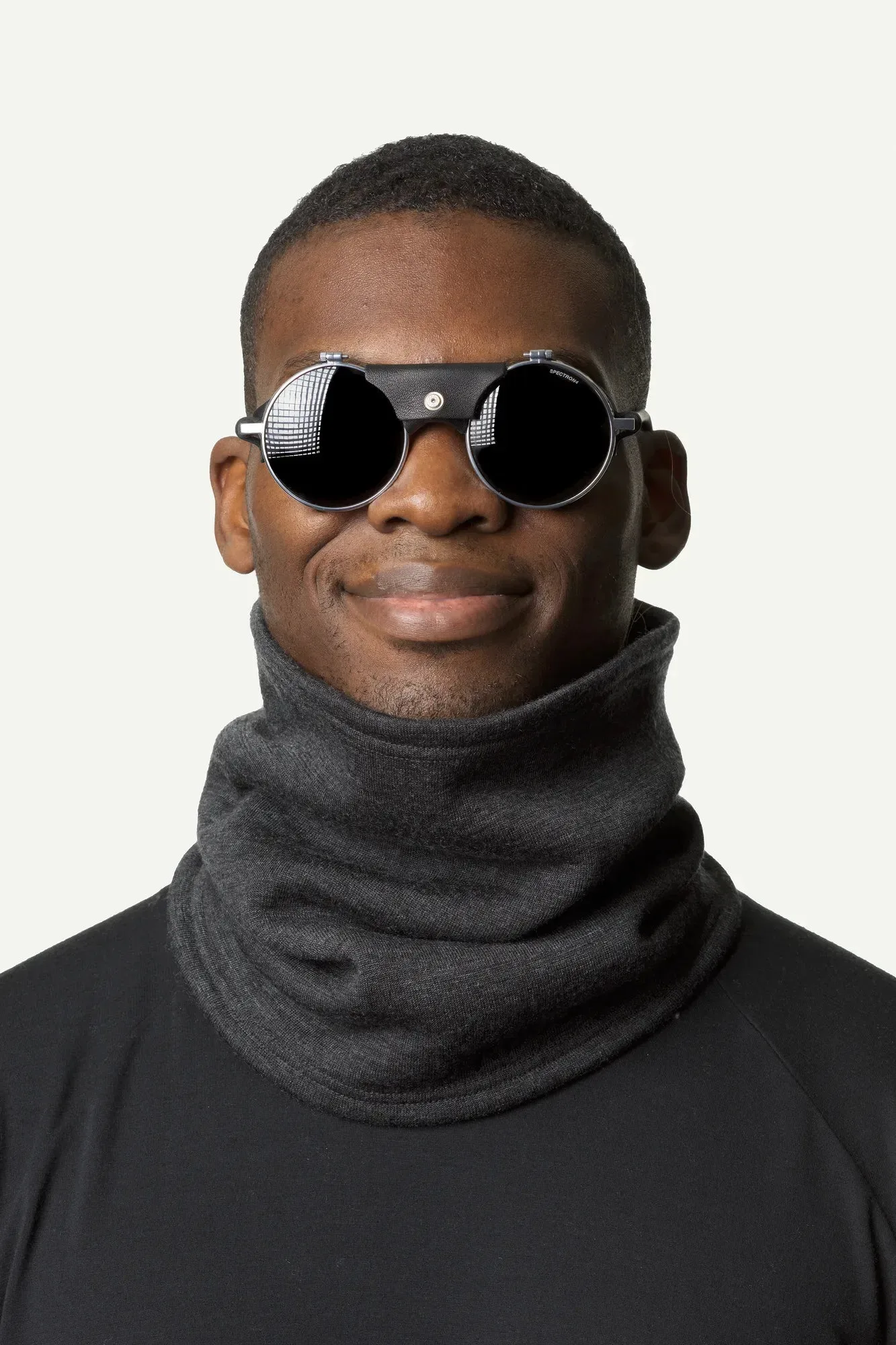
Alto Neck Gaiter
Which should you choose?
Best for
- Runners who want flexible coverage that can be adjusted mid-run
- Those who run in moderate cold (around freezing) and value breathability
Not for
- Extreme cold or high wind where full-face protection is essential