Building a Coherent Monitoring System
Choosing a studio monitoring setup often means deciding whether a standalone nearfield monitor is enough or if adding a subwoofer improves your low-frequency accuracy. The Neumann KH 120 MKII active monitor and the KH 805 II subwoofer are designed to work together, but each serves a different primary role. Understanding their individual strengths and how they complement each other helps you build a system that matches your production needs.
At a Glance: Key Specifications
-
Neumann KH 120 MKII (Standard, Blanche) – Enceinte Active: The Neumann KH 120 MKII is a bi-amplified active monitor with an LF output of 80W and HF output of 80W, frequency response from 44 Hz to 21 kHz, and a linear phase response from 120 Hz to 16 kHz. This monitor covers the critical mid and high frequencies with high precision, making it suitable for detailed nearfield mixing and critical listening.
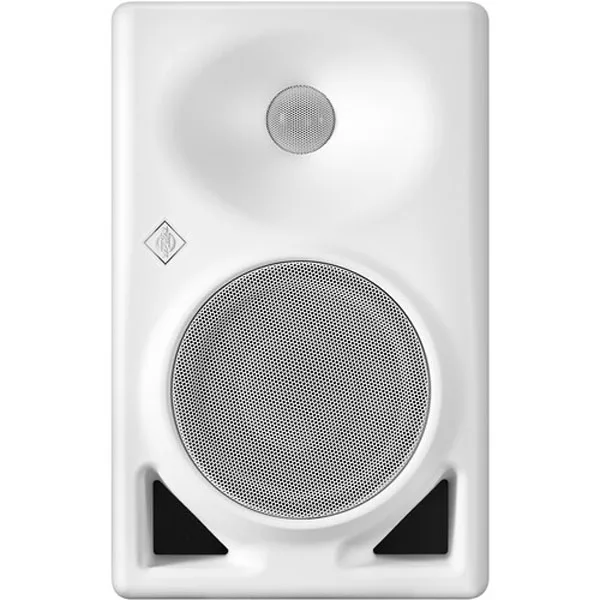
Neumann KH 120 MKII (Standard, Blanche) – Enceinte Active
-
Neumann KH 805 II – Subwoofers: The Neumann KH 805 II subwoofer features a driver that extends down to 16 Hz, with double the output power of the KH 750 DSP and integrated DSP for alignment. It adds authoritative low-end extension below what the KH 120 MKII can reproduce, essential for bass-heavy genres, film sound design, and immersive formats.
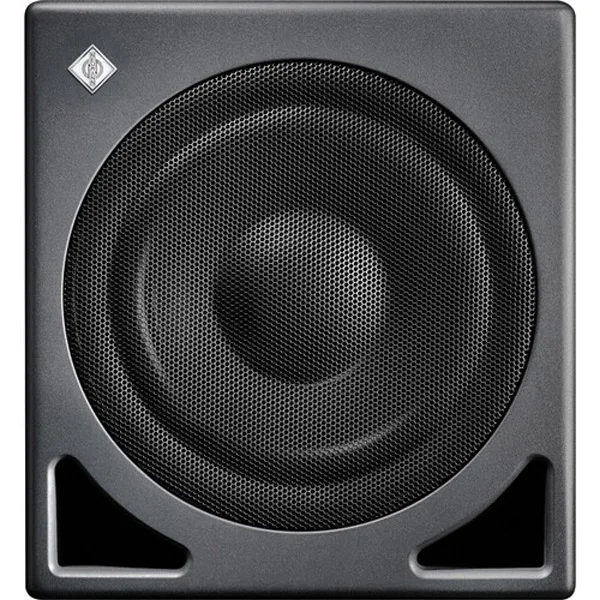
Neumann KH 805 II – Subwoofers
Where the KH 120 MKII Excels Alone
The KH 120 MKII is a 2-way active monitor with a woofer and a titanium dome tweeter. Its frequency response starts at 44 Hz, which already provides usable bass for many mixing scenarios. The bi-amplified Class AB amplification delivers 80W per channel, and the built-in DSP allows precise control over the monitor's behavior. For stereo nearfield monitoring in smaller rooms, a pair of KH 120 MKIIs can deliver accurate mixes without a subwoofer, especially if your productions don't rely on deep sub-bass content.
When to Add the KH 805 II Subwoofer
If your work involves electronic music, film post-production, or any genre where sub-bass information matters, the KH 805 II extends the system's low end to 16 Hz. Its driver and doubled power output compared to the KH 750 DSP provide significant headroom. The integrated DSP includes a Bass Manager that aligns the subwoofer with the KH 120 MKII, even if the monitors are connected via analog inputs. This alignment is crucial for a seamless crossover and phase coherence.
Compatibility and System Integration
The KH 805 II is designed to work with Neumann's KH Line monitors, including the KH 120 MKII. Its DSP can manage the crossover and level matching automatically when used with the optional MA 1 Monitor Alignment application. The subwoofer also supports immersive formats up to 7.1.4, making it a future-proof choice if you plan to expand beyond stereo. The KH 120 MKII, on the other hand, is a standalone monitor that does not include a subwoofer output or built-in crossover, so the KH 805 II acts as the system's bass management hub.
KH 120 MKII vs KH 805 II: Key Differences
- Role in the system: KH 120 MKII is a nearfield monitor covering mid/high frequencies; KH 805 II is a subwoofer dedicated to low frequencies below the monitor's range.
- Frequency extension: KH 120 MKII goes down to 44 Hz; KH 805 II extends to 16 Hz, adding two full octaves of sub-bass.
- Amplification: KH 120 MKII has 80W per channel (LF + HF); KH 805 II delivers roughly double the output of the KH 750 DSP, though exact wattage is not specified.
- DSP and alignment: Both have built-in DSP, but the KH 805 II includes Bass Manager for aligning with analog monitors; the KH 120 MKII relies on its own DSP for room correction when paired with MA 1.
- Immersive support: KH 805 II supports up to 7.1.4 configurations; KH 120 MKII is stereo-focused and can be used as part of a larger system with a subwoofer.
What the Supplied Information Does Not Confirm
The available evidence does not specify the exact crossover frequency between the KH 120 MKII and KH 805 II when paired, nor does it provide detailed setup steps for integrating the two. For precise crossover settings and alignment, refer to the product manuals or use the MA 1 Monitor Alignment application. Additionally, the KH 120 MKII's AES67 compatibility and network audio capabilities are not detailed in the supplied records, so if digital audio networking is a requirement, verify those features independently.