Quick answer
Choose a newborn moccasin that hugs the foot with no more than a finger-width of space at the heel and no pressure across the top of the foot. Soft sole styles suit newborns best because they bend with the foot and stay on without needing a stiff structure.
Why newborn sizing is different from older baby sizing
Newborn feet are mostly cartilage and grow quickly, so a shoe that fits today may feel tight within weeks. Unlike first walkers, newborns do not need tread or arch support; they need a soft, flexible covering that protects without restricting movement. That makes soft sole moccasins a practical first pair, but it also means the fit window is short and you should check the shoe against the foot often.
Because newborn sizing varies by brand, ignore the age on the label and start with the actual foot length. A size 0 moccasin is built for delicate newborn feet, but the only reliable test is how it sits on your baby's foot.
The trade-off between room to grow and staying on
It is tempting to buy a larger size so the shoe lasts longer, but a loose moccasin slips off and creates a tripping hazard once your baby starts pulling to stand. A snug fit stays on but may be outgrown in weeks. The middle ground is a shoe that fits now with just enough room for a thin sock or tights, and a plan to size up when the heel gap closes.
If you want a shoe for a special occasion rather than daily wear, a slightly roomier fit is acceptable as long as the opening still holds the foot. For everyday use, prioritize a close fit over longevity.
When to skip moccasins entirely
If your newborn has very wide or very narrow feet, or if a medical professional has advised a specific shoe, a standard moccasin may not be the right choice. Also skip soft sole moccasins for outdoor walking on rough surfaces; they are designed for indoor use and gentle outdoor wear, not pavement.
Newborn moccasin fit decision rules
- Measure the foot, not the age: Place a ruler against your baby's heel and measure to the longest toe while standing or lying with the leg gently extended. Add about 1 cm (a finger-width) for wiggle room, then compare that total to the brand's size chart. If the measurement falls between sizes, choose the smaller size for newborns. Re-measure every 4–6 weeks because newborn feet grow quickly.
- Check the heel gap: Put the moccasin on and press your finger between the heel and the back of the shoe. You should feel a small gap, no more than one finger-width. If your finger does not fit, the shoe is too small; if two fingers fit easily, it is too big and will slip off.
- Test the top-of-foot pressure: Run a finger across the top of the foot inside the shoe. The leather should rest gently without leaving red marks or indenting the skin. If you see marks after a few minutes, size up or choose a style with a wider opening. Red marks mean the shoe is too tight, even if the length seems right.
- Decide based on how often the shoe will be worn: For daily indoor wear, choose the size that fits snugly now. For occasional photos or a special outfit, you can choose one size up only if the easy-on opening still keeps the shoe on the foot. Never buy more than one size ahead for a newborn.
Product facts
-
Newborn Salt Flats Moccasin Baby Shoe: Light gray size 0 moccasins made with soft salt flats leather and an easy-on opening. The soft leather and wide opening make them easier to put on a newborn without forcing the foot, which matters when you are checking fit daily.
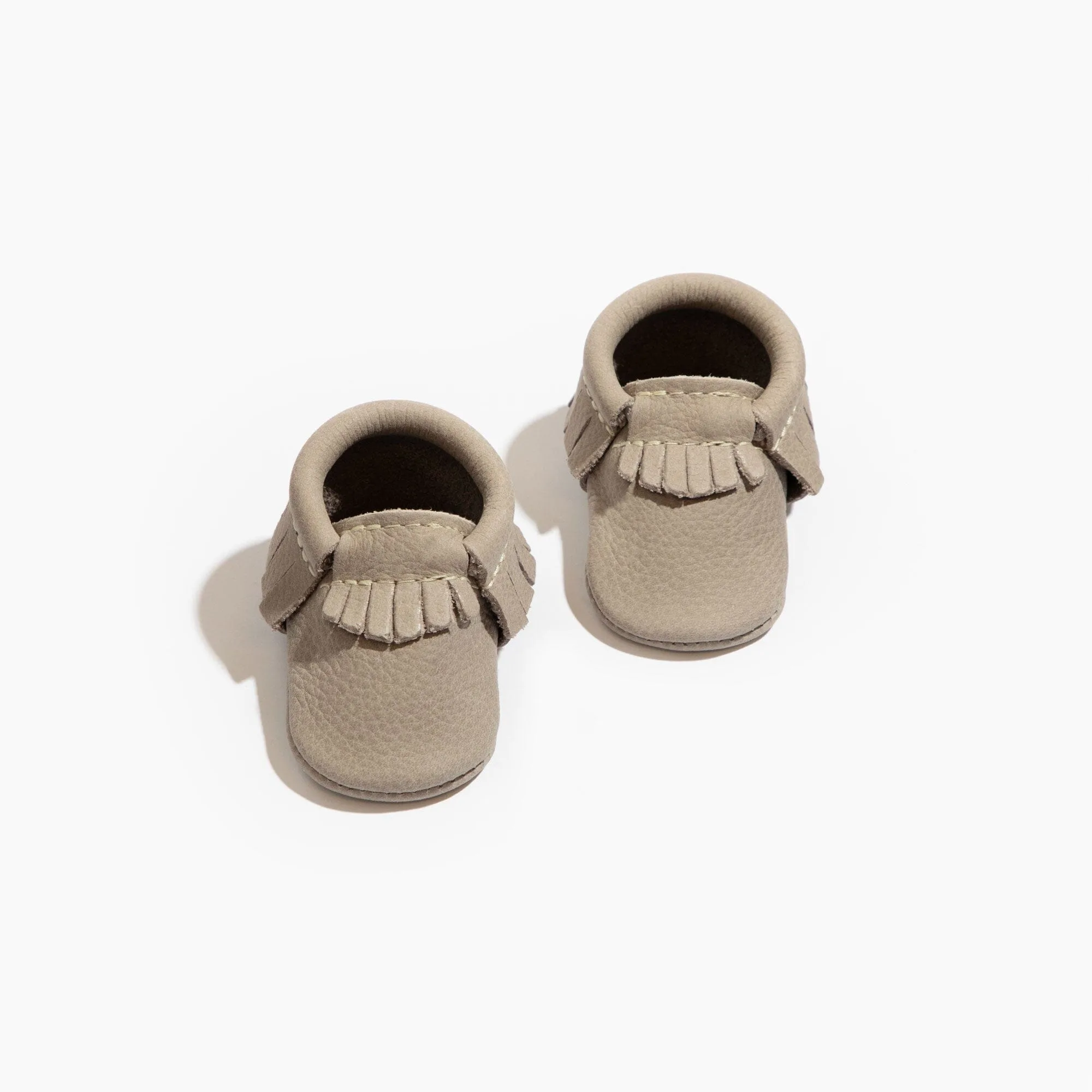
Newborn Salt Flats Moccasin Baby Shoe
Who this fit advice is for
Best for
- Parents buying a first pair of soft sole moccasins for a newborn or young infant
- Caregivers who want a shoe that stays on during indoor wear and brief outings
Not for
- Babies who are already walking outdoors on rough surfaces and need a shoe with tread
- Newborns with unusual foot shapes or medical fitting needs