What the Newport FORWARD Clip is built for
The Newport FORWARD Clip is a clip carrier in a neutral houndstooth print, priced at USD 181.97 against a catalog comparison price of USD 279.95. The name signals its main job: a forward facing carry. That makes it the carrier to reach for when your baby wants to watch the world rather than tuck in against your chest.
The supplied product record does not include a stated age or size range, care instructions, or operating steps. Those details are not confirmed by the information available here, so treat the steps below as a practical setup routine rather than a manufacturer's manual. Check the label and any instructions that come with your carrier before first use.
Before you start: the front carry safety checklist
Run through these checks every time, not just the first time. They take under a minute and catch most avoidable problems.
First, confirm your baby is ready to face outward. A forward facing carry keeps your baby's face away from your chest, so they need steady head and neck control before you try it. If your baby is still floppy or falls asleep the moment they are upright, keep them facing you and try again another day.
Second, clear the path. Forward facing means your baby's arms and legs are in front of you, so move anything breakable off low tables and keep hot drinks out of reach.
Third, dress for the carry. A forward facing baby sits close to your body, so bulky clothing on either of you makes a snug fit harder to judge.
Fourth, check the carrier itself. Look over the straps, clips and seams before you load your baby in. If anything looks worn or damaged, stop and contact the retailer rather than using it.
Fifth, plan your hands. You will need both hands free to seat your baby and adjust the carrier, so set up in a safe spot where you are not rushed.
How to front face baby in the Newport FORWARD Clip
Work through these in order. If a step does not feel secure, take your baby out and start again rather than forcing an adjustment.
- 1. Put the carrier on first: Clip the waistband and shoulder straps into place on your own body before adding your baby. A carrier that is already settled on you is far easier to adjust than one you are wrestling with a wriggling baby inside.
- 2. Loosen the straps you will need to reach: Give yourself slack in the shoulder and side straps so you can seat your baby without a fight. You will tighten everything once they are in.
- 3. Seat your baby facing outward: Lift your baby in so their back rests against your chest and their face looks away from you. Support them with one hand throughout.
- 4. Bring the panel up and secure it: Draw the carrier panel up over your baby's back and fasten the clips. Keep one hand on your baby until every clip is closed.
- 5. Tighten from the waist up: Start at the waistband and work upward through the shoulder straps. A firm waistband carries the weight; the shoulder straps fine-tune the fit.
- 6. Check the seat and leg position: Your baby should sit supported under the thighs, not dangling from the crotch. Adjust the seat width if your carrier allows it, and make sure no fabric is bunched under their knees.
- 7. Do a final hands-free check: With both hands hovering, lean forward slightly and shift your weight side to side. Your baby should move with you, not away from you. If there is any looseness, take them out and retighten.
Chekoh Newport clip fit tips
Small adjustments make a big difference to comfort on both sides of the carrier.
- Keep your baby high and close: A forward facing baby should sit high enough that you can tilt your head down and kiss the top of their head. If they sit low, tighten the shoulder straps.
- Watch the chin position: Your baby's chin should never be pressed into their chest. If it is, they are sitting too low or the panel is pulled too high. Reposition before you walk anywhere.
- Check for red marks: After a short carry, look at the backs of your baby's knees and thighs. Red lines mean the seat is too narrow or the fabric is pinching. Adjust before the next carry.
- Give your own shoulders a break: Forward facing carries pull your centre of gravity forward. If your lower back starts to ache, switch to a front inward carry or take the carrier off for a stretch.
- Keep sessions short at first: Build up gradually rather than heading out for a long walk on day one. Both of you need time to adjust to the new position.
From newborn to front facing: making the transition
The supplied product record does not confirm newborn suitability for the Newport FORWARD Clip, so do not assume it is the right carrier from day one. The catalog does show the carrier being used with babies at different stages: Florence at 5wks, Ronnie-Rae at 5mths and Lenny at 12mths. That range shows the carrier has been photographed across a spread of ages, but it does not tell you when your own baby is ready to face outward.
Use head and neck control as your guide. Once your baby can hold their head steady and push up confidently, a forward facing carry becomes a realistic option. Before that, keep them facing you. When you do make the switch, try it at home first, for a short period, with someone else around. If your baby slumps, fusses or falls asleep, turn them back inward and try again in a few weeks.
Newport FORWARD Clip at a glance
-
Newport FORWARD Clip: Neutral houndstooth print A muted pattern that works with most outfits and hides everyday marks better than a plain light fabric.
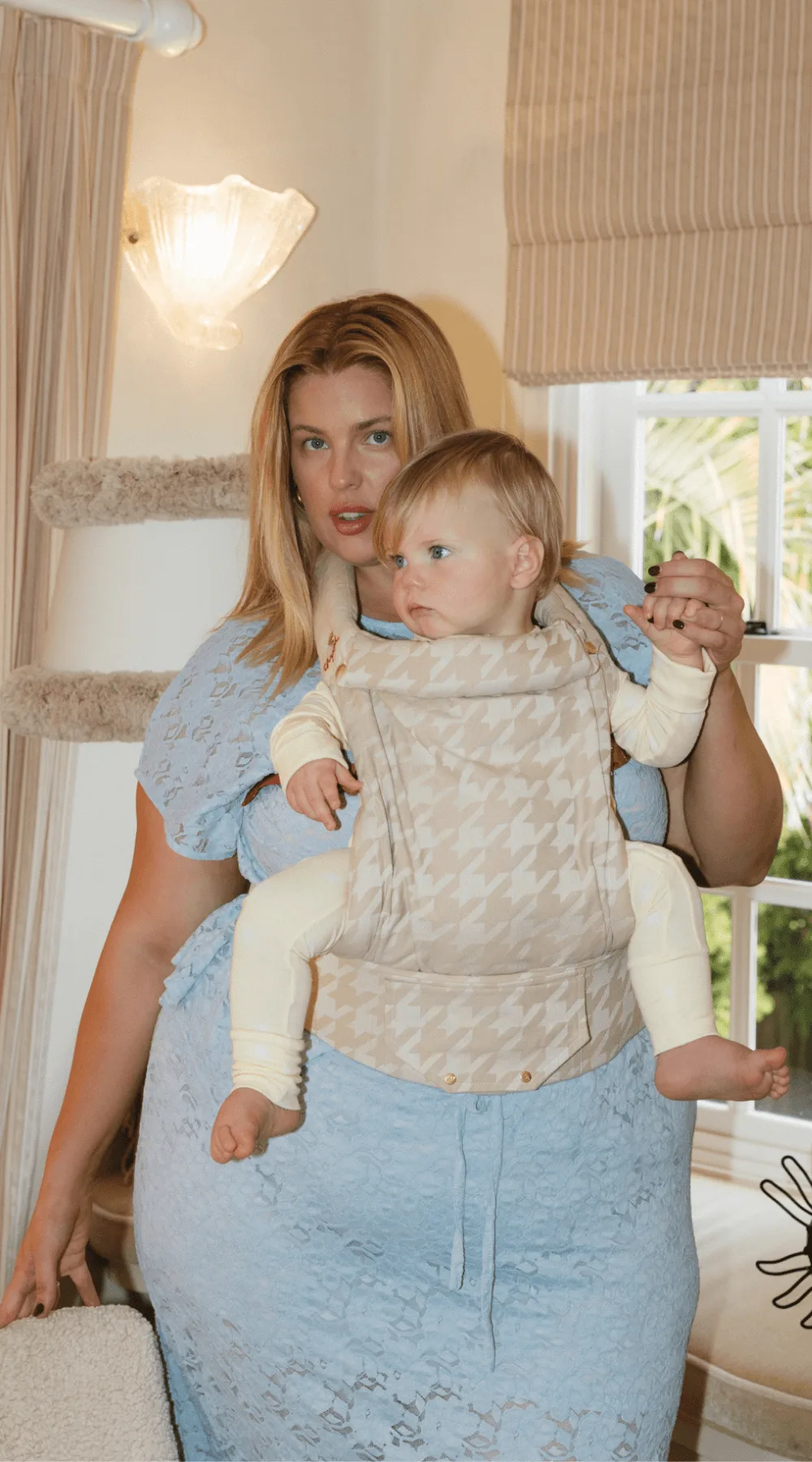
Newport FORWARD Clip
-
Newport FORWARD Clip: Catalog price USD 181.97, comparison price USD 279.95 Useful context if you are weighing the Newport against another clip carrier in the range.
-
Newport FORWARD Clip: Photographed with babies at 5wks, 5mths and 12mths Shows the carrier has been used across a spread of ages, though it does not confirm a stated age range.
What to do if the fit feels wrong
Most forward facing fit problems come back to two things: the waistband is too loose, or the panel is too high or too low. Start by tightening the waistband, then adjust the shoulder straps one side at a time. If your baby still feels like they are sliding down, take them out, shorten the straps and start again from step three.
If the carrier leaves marks, rubs or your baby seems uncomfortable after a short carry, stop using it in the forward facing position and check the label and any instructions supplied with your carrier. The information available here does not include care or adjustment guidance beyond what is described above, so the manufacturer's own instructions should take priority over any general advice.