Quick answer
Ninni pacifiers mimic the breast's shape to support a natural latch, while traditional orthodontic pacifiers are designed to minimize dental issues. For breastfed babies, Ninni may be more intuitive, but for older infants, orthodontic shapes might offer specific dental benefits. Evaluate your baby's needs and consult your pediatrician.
When choosing a pacifier, parents often weigh the benefits of breast-like shapes against orthodontic designs. Ninni pacifiers are crafted to feel like a mother's breast, encouraging a natural latch, while orthodontic pacifiers are shaped to support proper oral development. Understanding the differences can help you make an informed choice for your baby's dental health.
This comparison examines the design philosophies, dental considerations, and practical tradeoffs of Ninni pacifiers versus traditional orthodontic pacifiers, using only the facts provided by the manufacturer.
Design Philosophy: Breast-like vs. Orthodontic
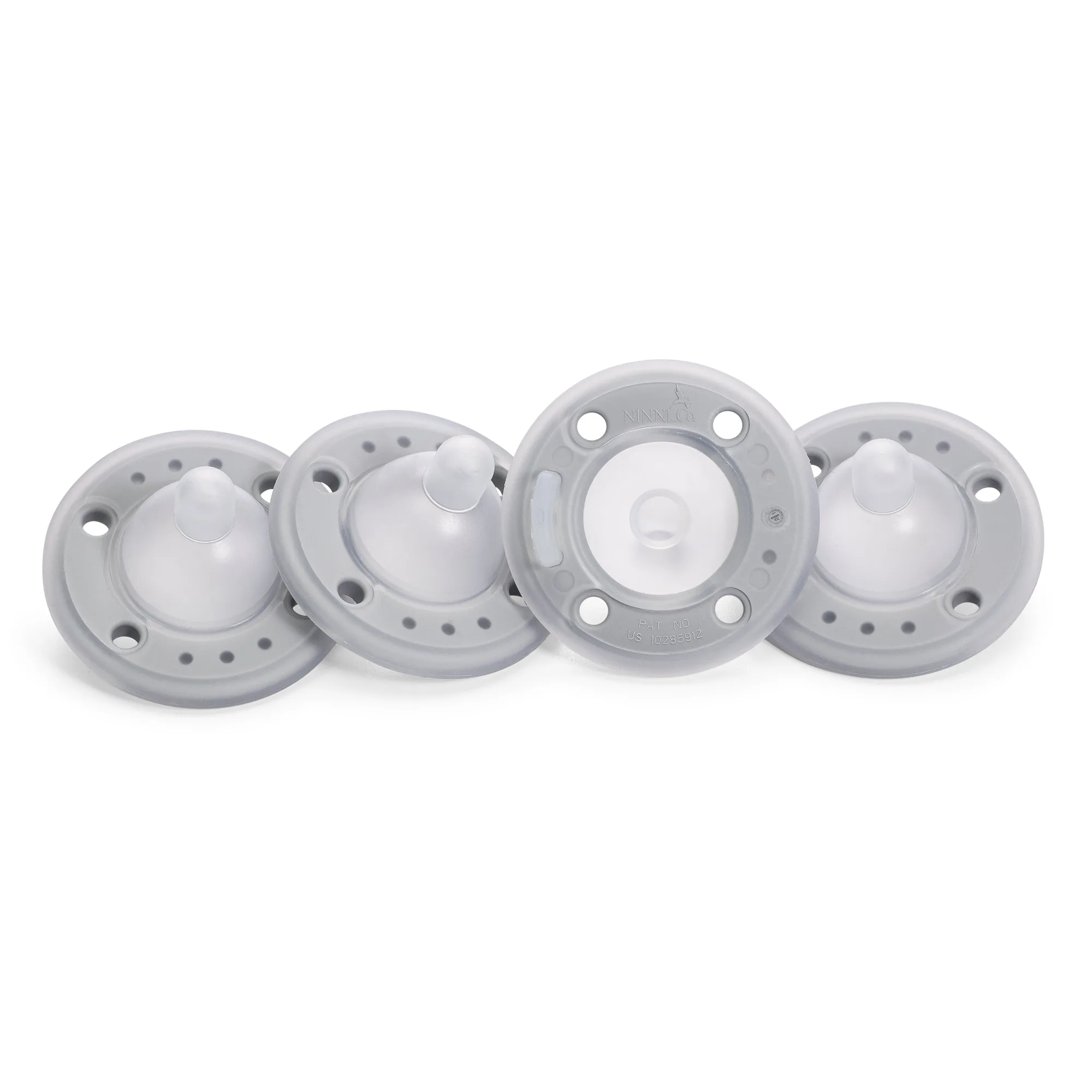
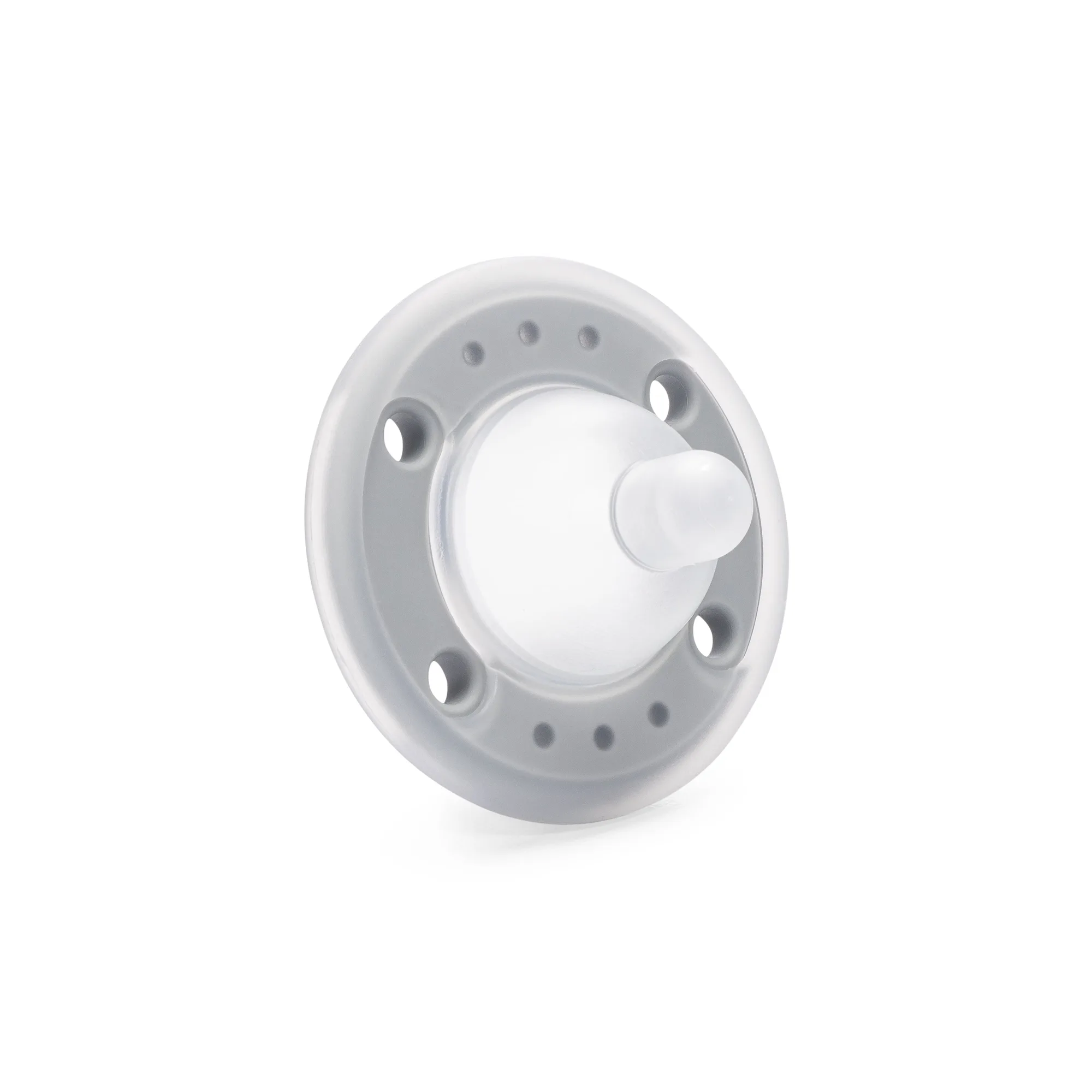
Ninni pacifiers are designed to mimic the natural breast, with a round base and a soft, graspable nipple that encourages your baby to draw it back to the soft palate. This design supports a breastfeeding-type latch, which can be particularly beneficial for breastfed babies who may experience nipple confusion with other shapes.
Orthodontic pacifiers, by contrast, are engineered with a flattened or bulbous shape that fits the palate and teeth, aiming to reduce the risk of dental misalignment. While Ninni pacifiers also claim to support dental health, the primary focus is on mimicking the breast, not on orthodontic correction.
- Consider your baby's feeding method: if exclusively breastfed, a breast-like shape may be more familiar.
- For babies transitioning to solids, an orthodontic shape might be recommended by dentists.
Dental Health Considerations
Both Ninni and orthodontic pacifiers are marketed as supporting dental health. Ninni pacifiers are described as 'orthodontic-optimized' in some product descriptions, suggesting they are shaped to support healthy oral development. However, the exact mechanism is not detailed in the catalog facts.
Traditional orthodontic pacifiers are widely recognized for their symmetric, thin-neck design that minimizes pressure on teeth and gums. They are often recommended by pediatric dentists to reduce the risk of open bite or crossbite. The tradeoff is that they may not feel as natural to a breastfed baby.
It's important to note that no pacifier can guarantee perfect dental health; prolonged use, especially beyond age 2, can still affect tooth alignment. Always follow your dentist's advice on pacifier use.
- Look for pacifiers with ventilation holes for safety, as Ninni offers multiple air holes.
- Replace pacifiers regularly and follow cleaning guidelines to maintain hygiene.
Practical Differences in Use
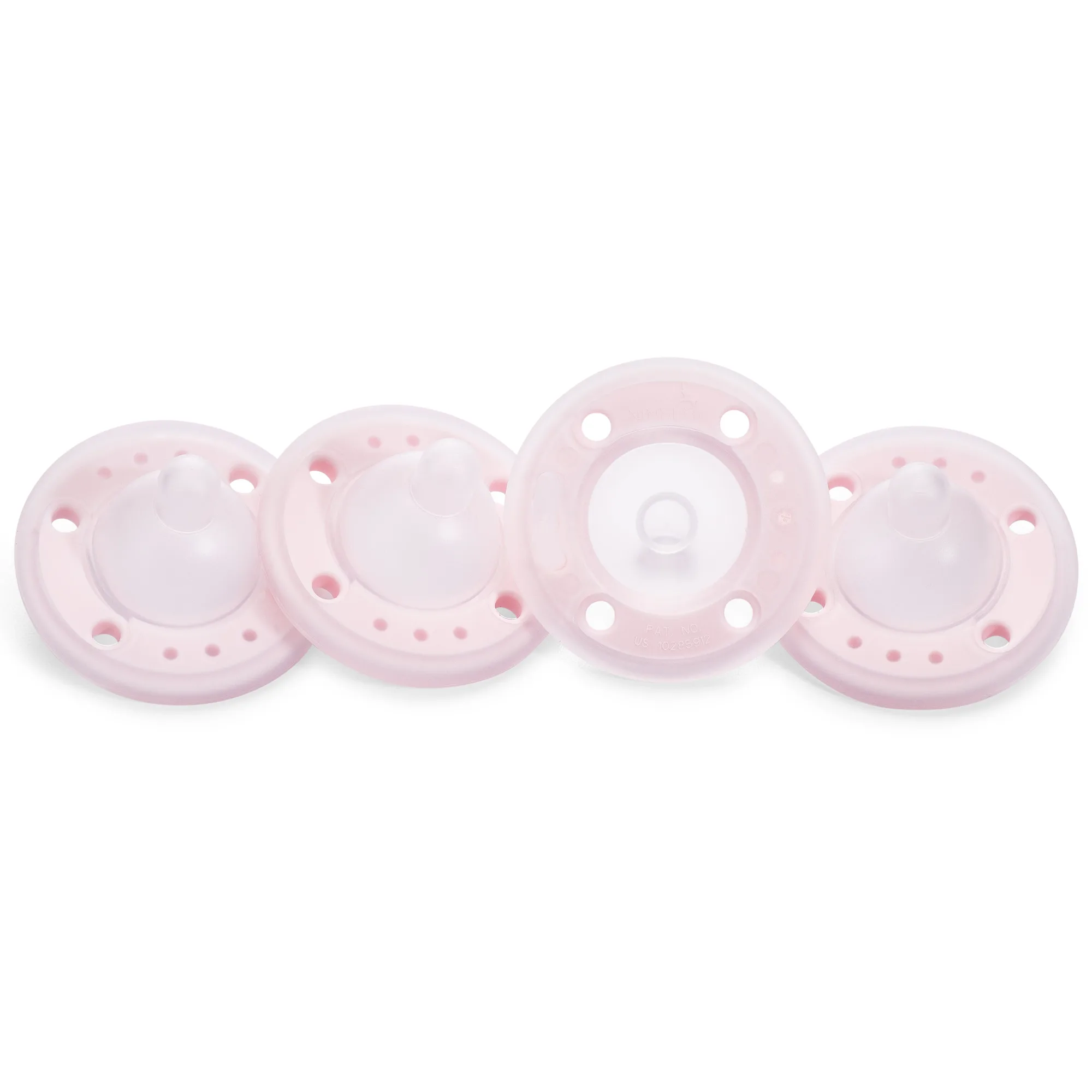
Ninni pacifiers come in various colors and pack sizes, such as the Ninni Pacifier Frost 2 Pack, which includes multiple pacifiers for convenience. They are designed to be gender-neutral and stylish, making them a favorite among fashion-conscious parents.
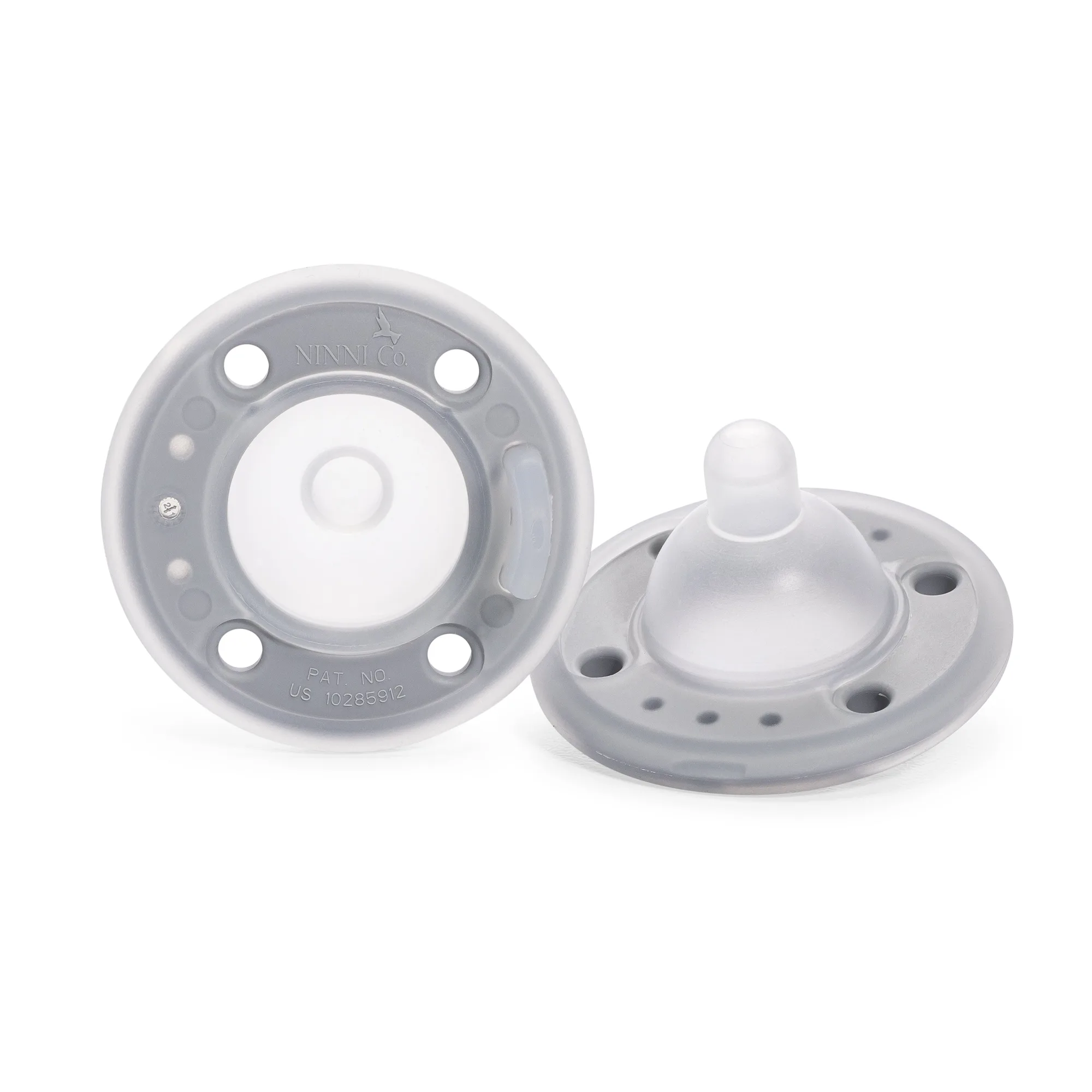
Ninni Pacifier Frost 2 Pack
Orthodontic pacifiers are often available in a wider range of shapes and sizes, but the key difference is the nipple shape. Some babies may reject a pacifier that doesn't feel like the breast, while others may prefer the firmer, more structured orthodontic nipple.
Consider your baby's age and preferences. Ninni pacifiers are recommended for ages 0-24 months, making them suitable from birth. Orthodontic pacifiers are also available for newborns, but you may need to try different brands to find the best fit.
- If your baby is fussy about pacifiers, try a breast-like shape first.
- For older babies, an orthodontic shape might be more accepted if they are used to bottle feeding.
Tradeoffs to Consider
- Breastfeeding compatibility: Ninni pacifiers mimic the breast, encouraging a natural latch, which can be easier for breastfed babies to accept. If you're breastfeeding, a Ninni pacifier may reduce the risk of nipple confusion.
- Dental alignment: Orthodontic pacifiers are specifically designed to minimize pressure on teeth and gums, potentially reducing the risk of misalignment. If dental concerns are your priority, an orthodontic pacifier might be the safer choice.
- Baby's preference: Some babies prefer the feel of a breast-like nipple, while others may accept only the firmer orthodontic shape. Be prepared to try both types to see which your baby prefers.
Product Facts
- Ninni Pacifier Frost 2 Pack: These gender-neutral pacifiers support a natural, breastfeeding-type latch with their round base and multiple air holes ensuring breathing safety. The round base and air holes make it a safe and comfortable choice for breastfed babies, reducing the risk of nipple confusion.
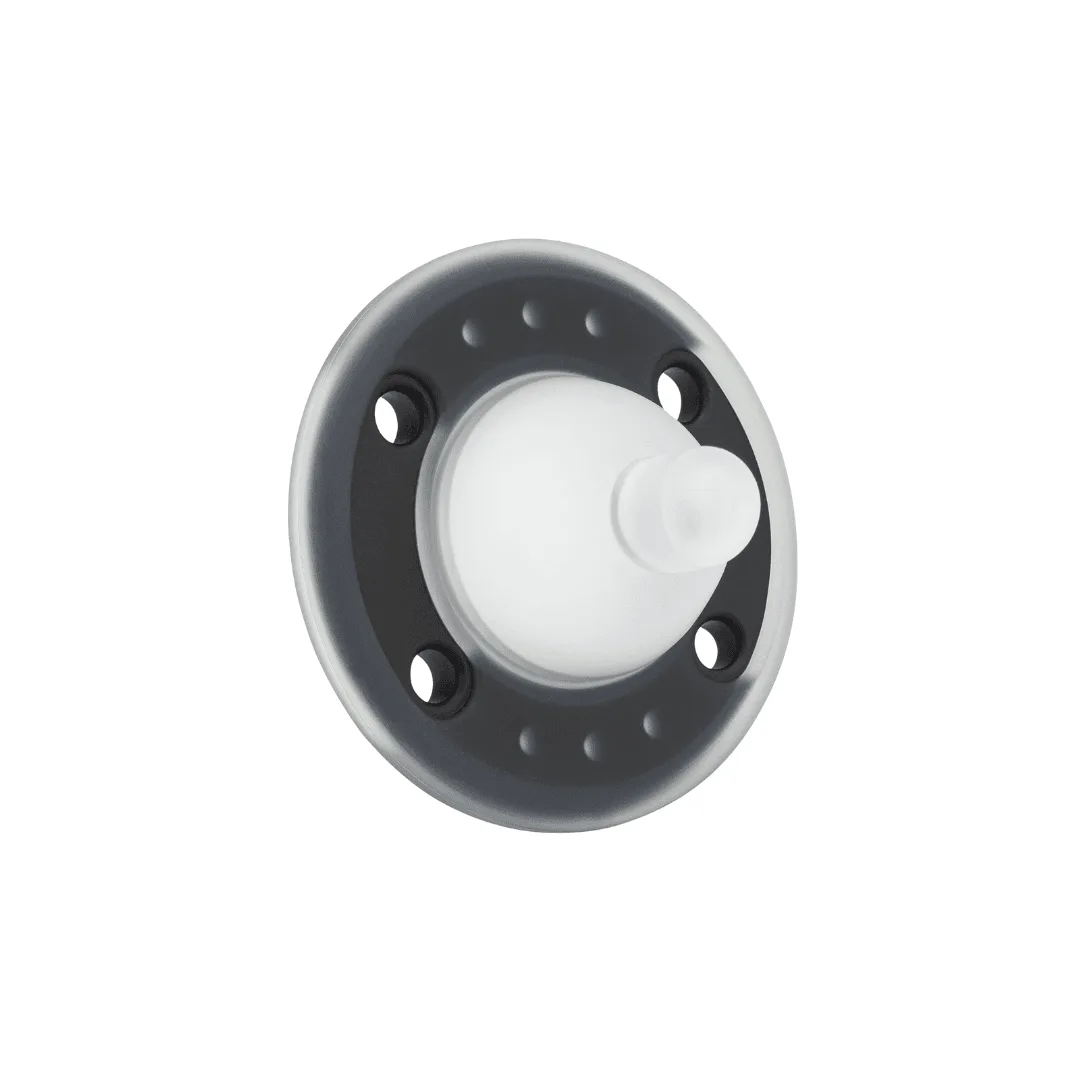
- Ninni Pacifier Cocoa 1 Pack: Recommended Age: 0-24 months. Designed for Dental Health: Specially shaped to support healthy dental and oral development. This pacifier is suitable from birth and claims to support dental health, making it a viable alternative to traditional orthodontic options.
- Ninni Pacifier Oatmeal 1 Pack: This breast-like pacifier is described as 'orthodontic' and supports healthy dental and oral development. The orthodontic claim suggests it may offer similar dental benefits to traditional orthodontic pacifiers while maintaining a breast-like feel.
Which Should You Choose?
Best for
- Breastfed babies who need a pacifier that feels like the breast to avoid nipple confusion.
- Parents who prioritize a natural latch and want a pacifier that supports breastfeeding.
Not for
- Parents seeking a pacifier with explicit orthodontic certifications or specific dental correction features.
- Babies who have already developed a preference for a traditional orthodontic shape.
Ultimately, the choice between Ninni and orthodontic pacifiers depends on your baby's feeding habits and your dental health priorities. Ninni offers a breast-like feel that may ease breastfeeding, while orthodontic pacifiers are designed with dental alignment in mind. Consider your baby's needs, consult your pediatrician or dentist, and don't hesitate to try both to see which your baby accepts best.