Why a UV filter matters on a telephoto lens
Long telephoto lenses magnify every flaw in front of the front element. A UV filter that is not up to the task can soften detail, add flare, or rob contrast exactly when you need it most. The NiSi NC UV filters are built specifically for telephoto use, combining lens-grade optical glass with coatings that keep images sharp and clean.
Beyond protection, a UV filter blocks ultraviolet light below 395nm, cutting the atmospheric haze that builds over long shooting distances. That means distant wildlife, sports action, or aviation subjects can render with better contrast and clarity, without a colour shift.
What the NiSi 95mm NC UV offers for telephoto lenses
-
NiSi 95mm NC UV Designed For Telephoto Lenses (Brass Frame): The NiSi 95mm NC UV (Brass Frame) is designed for telephoto lenses and maintains exceptional, edge-to-edge sharpness on 800mm lenses and beyond, even on 100+ megapixel sensors. If you shoot with a super-telephoto or a high-resolution body, you need a filter that does not soften the image. This filter is engineered to keep up.
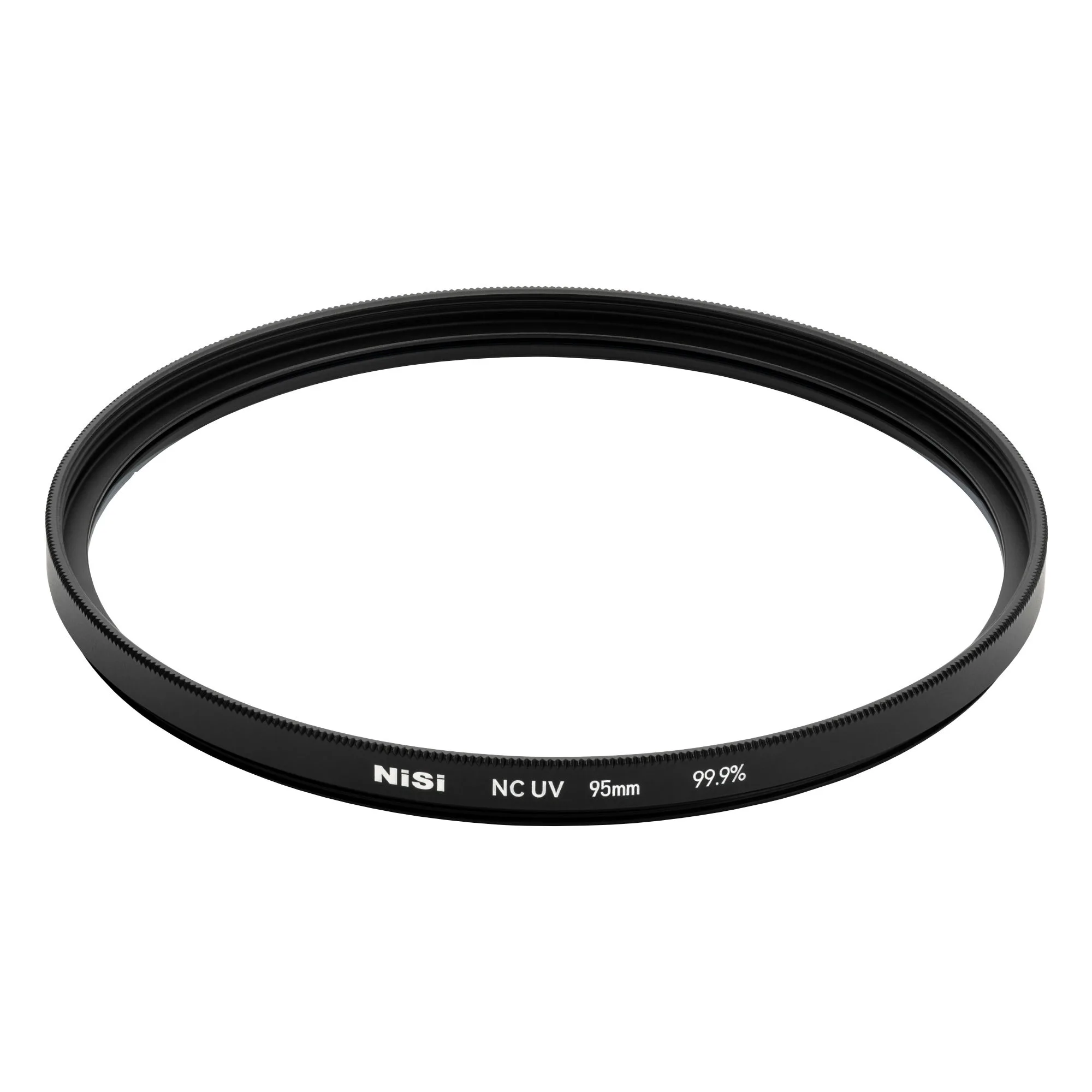
NiSi 95mm NC UV Designed For Telephoto Lenses (Brass Frame)
-
NiSi 95mm NC UV Designed For Telephoto Lenses (Brass Frame): It uses lens-grade optical glass with NiSi's Ultra Low Reflection Coating, reaching up to 99.9% light transmittance. High transmittance means minimal light loss and flare, so your telephoto captures its full share of light and detail.
-
NiSi 95mm NC UV Designed For Telephoto Lenses (Brass Frame): The double-sided 48-layer nano coating is waterproof and oil-proof, making rain, sea spray, dust, and fingerprints bead up and wipe away easily. In the field, you can keep the filter clean without harsh cleaning, protecting your front element from the elements.
Choosing the right size: 95mm vs 127mm
The NiSi NC UV comes in sizes to match different lens families. The 95mm version is designed for telephoto lenses with a 95mm front filter thread, including popular models from Nikon, Canon, Sony, and Sigma. The 127mm version is built for Canon and Fujifilm broadcast lenses, with a slimline aluminium frame that minimizes vignetting on wide-angle lenses.
Before you buy, check your lens's front filter thread size. It is usually printed on the lens barrel or in the manual. If you are unsure, look for the diameter in millimetres—it is the number with a ∅ symbol. The 95mm filter suits telephoto lenses like the NIKKOR Z 400mm F4.5 VR S or the Canon RF 800mm F11 IS STM, while the 127mm filter is for broadcast lenses such as the Fujifilm UA13x4.5BERD or Canon CJ45e×13.6B.
What the NiSi 127mm NC UV offers for broadcast lenses
-
NiSI 127mm NC UV Filter: The NiSi 127mm NC UV uses high-quality ultraviolet absorption optical glass and a double-sided, multi-coating lens technology. It provides high transmittance and a smooth surface, reducing unwanted reflections and protecting the lens from dust and moisture.
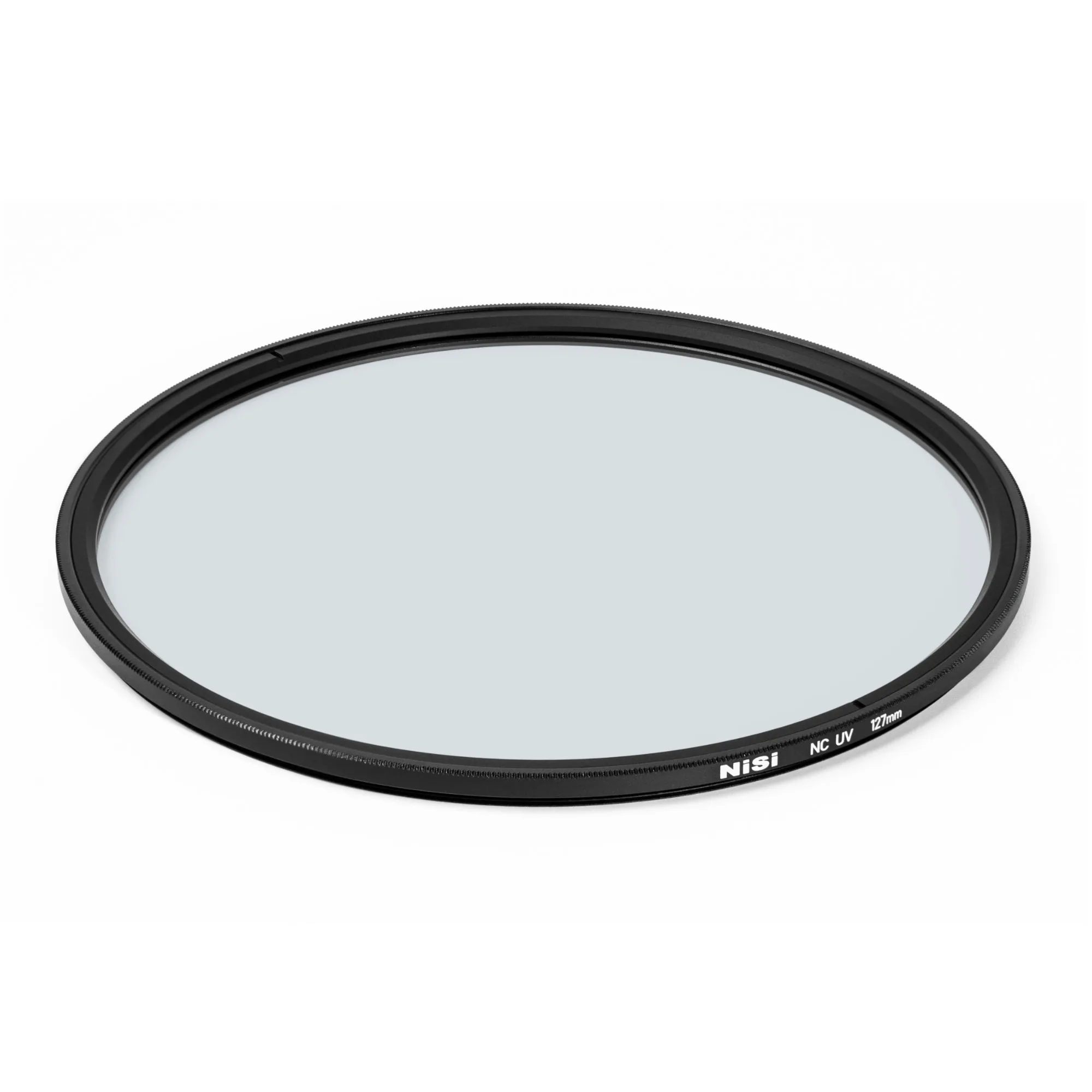
NiSI 127mm NC UV Filter
-
NiSI 127mm NC UV Filter: The slimline aluminium frame is lightweight and strong, and allows a lens cap to be attached for convenience. A slim frame minimizes vignetting, especially on wide-angle broadcast lenses, and the cap fit means you can leave the filter on between shoots.
How to fit and use your NiSi NC UV filter
Follow these steps to attach and maintain your filter correctly.
- Check the filter thread size: Confirm your lens has a 95mm or 127mm front filter thread. The size is usually printed on the lens barrel.
- Screw on the filter smoothly: The brass frame on the 95mm version threads on smoothly and resists warping, even in cold conditions. For the 127mm aluminium frame, screw it on gently to avoid cross-threading.
- Attach your original lens cap: The frame is precisely machined so your original lens cap still fits over the filter. This lets you keep the filter on between shoots without needing a spare cap.
- Clean with a soft cloth if needed: The nano coating makes fingerprints and water stains easy to wipe away. Use a microfiber cloth and gentle pressure.
Trade-offs to consider
The main trade-off with any UV filter is the potential for added reflections or loss of light. NiSi's ULRC coating on the 95mm version minimizes these, but no filter is completely invisible. For extreme telephoto work, the sharpness-focused manufacturing technique is a real benefit, but it comes at a higher price point.
The 127mm version is lighter due to its aluminium frame, but it may not offer the same level of optical precision as the brass-framed telephoto version. If you are shooting with a broadcast lens, the slim profile is more important than the ultra-sharpness spec, so the 127mm is a sensible choice.