A well-equipped camp kitchen relies on a few sharp blades, and choosing between a paring knife and a bread knife can feel like splitting hairs. Both serve different purposes, but if you're limited on pack space, you need to know which one earns a spot in your kit. The Barebones No. 4 Paring Knife and No. 9 Bread Knife are two popular options, each built for outdoor durability and precision.
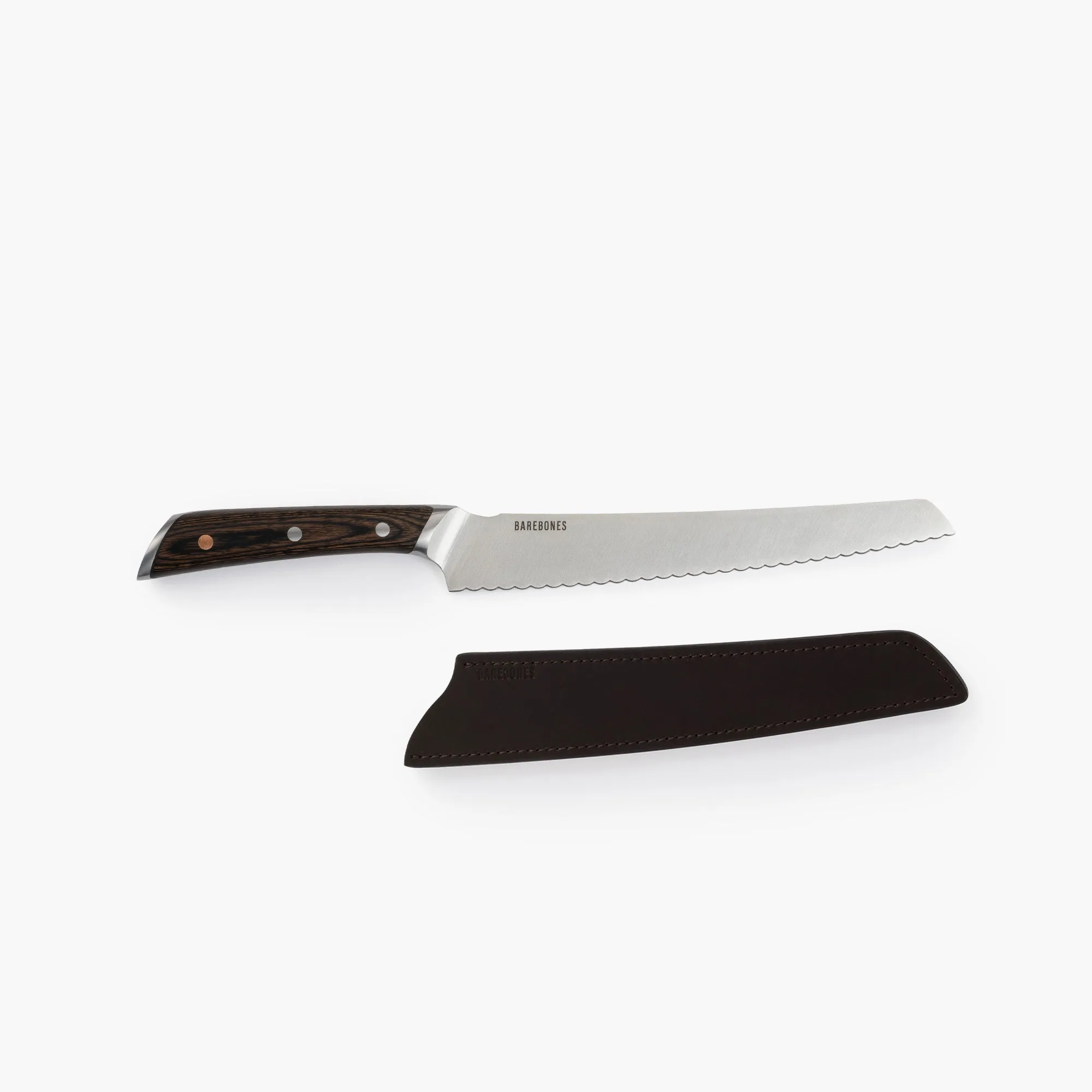
No. 9 Bread Knife
In this comparison, we break down blade length, edge style, and typical camp tasks to help you decide. Whether you're prepping vegetables or slicing a fresh loaf, understanding the strengths of each knife will save you time at the fire and keep your meals on point.
Blade Length and Portability
The No. 4 Paring Knife features a short, nimble blade (about 4 inches) that excels in detailed work—think peeling apples, deveining shrimp, or trimming herbs. Its compact size makes it easy to tuck into a cook kit or day bag without adding bulk. For backpackers or minimalist campers, this knife replaces the need for a larger chef's knife for small jobs.
In contrast, the No. 9 Bread Knife offers a longer blade (around 9 inches) with a serrated edge. This length is ideal for cutting through crusty bread, melons, or soft tomatoes without crushing them. It takes up more space but handles tasks that a paring knife simply cannot, such as sawing through a baguette or slicing a large roast.
- If space is tight, the No. 4 Paring Knife fits in a side pocket; the No. 9 Bread Knife requires a dedicated knife roll or sheath.
Edge Type and Maintenance
The No. 4 Paring Knife has a straight, fine edge that can be honed to a razor-sharp finish. Outdoor cooks often use it for precision cuts on vegetables and fruits. Because it's straight, you can sharpen it with a whetstone or a simple ceramic rod, which is easy to pack. However, the fine edge dulls faster if used on hard or rough surfaces.
The No. 9 Bread Knife uses a serrated scalloped edge. Those teeth stay sharp much longer because they saw rather than slice. Serrated knives rarely need sharpening in the field—you can simply wash and reuse. The trade-off is that you can't hone them with a typical stone, so eventual sharpening requires a special tool or professional service. For camp use, the serrated edge is often the more forgiving choice.
- For weekend trips: a quick field hone on the No. 4 Paring Knife keeps it ready. For longer expeditions: the No. 9 Bread Knife's serrations require less upkeep.
Best Use Cases in a Camp Kitchen
The No. 4 Paring Knife shines in prep work: dicing onions for a stew, scoring fish, or removing seeds from peppers. It feels like an extension of your hand and gives you control over small ingredients. If you cook elaborate meals at base camp, this knife is a workhorse for fine cutting. It pairs well with a larger knife like the Barebones No. 7 Nakiri Knife for chopping vegetables.
The No. 9 Bread Knife is the ultimate sharing tool. Fresh bread is a staple of camp meals—sandwiches, toast over the fire, or dipping in olive oil. Its long serrated blade also handles tough-skinned produce like butternut squash or pineapple. If your camp menu relies on loaves or large fruits, the bread knife is not negotiable.
- Paring knife for delicate, precise tasks; bread knife for crusty, large items. If you only pack one, consider what you'll actually eat.
Choose the No. 4 Paring Knife if your camp cooking focuses on vegetable prep and lighter meals. Choose the No. 9 Bread Knife if you regularly slice bread, large fruits, or dense vegetables. For the most versatile camp kitchen, carry both—but if weight and space demand a single knife, the serrated edge of the bread knife handles a wider range of outdoor foods.