The Core Difference: Elastic vs No Elastic
The main difference between no elastic socks and regular socks is how they stay up. Regular socks rely on elastic fibers like elastane or latex to grip the calf or ankle. No elastic socks use a ribbed knit to hold them in place. For people with eczema, the absence of elastic can reduce irritation from tight bands and synthetic materials.
Material and Skin Contact
No elastic socks are often made from 100% organic cotton, which is generally gentler on sensitive skin than blends containing synthetic elastic. The No Elastic Socks - 100% Organic Cotton from Eczema Clothing are held up purely by the ribbed knit around the ankles. This means less direct contact with potential irritants. However, due to manufacturing requirements, there are one or two very thin threads of elastic thread right at the top of the sock, which can be removed if necessary.
No Elastic Socks vs Regular Socks: Side-by-Side
- How they stay up: No elastic socks use a ribbed knit; regular socks use elastic fibers (elastane, latex).
- Skin contact materials: No elastic socks are typically 100% organic cotton; regular socks often contain synthetic elastic blends.
- Fit over time: No elastic socks lose their shape to a degree on wearing but regain it on washing. Regular socks maintain elastic tension longer.
- Removable elastic: No elastic socks may have one or two thin elastic threads at the top that can be removed. Regular socks have elastic integrated throughout.
No Elastic Socks - 100% Organic Cotton: Key Facts
-
No Elastic Socks - 100% Organic Cotton: No elastic means that they are held up purely by the ribbed knit around the ankles, so they lose their shape to a degree on wearing but regain this on washing. This explains why these socks don't dig in or cause pressure marks, a common issue with elastic bands for sensitive skin.
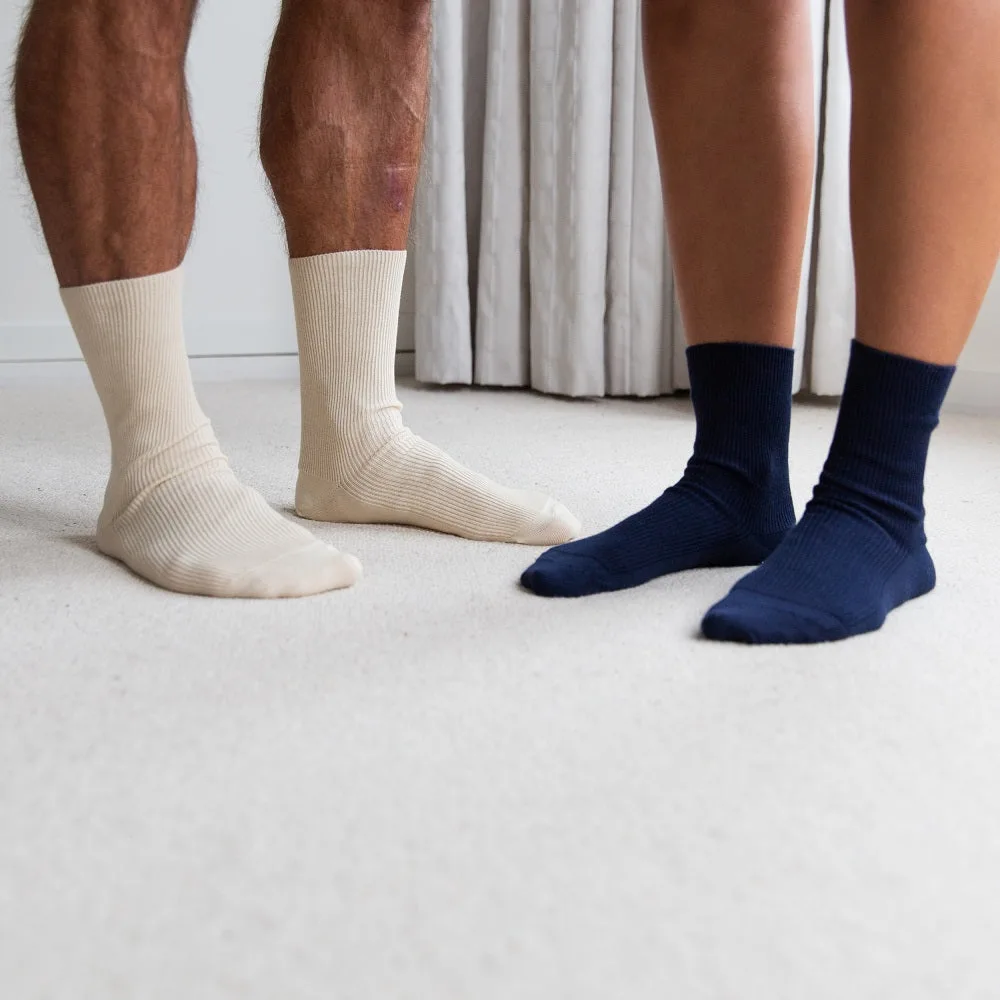
No Elastic Socks - 100% Organic Cotton
-
No Elastic Socks - 100% Organic Cotton: The socks do not contain latex or elastane however due to manufacturing technical requirements there are one or two very thin threads of elastic thread right at the top of the sock which can be removed if necessary. This gives you the option to remove any elastic if you need a completely elastic-free sock, while still benefiting from organic cotton.
-
No Elastic Socks - 100% Organic Cotton: Wash at up to 60c and low tumble dry or line dry. Proper care preserves the ribbed knit and organic cotton, helping the socks maintain their shape and comfort over time.
Which Should You Choose?
If you have eczema on your feet or ankles and find that regular socks cause itching, redness, or indent marks, no elastic socks are worth trying. The 100% organic cotton material is less likely to irritate, and the ribbed knit design avoids tight elastic bands. However, be aware that no elastic socks may feel looser over the course of the day and require washing to regain their shape. Regular socks offer more consistent tension but may contain elastane or latex that can trigger reactions. Your choice depends on whether you prioritize gentle skin contact or a snug, consistent fit.