A Vinegar That Works Like a Flavor Ingredient
Noir Fig Balsamic Vinegar is not a standard pantry vinegar. It is made from Trebbiano and Lambrusco grapes, fermented with pressed organic Calabrian figs, and aged in oak barrels. The result is a silky, aromatic vinegar with a balance of sweet, tangy, and wood-smoked notes. Because of its concentrated flavor, a little goes a long way in both hot and cold preparations.
What the Catalog Confirms About This Vinegar
-
Noir Fig Balsamic Vinegar: The blend is aged in Oak barrels, where time and air work their quiet transformation — softening the bright acidity into a velvety sweetness full of depth. The oak aging gives this vinegar a mellow character that works well as a finishing ingredient without overwhelming other flavors.
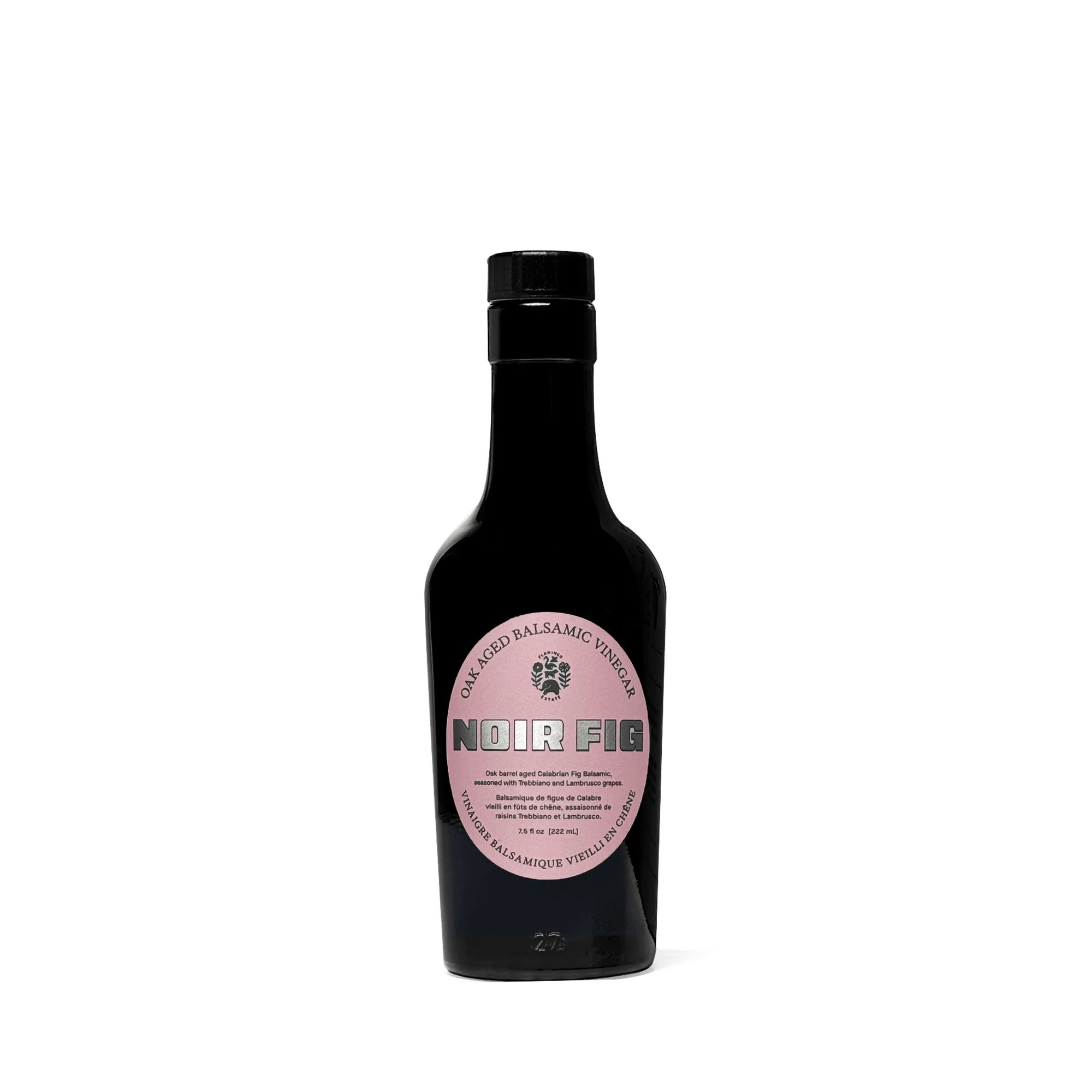
Noir Fig Balsamic Vinegar
-
Noir Fig Balsamic Vinegar: Drizzle it over grilled Peaches, ripe Tomatoes, roasted meats, or a slab of aged cheese. These are the primary serving suggestions from the producer, giving you a reliable starting point for using the vinegar.
-
Noir Fig Balsamic Vinegar: Reduce it gently until it glows like molasses, or finish a dish with just a drop. Reduction is a supported technique that transforms the vinegar into a thicker, more intense glaze, useful for meats or roasted vegetables.
Start with Salads: Dressings and Finishing Splashes
A simple vinaigrette is the most direct way to use Noir Fig Balsamic Vinegar. Whisk one part vinegar with three parts olive oil, a pinch of salt, and optional herbs. The fig sweetness pairs well with bitter greens like radicchio or endive, and with ripe tomatoes or sliced peaches. You can also use it as a finishing splash — just a few drops over a composed salad to add brightness without making a dressing.
Marinades and Glazes: Where Sweetness and Acidity Work Together
The vinegar's balanced acidity and fruitiness make it a natural choice for marinades. Combine it with olive oil, garlic, and rosemary for chicken or pork, letting the meat absorb the flavor for at least an hour before cooking. For a quick glaze, reduce the vinegar gently over low heat until it thickens to a syrupy consistency, then brush it onto roasted meats or grilled vegetables during the last few minutes of cooking. The catalog notes that reduction yields a molasses-like glaze, so you can use it as a finishing touch for lamb chops, roasted carrots, or even grilled stone fruit.
Cheese Boards and Simple Pairings
Aged cheeses, especially firm sheep's milk or blue cheeses, benefit from a light drizzle of this fig balsamic. The sweetness cuts through the salt and fat, creating a balanced bite. You can also serve it alongside a cheese board in a small dish for guests to add themselves. The producer suggests pairing it with a slab of aged cheese, which is a straightforward way to enjoy the vinegar without any cooking.