The Core Difference: Nylon vs Metal Jaws
Once a piece has been through its final polish, every tool that touches it is a risk. Standard metal-jaw pliers can leave scratches, dents, or surface marks on finished jewellery, even when used carefully. Non-marring flat nose pliers replace metal contact surfaces with nylon inserts, providing a softer grip that protects polished metal, plated finishes, and delicate components.
The choice between these two types comes down to whether you are working with raw stock that will be finished later, or handling a piece that is already polished, plated, or assembled. For the latter, non-marring pliers are the safer option.
When Nylon Jaws Make the Difference
Nylon jaw pliers are essential for tasks where surface finish is critical. Bench jewellers, silversmiths, and optical technicians regularly grip, form, and adjust finished components without risking refinishing work. The nylon faces allow you to hold, straighten, and adjust without leaving marks.
Standard metal pliers still have their place for heavy forming, cutting, or gripping raw wire and sheet metal that will be filed and polished later. But for final assembly, stone setting adjustments, or working with pre-painted parts, non-marring pliers are the better choice.
Non-Marring Flat Nose Pliers at a Glance
-
Non-Marring Flat Nose Pliers — Parallel Action, Nylon Jaws + Spare Set, 140 mm: These parallel-action pliers grip flat and even along the whole jaw, and the nylon faces mean you can hold, straighten and adjust finished metal or spectacle frames without buying yourself refinishing work. The nylon inserts protect polished surfaces from scratches or marks, making these pliers ideal for final assembly and adjustment work.
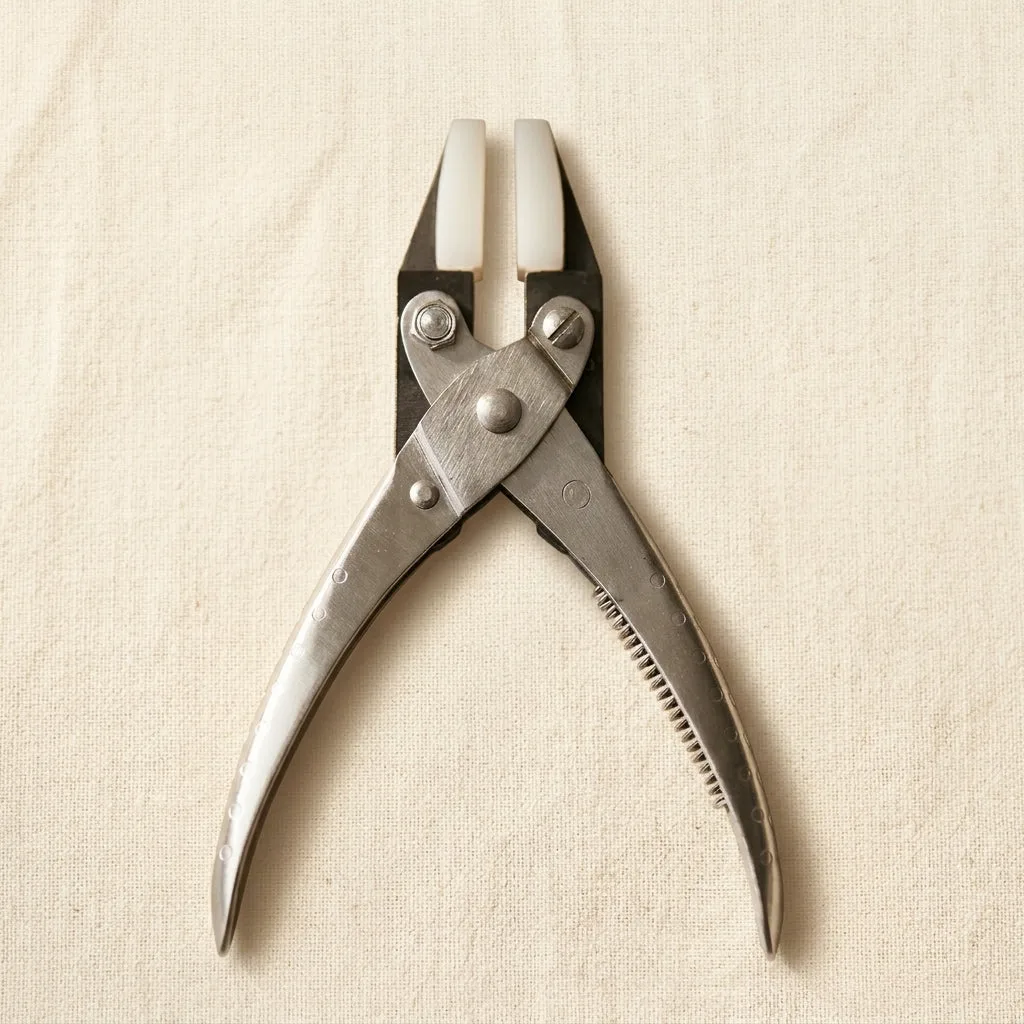
Non-Marring Flat Nose Pliers — Parallel Action, Nylon Jaws + Spare Set, 140 mm
-
Non-Marring Flat Nose Pliers — Parallel Action, Nylon Jaws + Spare Set, 140 mm: The compound box-joint keeps the jaws parallel through their full travel, so pressure spreads across the workpiece instead of concentrating at a pinch point. Even pressure distribution prevents localised denting or distortion, especially on thin or soft metal components.
-
Non-Marring Flat Nose Pliers — Parallel Action, Nylon Jaws + Spare Set, 140 mm: The flat nylon inserts are replaceable, and a spare pair comes with the tool. Extended tool life and consistent protection: you can swap worn inserts instead of replacing the whole pliers.
Parallel Action vs Standard Pliers
Standard pliers typically pivot at a single point, causing the jaws to close at an angle. This can concentrate force at the tip or the back of the jaw, depending on where you grip. Parallel action pliers use a compound box-joint mechanism to keep the jaws parallel throughout their full travel. This design spreads pressure evenly across the workpiece, reducing the risk of marring or distorting the metal.
For jewellery work, parallel action is particularly valuable when holding flat wire, sheet, or finished bands. The even grip also improves control during forming and adjustment.
Who Benefits Most from Non-Marring Pliers
These pliers are primarily for bench jewellers, silversmiths, and optical technicians who regularly grip, form, and adjust finished components. They are also favoured by craftspeople and model makers working with soft metals or pre-painted parts where the surface finish is critical.
If your work involves frequent handling of polished, plated, or assembled pieces, investing in a dedicated pair of non-marring parallel action pliers saves time on re-polishing and reduces the risk of costly damage.
What the Supplied Information Does Not Cover
The supplied product information does not include specific operating speeds, loads, or structural installation procedures. For safe and effective use, follow the manufacturer's instructions that come with the tool. The pliers are sized at 140 mm for controlled bench work rather than brute leverage, and are intended for manual gripping, forming, and adjusting tasks.