Quick Answer
For everyday coffee, whole milk gives a richer, creamier cup, while nonfat dry milk offers unmatched convenience and a longer shelf life. Choose based on whether you prioritize taste or practicality.
Taste and Texture: Creaminess vs Lightness
Whole milk's higher fat content contributes a velvety mouthfeel and subtle sweetness that many coffee drinkers love. It also steams into microfoam that holds well in lattes and cappuccinos.
Nonfat dry milk, when reconstituted, produces a lighter, less creamy drink. However, it still adds a pleasant dairy note and can be whisked into hot coffee directly as a creamer, dissolving quickly without needing refrigeration.
Convenience and Shelf Life
Whole milk requires refrigeration and has a short shelf life, which can lead to waste if you don't use it quickly. Nonfat dry milk is shelf-stable for months, making it a reliable backup for when you run out of fresh milk or for office, camping, and travel use.
The supplied Nonfat Dry Milk 1 Lb. Bag is specifically noted as handy for when you run out of milk and is described as perfect for Bean to Cup applications, meaning it can be used in automatic coffee machines that require a milk powder option.
Cost and Storage Considerations
Nonfat dry milk is often more economical per serving than fresh whole milk, especially when you consider waste. It also takes up less pantry space and doesn't need cold storage, which is a plus for small kitchens or offices.
However, whole milk is a fresh dairy product with a taste that many find irreplaceable. If you drink coffee daily and have fridge space, whole milk may offer the best flavor experience despite the higher cost and shorter shelf life.
Trade-offs at a Glance
- Flavor richness: Whole milk provides a fuller, creamier taste and better mouthfeel, while nonfat dry milk is lighter and less rich. If you value creamy texture, choose whole milk; if you prefer a lighter cup, nonfat dry milk works well.
- Convenience: Nonfat dry milk is shelf-stable and always ready, while whole milk needs refrigeration and has a shorter shelf life. Stock nonfat dry milk for backup or travel, but keep whole milk for daily enjoyment if you have fridge space.
- Cost and waste: Nonfat dry milk often costs less per serving and reduces waste since it doesn't spoil quickly; whole milk can go bad before you finish the carton. For occasional coffee drinkers, nonfat dry milk may be more economical; for daily drinkers, whole milk's taste may justify the cost.
Product Facts
-
Nonfat Dry Milk 1 Lb. Bag: Nonfat dry milk is very handy to have around when you run out of milk; it can be stirred into coffee and tea or mixed with water to turn back into liquid milk. This means you can keep a bag on hand for emergencies or use it as a regular creamer, and it's perfect for Bean to Cup machines that need a powdered milk option.
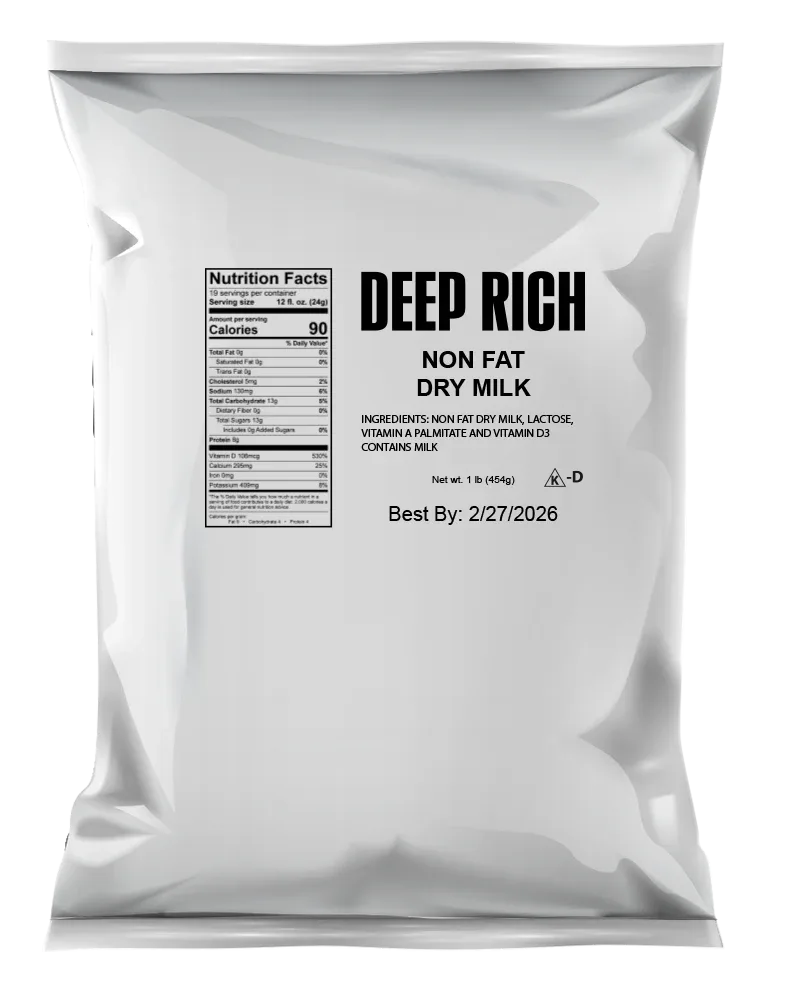
Nonfat Dry Milk 1 Lb. Bag
Which Should You Choose?
Best for
- Coffee drinkers who want a rich, creamy cup and have regular access to refrigeration
- Lattes and cappuccinos where milk steaming quality matters
Not for
- Those who need a long-lasting, no-refrigeration option for office, camping, or occasional use
- Anyone looking to cut costs and reduce dairy waste