Quick answer
Choose a notepad when you need disposable, tear-off pages for lists, calls and rough ideas. Choose a notebook when you want a durable, bound book for ongoing notes you will keep and reference. Choose a journal when the writing itself is the point: dated entries, reflection, habit tracking or a planner-style record you will revisit.
Most people buy the wrong paper product because they shop by look instead of by job. A notepad, a notebook and a journal can all be A5-ish, all have covers, and all sit on the same desk, yet they behave very differently once you start writing. The difference between notebook and journal is not marketing language; it is binding, page count, paper weight and whether pages are meant to stay or go.
This comparison sticks to what you can actually check before buying: page count, paper weight, binding, cover and whether pages tear out. It uses real products from our range to show how those details change the way you use each format, so you can match the format to your habit rather than the other way around.
What actually separates a notebook, a journal and a notepad
A notepad is built for removal. Pages are usually bound with a gummed edge so a single sheet tears away cleanly, which is why notepads suit shopping lists, phone messages, meeting scribbles and anything you will throw out or hand over. A notebook is built for retention: pages are bound to stay in place, so the book becomes a record you can flip back through. A journal is a notebook with an intended use pattern, whether that is dated entries, reflection, sketching or planning.
The practical test is simple. Ask whether you will ever want the page to leave the book. If yes, you want a notepad. If no, you want a notebook or journal. Everything else, including paper weight and cover style, is about how pleasant that choice is to live with.
- Tear-off pages point to a notepad; bound pages point to a notebook or journal.
- If you date your entries or track habits, you are choosing a journal, not a notebook.
- Paper weight matters more in a notebook you write in daily than in a notepad you use for lists.
Notepad: the format for pages that should leave
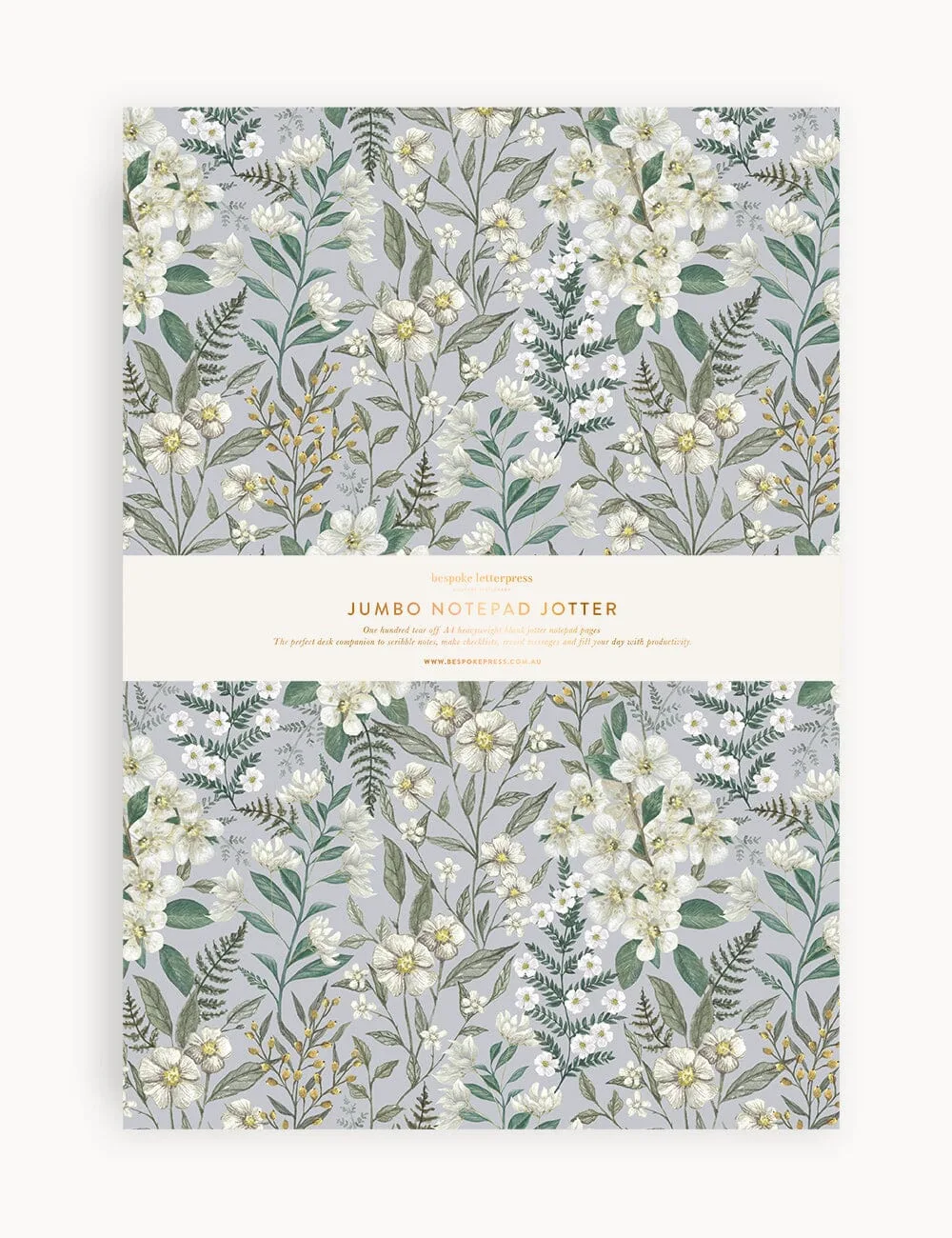
The Ivory Garden Notepad Jumbo Jotter is an A4 jumbo notepad jotter with 100 heavyweight tear-off blank pages, bound with a gummed edge and finished with a full heavyweight wrap-around cover, gold foil and gilded edges. The 100gsm paper is the detail that matters: it is heavy enough to take pen ink without the feathering you get on thin list pads, while the gummed binding means each sheet leaves cleanly.
Ivory Garden Notepad Jumbo Jotter
That combination suits a desk where notes are transient. You can tear off a page for a colleague, a shopping list or a packing note without destroying the rest of the pad. The trade-off is that a notepad is a poor archive. Once pages are gone, they are gone, and there is no spine to label or shelve. If you want to keep a record, this is the wrong format.
- A4 size suits desk work, lists and messages; it is less convenient to carry than a small pad.
- Gummed binding is designed for clean tearing, not for long-term page retention.
Notebook and journal: bound pages you keep
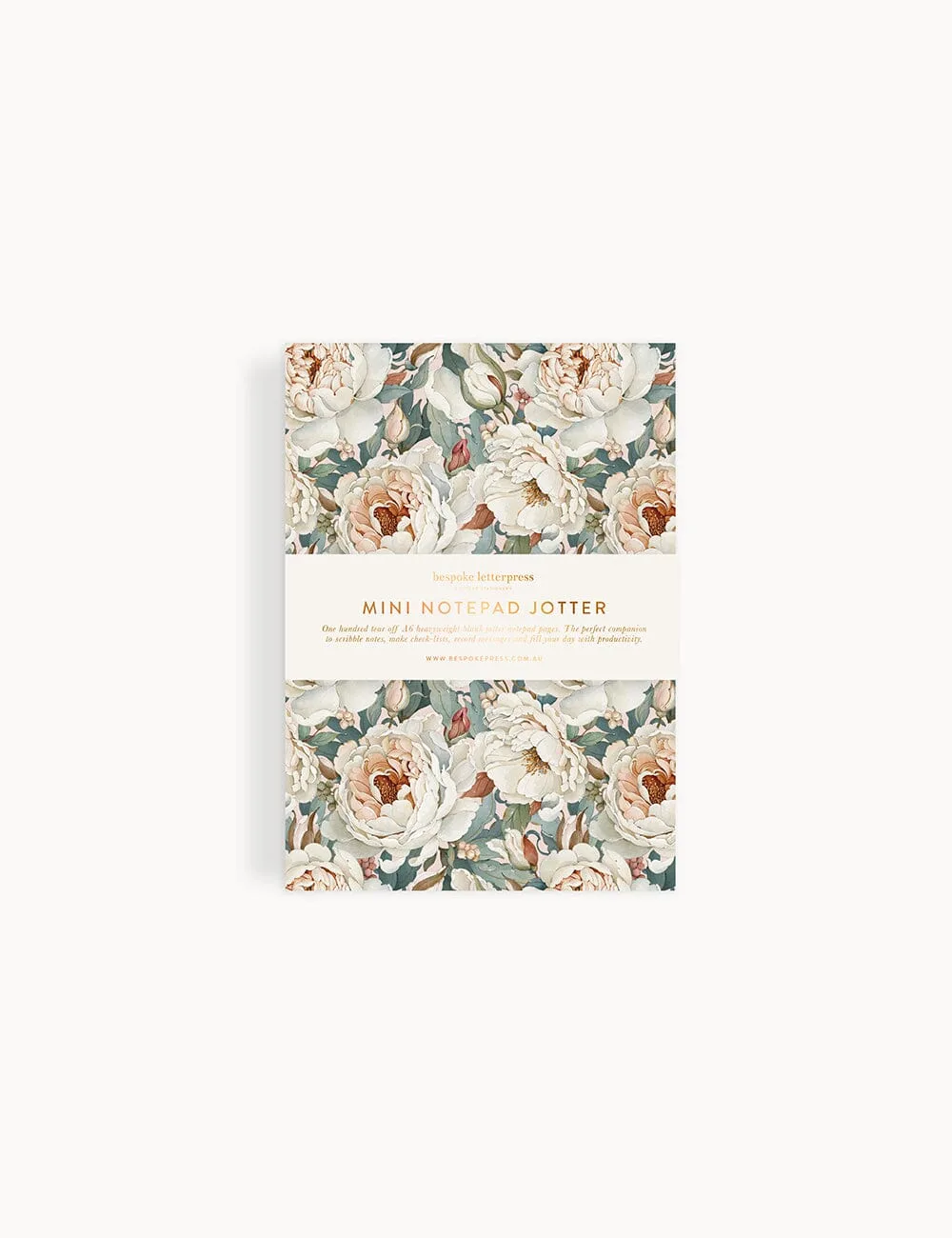
The Mini Heritage Roses Jotter is an A6 notepad mini jotter with 100 heavyweight tear-off blank pages, a gummed edge, a full heavyweight wrap-around cover, a removable gold foil printed bellyband and gold foil and gilded edges. Despite the jotter name, its structure is a small bound pad, which makes it a useful middle option: small enough for a bag, but with the same 100-page capacity and 100gsm environmentally responsible paper as its larger sibling.
Mini Heritage Roses Jotter
Where a journal differs is intent rather than construction. If you are choosing a journal, you are choosing a place for dated entries, reflections or tracked habits, and you will want the pages to stay in order. If you are choosing a notebook, you are choosing a working document: meeting notes, project research, drafts. Both are bound, both are kept, but only one is designed to be read back in sequence.
- A6 is genuinely pocketable; A4 is genuinely desk-bound. Pick by where you write, not by which looks better.
- If you plan to number pages or index them, start with a bound book rather than a tear-off pad.
Paper weight, cover and protection: the details that decide daily use
Paper weight is the specification most often ignored and most often regretted. The 100gsm paper used across the jumbo and mini jotters is described as heavyweight, which affects how ink sits, how much show-through you get and how substantial each page feels. In a notepad you use for quick lists, this is a comfort feature. In a notebook or journal you write in every day, it is closer to a requirement.
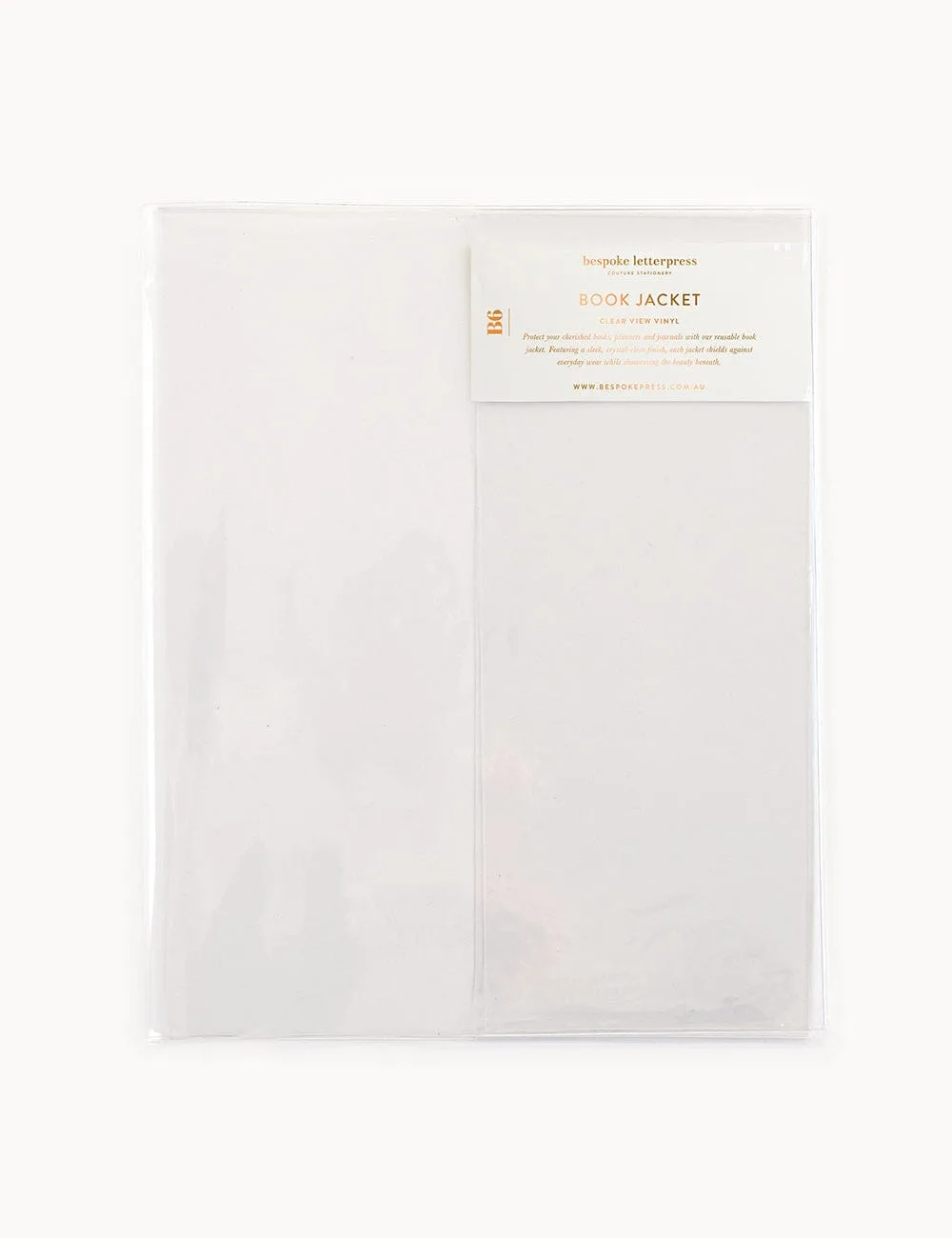
Cover and protection matter just as much once a book lives in a bag. The B6 Protective Book Jacket is a clear vinyl jacket designed to fit Large Day to Page Planners perfectly, made from flexible vinyl that guards against spills, scratches and daily wear while letting the planner design show through. It is a reminder that the format you choose only works if the book survives the way you carry it.
- Check the stated paper weight before buying; it tells you more about writing feel than cover art does.
- If your book travels loose in a bag, budget for a protective jacket or choose a hardier cover.
How to decide in under a minute
Start with the life of the page. Will it be thrown away, handed to someone or rewritten? Buy a notepad. Will it be kept, referenced or added to over weeks? Buy a notebook. Will it be dated, tracked or reflected on? Buy a journal. This single question resolves most of the notebook vs notepad and journal vs notepad confusion before you look at colour or cover.
Then match size to location. A4 stays on a desk; A6 travels. Then match paper to pen. If you use fountain pens or heavy ink, favour the heavier 100gsm stock described in the jotters above. If you use pencil or ballpoint for lists, almost any reasonable paper will do. Buying in this order, purpose then size then paper, stops you accumulating three half-used books.
- Write your answer to the page-life question on a sticky note before you shop.
- If you need both, buy one notepad for transient notes and one bound book for everything you keep.
The trade-offs, side by side
- Notepad: convenience versus permanence: Tear-off pages and gummed binding make lists, messages and rough drafts effortless, and 100gsm paper keeps them pleasant to write on. The cost is that removed pages cannot be recovered or reordered. Choose it if nothing you write needs to survive the week.
- Notebook: durability versus flexibility: Bound pages keep your notes in order and make the book worth shelving, but you cannot hand a page to someone or pin it to a board without losing it from the sequence. Choose it if you will read these notes again.
- Journal: intention versus speed: A journal rewards routine, dated entries and reflection, but it asks for consistency. Bought without a habit, it becomes an expensive blank book. Choose it only if you already have a reason to write regularly.
- Size and protection: portability versus capacity: A4 gives room for desk work; A6 travels. Whichever you pick, an unprotected book in a bag will show wear, which is where a clear vinyl jacket like the B6 Protective Book Jacket earns its place. Match size to where you write, then protect what you carry.
Product facts that show the difference
- Ivory Garden Notepad Jumbo Jotter: A4 jumbo notepad jotter with 100 heavyweight tear-off blank pages, gummed edge binding, full heavyweight wrap-around cover, removable gold foil printed bellyband and gold foil and gilded edges, on 100gsm paper. The gummed edge and tear-off pages make this the right format when notes are meant to leave the desk, while 100gsm paper keeps the writing experience comfortable.
- Mini Heritage Roses Jotter: A6 notepad mini jotter with 100 heavyweight tear-off blank pages, gummed edge binding, full heavyweight wrap-around cover, removable gold foil printed bellyband and gold foil and gilded edges, on 100gsm environmentally responsible paper. The same 100-page, 100gsm specification in a pocketable A6 size, which suits people who write away from a desk and still want a substantial page.
- B6 Protective Book Jacket: Clear vinyl book jacket designed to fit Large Day to Page Planners perfectly, made from durable, crystal-clear flexible vinyl that guards against spills, scratches and daily wear. If the book you choose travels in a bag, protection is what keeps it usable; this jacket addresses wear without hiding the cover design.
Which one should you buy?
Best for
- Shoppers who need disposable lists, messages and meeting scribbles: a notepad such as the Ivory Garden Notepad Jumbo Jotter.
- Writers who want a portable pad for notes on the move: the Mini Heritage Roses Jotter in A6.
- Anyone keeping ongoing notes they will reread: a bound notebook, with a B6 Protective Book Jacket if it travels.
- People with an existing daily writing or planning habit: a journal or planner-style book.
Not for
- Archiving dated entries or habit tracking: a tear-off notepad cannot keep pages in sequence.
- Handing individual pages to other people: a bound notebook or journal will not let you remove a sheet cleanly.
- Buying a journal before you have a routine: it will sit unused, and a cheaper notepad would have served you better.
Decide by the life of the page, then by size, then by paper weight. A notepad for pages that leave, a notebook for notes you keep, and a journal for writing you return to. Get that order right and you will stop buying three books to do one job.