Quick answer
Start with the job the notepad does most days: pick a structured to-do list notepad layout for task tracking, and an unlined desk notepad for work that is mostly brainstorming or sketching. Then confirm the sheet size and binding suit where you actually write.
Why layout matters more than page count
A 50-sheet notepad and a 200-sheet one can serve the same purpose, but a printed layout changes how you use each page. Ruled lines keep handwriting level and make lists scannable; a pre-printed checklist or header pushes you to finish items instead of rewriting them. Unlined pages remove that structure, which helps when you are capturing ideas, diagrams, or notes that do not fit a row.
The trade-off is flexibility. A structured to-do list notepad layout is fast for recurring tasks but awkward for long-form notes, while a blank page handles almost anything but gives you no built-in prompt to prioritize. Choose the layout that matches the majority of your writing, not the occasional exception.
Sheet size and binding: the practical constraints
Sheet size affects portability and writing room. A compact 8.5" x 5.5" sheet fits beside a laptop or in a tote and still gives enough width for a short list, but it is cramped for multi-column planning. Larger formats suit desk work but are harder to carry between meetings.
Binding decides how the pad behaves. Top-gummed pads tear away cleanly and lie flat on a desk, which suits a desk notepad for work. A cardboard backing adds stiffness so the pad works without a clipboard. If a listing does not state page count, sheet size, or backing, treat that as a missing specification and ask before buying rather than assuming.
Decision rules for choosing a notepad
- If most pages are tasks: Choose a to-do list notepad layout with a printed header or checklist so prioritization is built into the page. Count how many pages last week were lists before committing.
- If most pages are ideas: Choose an unlined notepad so sketches, diagrams, and free notes are not forced into rows.
- If you write at a desk: Prioritize a top-gummed pad with a cardboard backing that lies flat and tears away cleanly. Check that the backing is stated, not assumed.
- If you carry it daily: Confirm the sheet size fits your bag or laptop sleeve before buying; 8.5" x 5.5" is a compact middle ground.
Two layouts in the catalog
-
I'm a Real Tough Kid I Can Handle My To-Do List notepad: Hand-lettered to-do list header with 50 tear-away sheets, 8.5" x 5.5", and a cardboard backing. The printed header turns each page into a ready-made task list, so you spend less time setting up and more time checking items off.
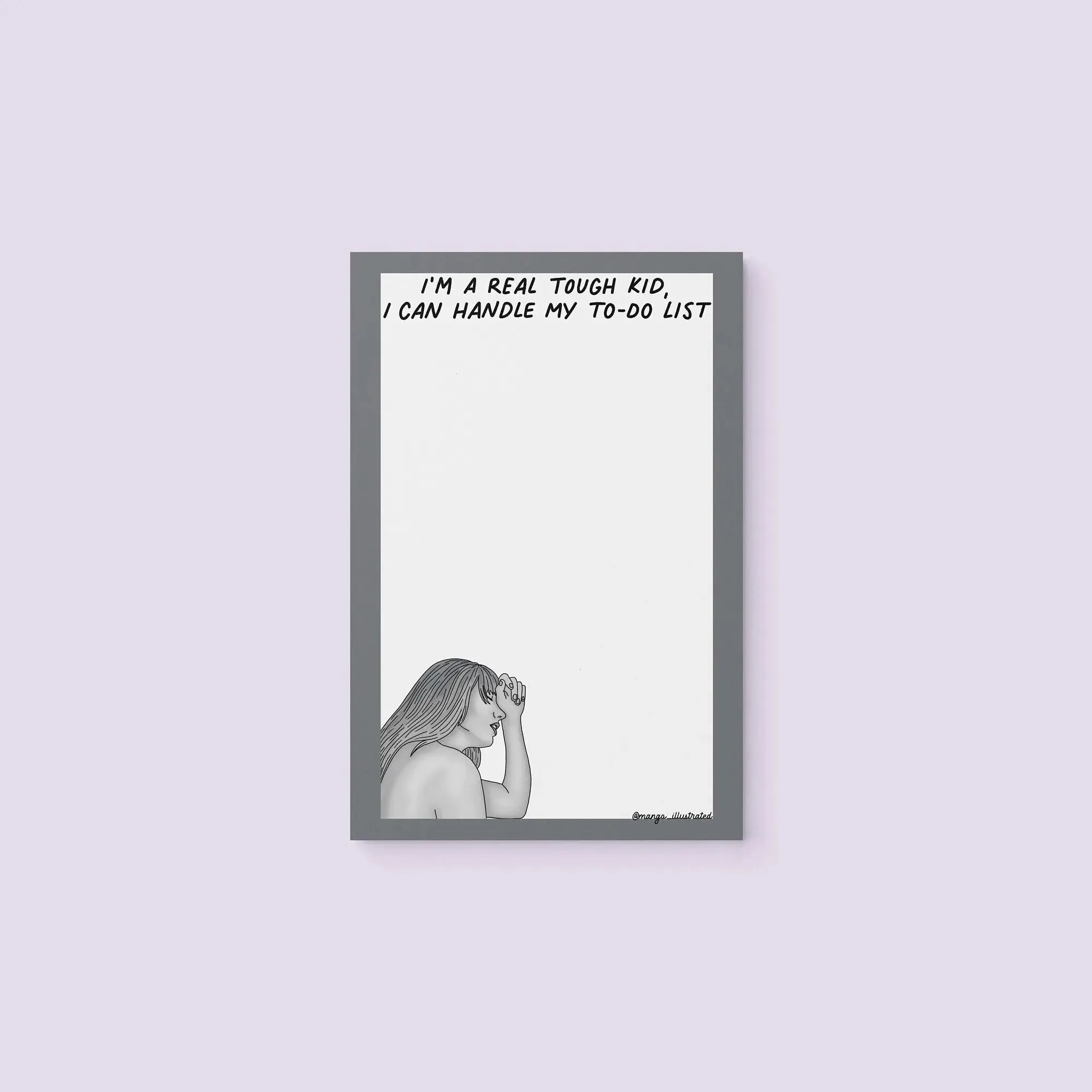
I'm a Real Tough Kid I Can Handle My To-Do List notepad
-
Purple Stripes Notepad: Blank 8.5" x 5.5" sheets with 50 tear-away pages and a cardboard backing. The open middle suits brain dumps, doodles, and notes that do not fit a fixed list structure.
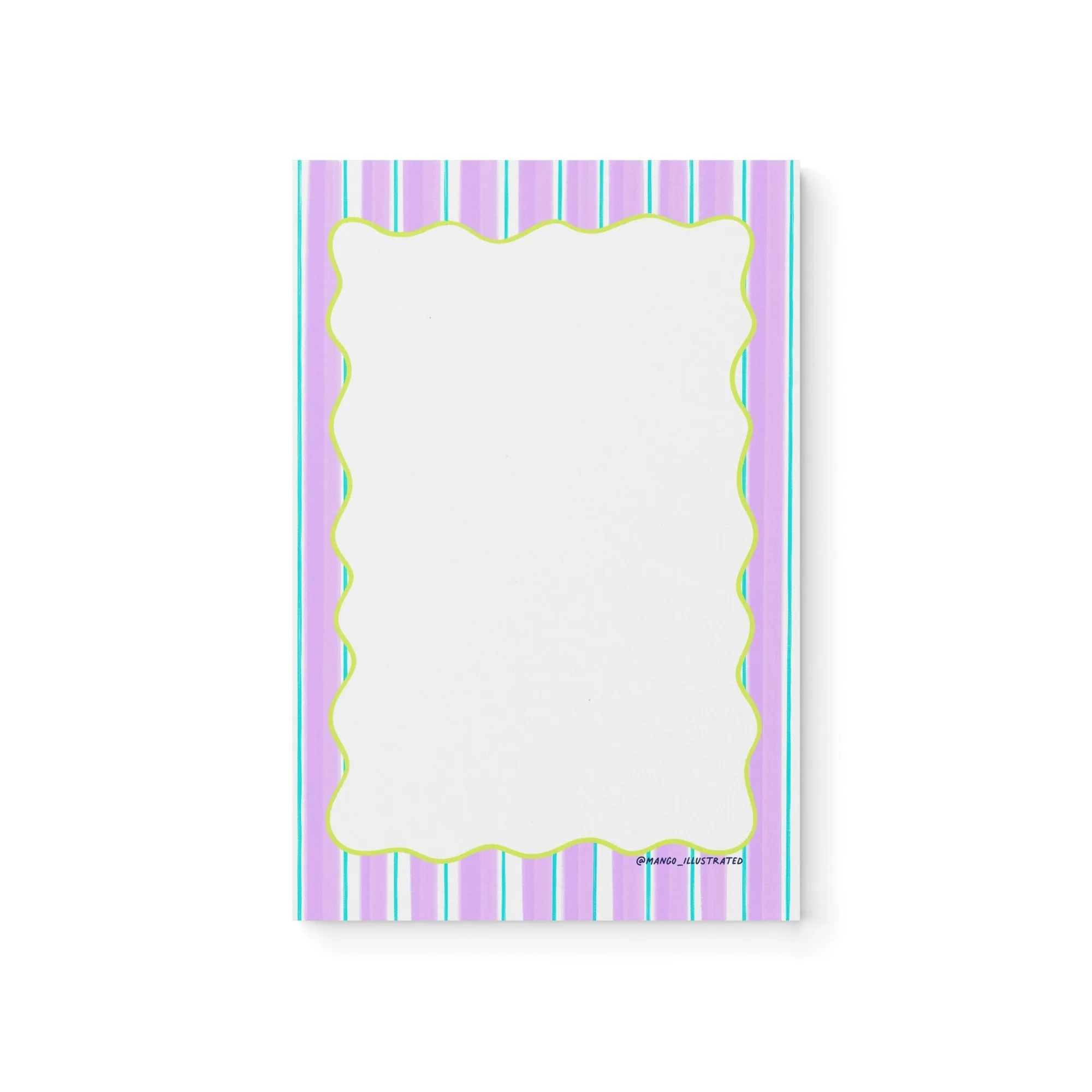
Purple Stripes Notepad
Who each layout suits
Best for
- People who run the same task list most days and want a printed structure
- Desk workers who tear off pages and need a stiff backing
- Writers who prefer a compact 8.5" x 5.5" sheet
Not for
- Long-form journaling or sketching that needs an unlined page
- Anyone who needs a large-format planning sheet
- Buyers who require a stated page count above 50 sheets