Quick answer
Choose a notepad when the note is temporary: a grocery list, a phone number, a task you'll finish today. Choose a notebook when the note is part of a sequence you'll reread or build on, like meeting minutes, a journal, or project notes. Many people need both, and the honest test is whether you'd be upset to lose the page. If losing it would cost you nothing, a notepad is the right format.
The difference between a notepad and a notebook isn't the paper. It's the promise you're making to yourself about whether the writing will survive the week. A notepad is a surface you write on and tear off. A notebook is a record you keep, flip back through, and judge yourself by later.
That distinction matters more than size, binding, or price, because it decides where your notes actually end up. Buy the wrong one and you get either a drawer full of loose sheets you never revisit or a half-empty notebook you're afraid to "ruin" with a shopping list.
The real difference: disposable vs. sequential
A notepad is built for single-use notes. Sheets are often adhesive-backed or tear-away, which means the page has a job and then leaves. That's a feature: you can stick a reminder to a laptop lid, hand someone a list, or cross something off and throw it away without feeling like you've damaged a book. The trade-off is that nothing accumulates. There's no index, no chronology, and no way to find what you wrote three weeks ago unless you kept the sheet.
A notebook is built for sequence. Pages stay in order, so your notes build into something: a project log, a reading record, a running list of ideas. The trade-off is commitment. You have to carry it, protect it, and resist the urge to keep it pristine. If you abandon notebooks halfway through, the format is working against you, not for you.
- Ask one question before you buy: will I need to find this note again? If yes, notebook. If no, notepad.
Where notepads win
Notepads are unbeatable for short-horizon tasks and shared notes. A 3" x 3" adhesive pad fits in a pocket or beside a keyboard, and because the sheets stick, they travel to the exact place the reminder is needed: a monitor bezel, a fridge door, the inside of a planner. That physical relocation is something a notebook can't do.
They're also cheaper per page and lower stakes. You can write badly on a notepad and no one cares, which makes it the better format for brainstorming, phone messages, and anything you'll transcribe elsewhere later. The limitation is durability. Loose adhesive sheets curl, get lost, and don't survive being shoved in a bag for a month. If a note needs to last, move it into something bound.
- Keep a notepad where the note is needed, not where you sit. Kitchen, car console, and desk edge beat a drawer.
Where notebooks win
Notebooks win whenever context matters. Meeting notes only make sense next to last week's meeting notes. A habit log only works if you can see the streak. A notebook keeps that context automatically because the pages stay in order, and it gives you a spine to label and shelve when it's full.
The cost is friction. You have to decide on a system, carry the book, and accept that it will get scuffed. Notebooks also fail quietly: people buy a beautiful one, write three pages, and stop because the first page isn't perfect. If that sounds familiar, a cheap notebook you're willing to wreck will serve you better than an expensive one you're afraid to open.
- Date every entry. It costs two seconds and turns a notebook into a searchable record later.
Cost, format, and the refill question
Notepads are typically the cheaper entry point, and you replace them sheet by sheet rather than buying a new book. Notebooks cost more up front but hold far more writing per dollar, and a good one lasts months. The refill question matters more than the sticker price: a notepad you use daily needs a steady supply, while a notebook needs only one purchase.
Format also splits the two. Adhesive notepads are square and small by design, which limits how much you can write in one go. Notebooks come in sizes that accommodate long-form writing, but they don't stick to anything. If you've ever taped a notebook page to a wall, you already understand the gap.
- Budget the system, not the item: a notepad plus a notebook often costs less than replacing an abandoned premium notebook.
The trade-offs, side by side
- Retrieval: Notepads give you no way to find an old note unless you kept the sheet; notebooks keep everything in order by default. If you've ever re-written a note because you couldn't find the original, choose a notebook.
- Portability of the note, not the pad: Adhesive notepad sheets can move to a laptop, fridge, or planner page. Notebook pages stay in the notebook. Choose a notepad when the note needs to travel to a specific place.
- Commitment and waste: Notepads are cheap and low-stakes but generate loose paper; notebooks hold more per dollar but fail if you abandon them. Buy a notebook you're willing to scuff, and a notepad you're willing to use up.
Two MangoIllustrated picks that show the split
- To Remember If I Don't Lose This Note sticky notes: 50 sheets with adhesive back, 3" x 3", designed in Charlotte and printed in USA. This is the notepad side of the decision: small, sticky, and disposable, so it works for reminders you'll move to a screen or a planner and then discard. Fifty sheets is enough to test whether you actually use a pad before committing to a system.
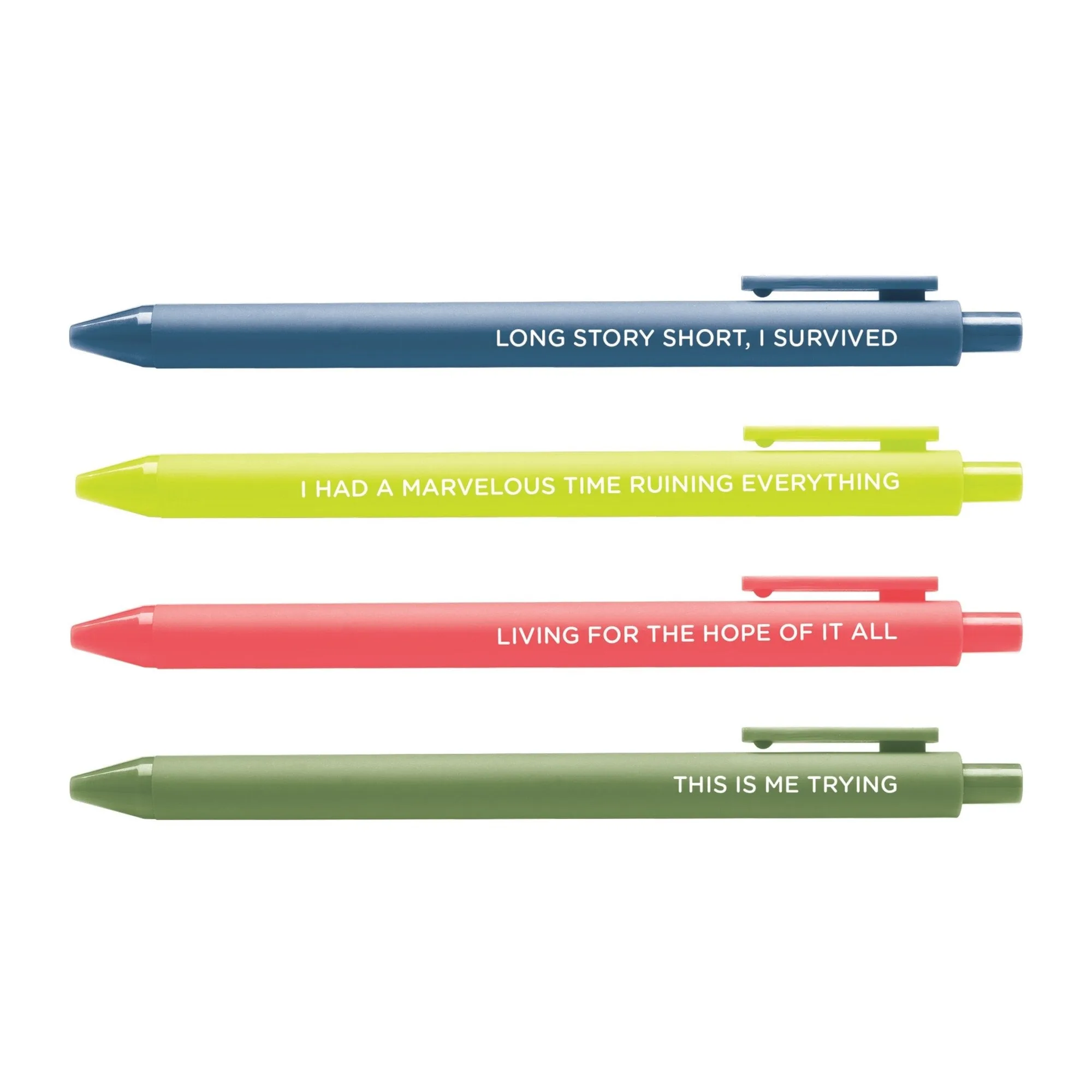
- Folkmore Pen Set: Four jotter gel pens with 0.5mm fine point and black gel ink, packaged in a clear plastic sleeve. Fine-point gel ink is the practical match for both formats: it stays legible in small notepad squares and doesn't bleed into a notebook margin. A four-pen set also means one can live with the pad and one with the notebook, so you're not hunting for a pen when a thought arrives.
Which should you actually buy?
Choose a notepad if you...
- write short reminders, lists, or phone messages you'll act on within a day or two
- need the note to stick somewhere visible, like a monitor or fridge
- brainstorm messily and transcribe the good parts elsewhere
Choose a notebook instead if you...
- need to look back at notes from last month or last quarter
- keep sequential records like meeting minutes, journals, or project logs
- want one place that accumulates instead of scattering loose sheets
Pick the format that matches the lifespan of your notes, not the one that looks better on a desk. A small adhesive notepad handles the thoughts you just need out of your head, and a notebook handles the ones you'll want back. If you're unsure, start with the notepad: it's the cheaper way to find out whether you're a keeper or a tearer.