Quick answer
Choose the TeleVue NP101is for a versatile, imaging-ready package with a flat field and 4-inch aperture, or the TEC APO180FL for a larger 7-inch aperture that demands a bigger mount and separate accessories.
Aperture and light gathering
The TEC APO180FL’s 180mm aperture gathers over three times more light than the NP101is’s 101mm aperture. This makes the APO180FL the clear choice for dim deep-sky objects and high-resolution imaging, but it also means a heavier optical tube that requires a substantial mount.
Included accessories vs. bare OTA
The NP101is ships as a complete imaging package with rings and a field flattener, while the APO180FL is an OTA-only product. Budget for rings, a mounting plate, and a field flattener separately if you choose the TEC—these extras add cost and complexity to the setup.
NP101is vs APO180FL trade-offs
- Aperture and reach: APO180FL (180mm) gathers ~3.2x more light than NP101is (101mm), enabling better resolution on faint targets. If your priority is deep-sky detail, the APO180FL’s aperture advantage is significant.
- Portability and mount requirements: NP101is is lighter and fits smaller mounts; APO180FL is substantially heavier and needs a premium mount. The NP101is is far easier to travel with and set up on a mid-sized German equatorial mount.
- Included vs. a la carte: NP101is includes rings and a field flattener; APO180FL is OTA-only, requiring separate purchases for rings, plate, and flattener. Factor $1,000–$2,000+ for APO180FL accessories when comparing total cost.
Product facts
-
NP101is: TeleVue applied NP-series developments to make the NP101is optically, mechanically, and functionally as perfect as possible for imaging up to 50mm diagonal chips without penalty to visual operation. The NP101is delivers a flat field for modern medium-format sensors while retaining excellent visual performance, reducing the need for a separate field flattener.
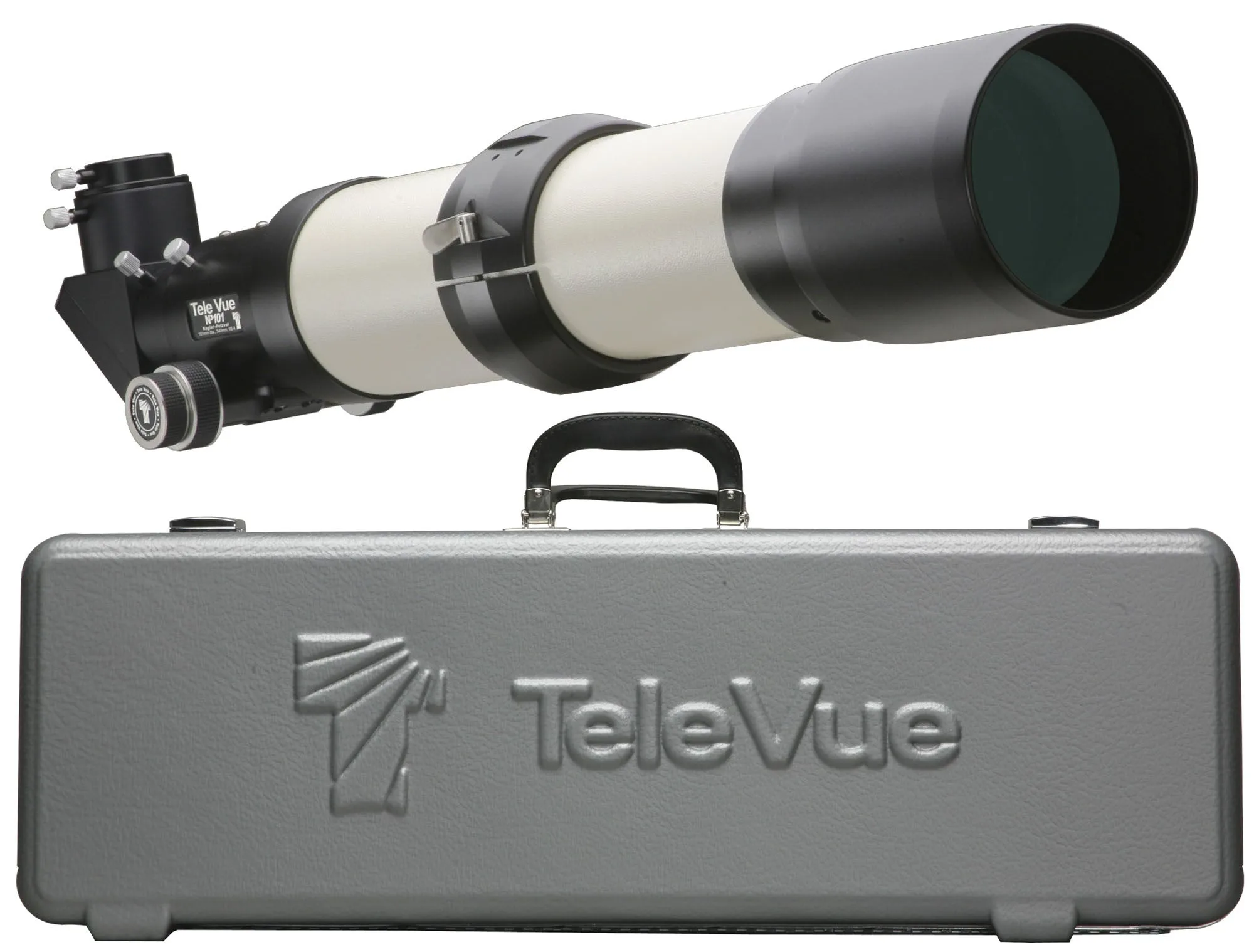
NP101is
-
APO180FL F/7: The TEC APO180FL ships as the OTA only, without rings, mounting plates, field flatteners, or other accessories; these must be purchased separately. The APO180FL’s larger aperture requires a higher mount capacity and additional accessory purchases, increasing total investment beyond the base price.

APO180FL F/7
Which refractor fits you?
Best for
- Astrophotographers who want a ready-to-image, portable refractor with a flat field for up to 50mm sensors – choose NP101is
- Imagers seeking maximum aperture and resolution on a permanent or large observatory mount – choose APO180FL
Not for
- Budget-conscious buyers who need a complete setup under $10,000 – consider a smaller apo refractor or a used NP101is
- Travelers who need a lightweight grab-and-go scope – the APO180FL is too large and heavy