Quick answer
Choose the Nursh 0+ Months bottle for a newborn who needs a soft, slow-flow nipple and the smallest pouch. Move to the Nursh 3+ Month bottle when your baby is around three months old, feeding more efficiently, and ready for a faster flow and larger pouch.
What actually changes between the two stages
The 0+ and 3+ month Nursh bottles share the same air-free silicone pouch design: the pouch collapses as your baby drinks, so milk never touches plastic and air ingestion is reduced. The stage difference is about nipple flow and pouch capacity, not a different feeding mechanism.
The 0+ bottle is built around a soft, slow-flow nipple that mimics the feel of breastfeeding, which helps newborns latch comfortably. The 3+ bottle uses a faster-flow nipple and a larger pouch to match an older baby's stronger, more efficient suck.
The trade-off: price versus readiness
The 0+ bottle is the lower-cost entry point, but if your baby is already feeding efficiently, a slow-flow nipple can lead to longer feeds and frustration. The 3+ bottle costs more, yet it can reduce feeding time and spit-up for babies who are ready for a faster flow.
There is no universal age at which every baby should switch. The three-month marker is a guide, not a rule. Watch your baby's cues rather than the calendar.
When the age label is misleading
Some babies are ready for the 3+ bottle before three months, especially if they were born larger or already drain the 0+ bottle quickly. Others need the slower flow beyond three months, particularly if they gulp, cough, or spit up often during feeds.
If your baby was premature or has feeding challenges, ask your pediatrician or feeding specialist before changing stages. The bottle stage is a tool, not a prescription.
Key trade-offs at a glance
- Nipple flow: The 0+ bottle has a soft, slow-flow nipple; the 3+ bottle has a faster-flow nipple. If your baby takes more than 20 minutes to finish a feed or falls asleep at the bottle, the faster flow may help.
- Pouch capacity: The 3+ bottle holds more milk in its larger pouch than the 0+ bottle. If you are preparing bigger bottles and your baby still seems hungry, the 3+ pouch is the better fit.
- Price: The 0+ bottle is priced lower than the 3+ bottle. Buying the 0+ first and sizing up later costs more overall, so choose based on your baby's current feeding, not just the lower price.
Product facts
-
Nursh Bottle | 0+ Months: Soft, slow-flow nipple designed to mimic breastfeeding and encourage proper latching. This makes the 0+ bottle a natural starting point for newborns who are still learning to latch and feed.
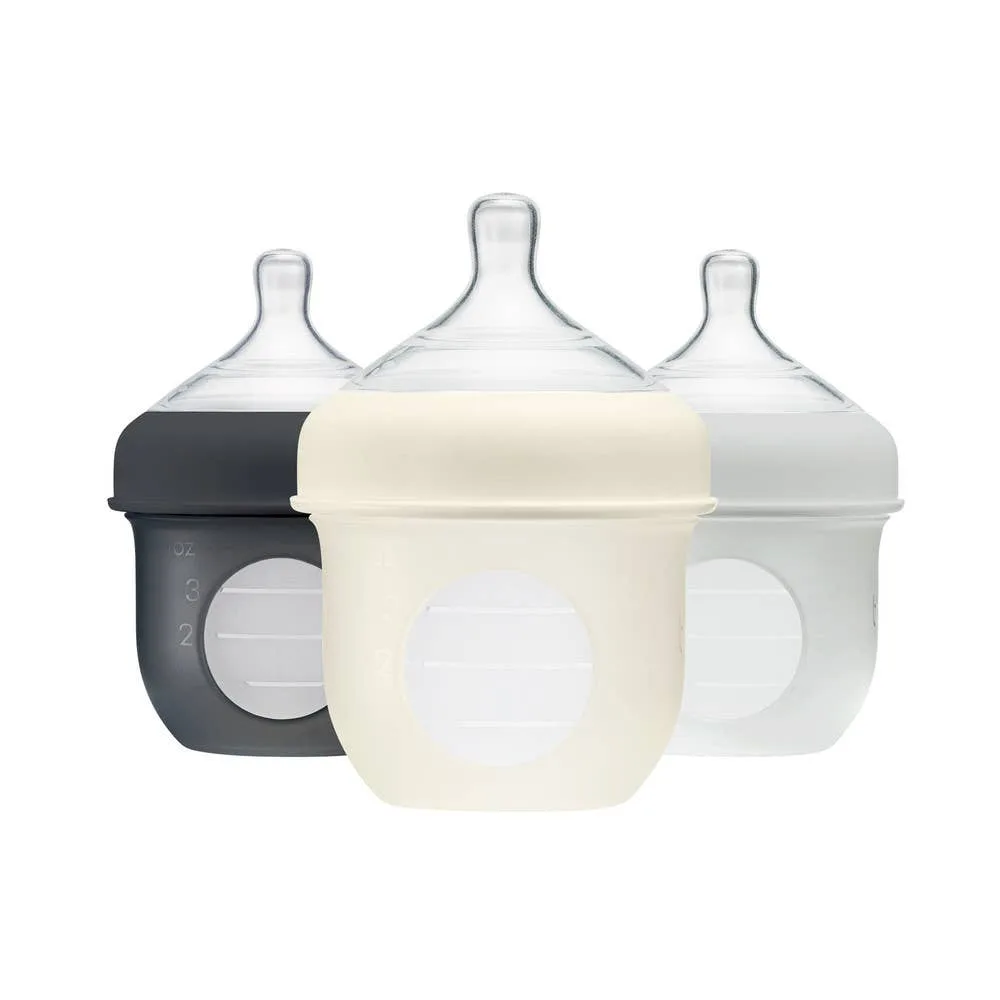
Nursh Bottle | 0+ Months
-
Nursh Bottle | 3+ Month: Larger pouch and faster-flow nipple for babies drinking more at each feed. The 3+ bottle keeps up with an older baby's stronger suck and growing appetite without long, tiring feeds.
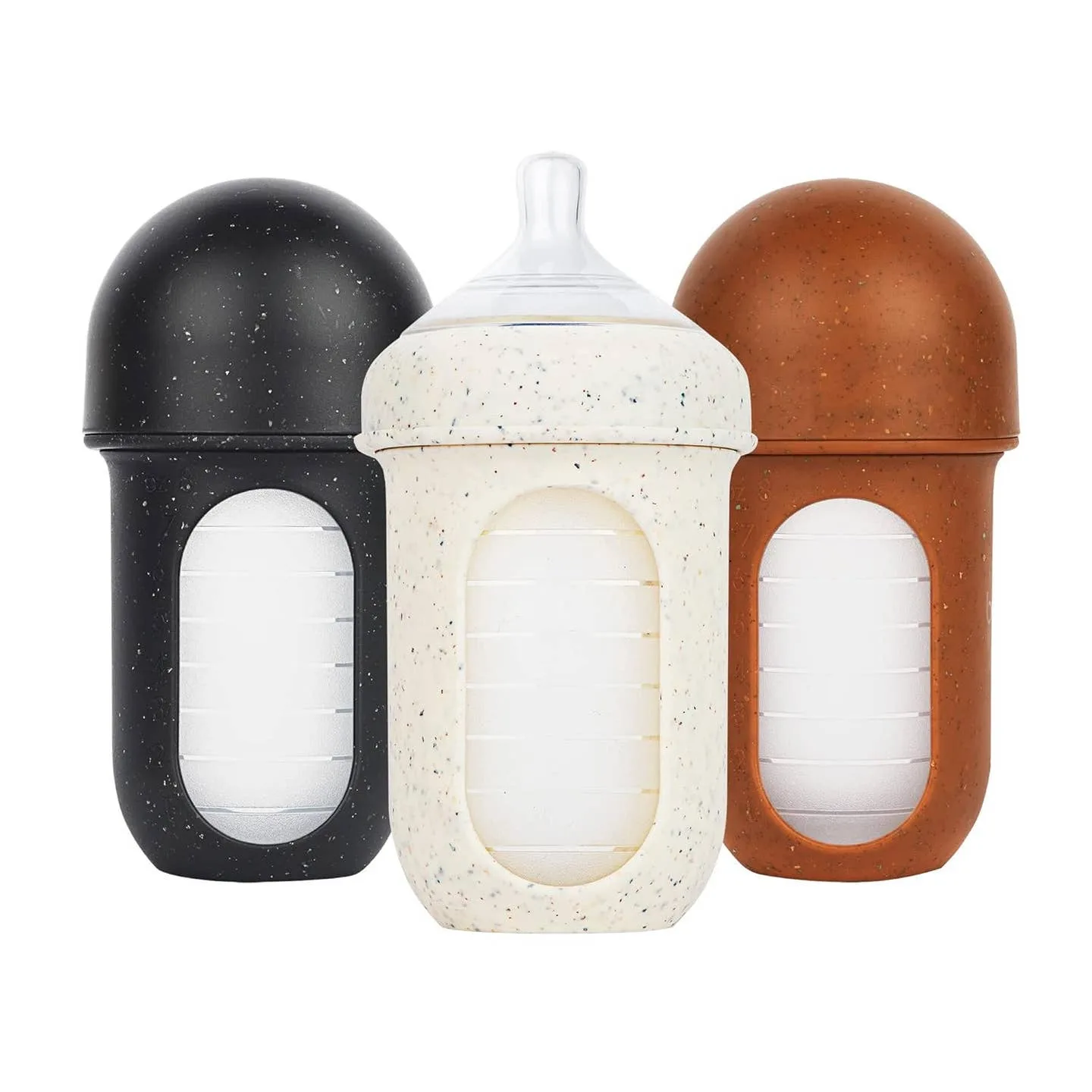
Nursh Bottle | 3+ Month
Which stage fits your baby?
Best for
- Newborns and babies under three months who need a slow, gentle flow
- Parents starting with a lower-cost bottle who want to size up later
Not for
- Babies already draining the 0+ bottle quickly or feeding efficiently
- Parents who want to buy one bottle stage and use it for many months